New liquidity lanes may open up to more complex financial markets via tokenized stocks, Treasuries and stablecoins. Trump Accounts could introduce millions of young Americans to investing whi
- New liquidity lanes may open up to more complex financial markets via tokenized stocks, Treasuries and stablecoins.
- Trump Accounts could introduce millions of young Americans to investing while blockchain infrastructure enters traditional financial markets.
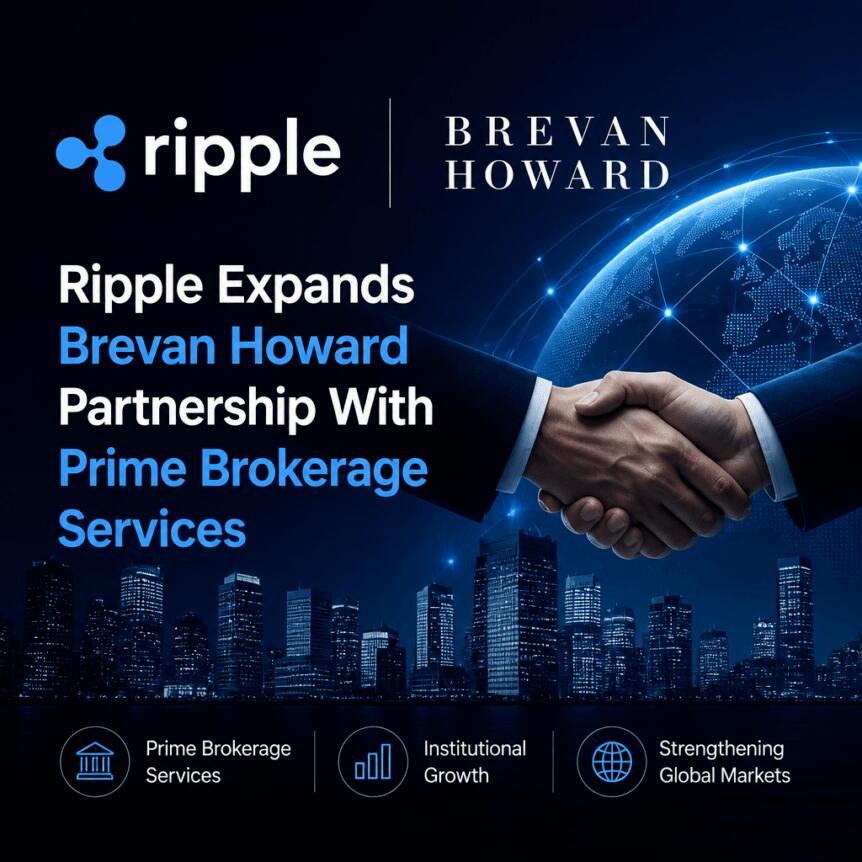
- Ripple’s institutional expansion connects equities, currencies, fixed income, derivatives, and digital assets within one broader financial platform.
XRP has been part of a larger financial shift that includes tokenization of assets, stablecoins, institutional platforms, and blockchain-based financial market infrastructure.
Trump Accounts Bring Investing to Younger Americans
X Finance Bull links Trump Accounts with the broader shift toward digital financial markets. The post connects the program with tokenized securities, stablecoins, and Ripple’s expanding institutional infrastructure. It presents the $1,000 Treasury contribution as one part of a wider market transition.
https://twitter.com/Xfinancebull/status/2106489719294988634?s=20
Treasury completed automatic enrollment for Trump Accounts on October 1. More than 60 million eligible children under 18 can claim accounts. Children in the pilot program may receive a $1,000 Treasury contribution.
The money initially enters qualifying broad U.S. equity index investments. Therefore, the program does not represent a direct XRP allocation. Instead, it could introduce younger Americans to investment accounts and market ownership.
The current XRP price stands at approximately $1.49 in the supplied market data. That figure places the asset within a broader market discussion, rather than defining the thesis. The central focus remains financial infrastructure and changing investment access.
Tokenized Assets Connect Traditional and Digital Markets
The supplied commentary points toward the SEC’s September Innovation Exemption. The exemption permits limited trading involving tokenized NMS stocks. These transactions can occur within permissioned automated market-maker environments.
The referenced framework requires underlying smart contracts to remain public and auditable. Those contracts must also operate on public permissionless ledgers. This creates another connection between conventional securities and blockchain infrastructure.
Stocks, funds and Treasuries may be tokenized and added to the emerging market. Stablecoins and digital commodities might run concurrently with those assets. Crypto ETFs could further connect established investment channels with digital markets.
Federal policy has also moved toward integrating digital assets with financial services. The supplied material links this direction with payments and traditional market infrastructure. Together, these developments point toward increasingly connected financial systems.
Ripple Expands Across Institutional Asset Classes
Ripple Prime’s Delta One business covers U.S.-listed equities and indices. It also includes digital assets within its institutional offering. Ripple’s broader platform spans foreign exchange, fixed income, derivatives, and digital assets.
Institutional clients can reportedly cross-margin exposures across these markets around the clock. That capability places multiple asset classes within a connected financial environment. It also brings blockchain infrastructure closer to established institutional operations.
The broader thesis centers on liquidity between tokenized financial assets. Tokenized equities, Treasuries, RLUSD, and other stablecoins could require efficient settlement routes. XRP could potentially serve as an intermediary when market conditions make that route economical.
A possible structure could move a tokenized asset through XRP into RLUSD. Another route could connect one digital dollar with another through XRP. However, direct trading pairs, stablecoins, and competing networks could provide alternative liquidity routes.