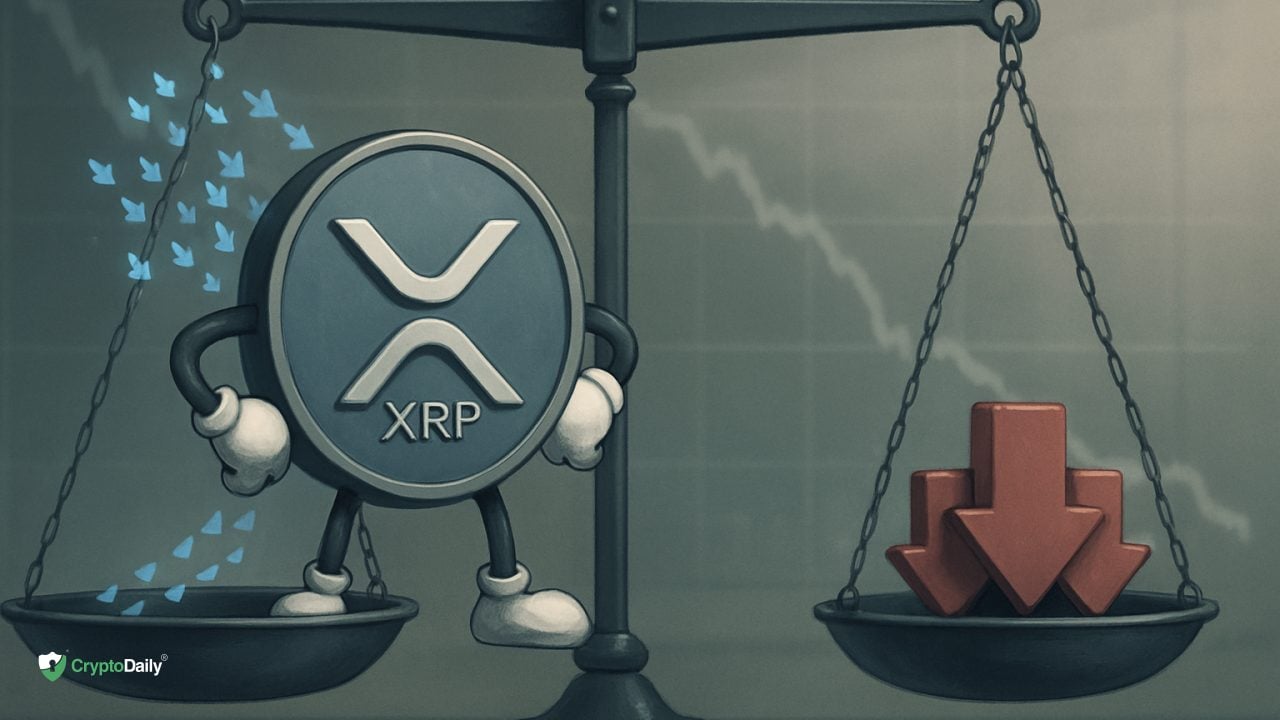
XRP is back near the $1.20 handle after a choppy, macro driven start to June. Traders want to know whether persistent ETF demand can overpower the crowded short positioning that built into th
XRP is back near the $1.20 handle after a choppy, macro driven start to June. Traders want to know whether persistent ETF demand can overpower the crowded short positioning that built into the post Fed sell off.
This piece explains how ETF flows interact with derivatives, what the latest data shows, and which signals matter most from here. You ll leave with a practical checklist to track whether demand is winning, plus risk factors and common pitfalls to avoid.
Yes —sustained spot ETF inflows can offset short pressure, but only if they persist across multiple sessions and coincide with improving spot liquidity. Into mid June, XRP s rebound above $1.20 followed an 8% two session jump and evidence of crowded shorts, a setup that can accelerate moves both ways. Watch daily ETF creations, perp funding, and whether price holds above $1.20 on strong volume.
- May 2026 delivered $118.29M in net inflows to U.S. spot XRP ETFs (MEXC reporting SoSoValue).
- Cumulative XRP spot ETF inflows since launch are roughly $1.39 $1.4B as of late May 2026 (TradingNews).
- XRP rallied ~8% from $1.1425 to $1.2307 on June 14 15 with a breakout volume spike near 21:00 UTC (~107.6M XRP) (CoinDesk).
- Perps showed heavy short side leverage into June; analysts cited about $227.1M in short liquidation exposure (~90% skew) (BeInCrypto citing CoinGlass).
- Stronger-than-expected U.S. jobs data on June 5 added to a hawkish macro tone and risk off in early June (BLS).
What actually moved XRP around $1.20 this week?
After a tough start to June amid macro jitters, XRP ripped about 8% between June 14 and 15, climbing from roughly $1.1425 to $1.2307. The push featured a breakout around 21:00 UTC on June 14 with a volume burst estimated near 107.6 million XRP—evidence that fresh demand finally overwhelmed offers at the prior ceiling (CoinDesk).
That move arrived against a macro backdrop that had punished risk assets earlier in the month. The U.S. May jobs report, released June 5, showed a 172,000 increase in nonfarm payrolls, a beat that markets read as hawkish and that helped trigger broad risk off across equities and crypto (BLS).
On microstructure, derivatives positioning into late May and early June was skewed toward shorts on XRP perpetuals. With shorts reportedly accounting for roughly 90% of levered liquidation exposure, even a modest spot led reversal could spring a squeeze—one potential contributor to the fast breakout once $1.20 was in sight (BeInCrypto citing CoinGlass).
Do ETF inflows have the firepower to counter shorts?
They can—if they re persistent and broad based. May 2026 was the strongest month of the year for U.S. spot XRP ETFs, with net inflows totaling around $118.29 million per SoSoValue data reported in market coverage (MEXC). Since the November 2025 launch, cumulative net inflows have been reported around $1.39 $1.4 billion as of late May 2026, according to market summaries compiling SoSoValue and Bloomberg sourced flow data (TradingNews).
Mechanically, consistent ETF creations require authorized participants to source underlying XRP, contributing steady spot demand. The market impact varies: on thin days, creations may move price more; in deep liquidity, the effect can be muted. The key isn t a single big day —it s a streak of net creations that keeps inventory tight while shorts pay funding and face rising mark to market pressure.
Still, not all flow prints are equal. Net inflows can coincide with profit taking elsewhere, or large OTC blocks can absorb pressure off exchange with limited footprint on order books. That s why measuring ETF demand alongside spot depth, perp funding, and realized volatility offers a truer read than flows alone.
Pro tip: Treat one day ETF flow spikes as noise until they string together into a multi session pattern and coincide with improving spot liquidity and constructive funding. Sustained alignment matters more than headline totals.
How does the crowded short setup change the path?
When shorts dominate leverage, the path of least resistance can flip quickly. Into June, analysts flagged about $227.1 million of cumulative short side liquidation leverage on XRP perps, with roughly 90% of levered exposure on the short side —a classic fuel source for sharp squeezes if spot bids gain traction (BeInCrypto citing CoinGlass).
In practice, a push through obvious resistance (like $1.20) can trigger stop runs that cascade into market buys from forced covering. If ETF creations are positive during the same window, the net effect can compound as both structural and tactical demand hit simultaneously.
The flip side is just as important: crowded shorts sometimes exist for a reason. If spot demand fades or macro headwinds reappear, funding can normalize and price can drift back into the prior range, trapping late longs. The signal to track is whether higher lows form on pullbacks with funding near flat—evidence that squeeze dynamics are transitioning into genuine accumulation.
What signals should traders track to gauge whether demand is winning?
No single metric decides the tape. A small dashboard of corroborating signals is more reliable, especially in a macro sensitive market.
- ETF flows: Look for multiple consecutive sessions of net creations across issuers, not just a one day pop. Confirm via reputable flow trackers referenced in market coverage (e.g., SoSoValue as reported by outlets like MEXC).
- Perp funding and basis: Mildly positive or flat funding with rising price suggests spot led demand; surging positive funding may signal froth.
- Open interest behavior: Rising OI on up moves is fine if funding is tame; collapsing OI on green candles hints at short covering more than new longs.
- Spot depth and slippage: Tighter spreads and deeper books mean ETF creations likely translate into cleaner price action.
- Volume quality: Prefer rising spot volumes during breakouts (e.g., the June 14 21:00 UTC spike noted by CoinDesk) with less reliance on derivatives churn.
- Macro calendar: Jobs, CPI/PCE, and Fed communications can reset risk appetite quickly; the June 5 jobs beat is a fresh example (BLS).
How does XRP stack up versus other large cap flows right now?
For context, it helps to compare XRP s setup with common large cap dynamics. While exact numbers vary day to day, qualitative differences can guide expectations around volatility and flow through.
Factor XRP now Typical impact What to watch ETF flow momentum Strong May inflows; cumulative since launch reported near $1.39 $1.4B Sustained creations can tighten float and aid trend continuation Multi session net creations and breadth across issuers (MEXC; TradingNews) Perp positioning Heavily short skewed into June per analyst summaries Increases squeeze risk if spot bids step in Funding, OI during breakouts (BeInCrypto) Macro sensitivity Reactive to hawkish surprises Can overwhelm micro flows near data releases Jobs, inflation, and Fed speak timing (BLS) Liquidity profile Breakout saw elevated spot volume Better depth reduces slippage, steadies trend Spot market spreads/vol during pushes (CoinDesk)
The takeaway: ETF demand appears constructive, perp shorts add optionality for squeezes, but macro can still set the tone. Alignment across these pillars is what turns a bounce into a trend.
Where are the key tactical levels and timeframes to watch?
Price acceptance around $1.20 is the first battleground. The mid June breakout tagged roughly $1.2307 before cooling; holding above $1.20 on expanding spot volume would suggest buyers are absorbing supply. If ETF creations continue while dips print higher lows, the path of least resistance tilts upward in the near term.
On the downside, the prior session s lower bound near $1.1425 is a simple reference. Slips back into the pre breakout range with weakening volume would argue for patience. Timeframe matters too: a constructive daily close can still fail on the weekly if macro data flips sentiment. Traders often scale risk into confirmations rather than front running levels with oversized positions.
Remember that headlines can create gaps between U.S. ETF hours and the 24/7 crypto tape. Momentum that looks strong intraday may need confirmation on the next U.S. session when creations/redemptions resume.
What are the main risks that could break the setup?
Macro shocks remain the top risk. The early June drawdown showed how a stronger than expected labor print can tilt the Fed reaction function and drain risk appetite quickly (BLS). A string of hawkish surprises could overpower supportive microstructure and push XRP back into its prior range.
Flow fragility is another concern. ETF inflows can be lumpy; a few redemptions during a thin tape may embolden shorts. Overreliance on one indicator leaves traders blind to shifting funding, open interest, or OTC supply that doesn t show up on public order books.
Lastly, market specific headlines—legal, regulatory, or exchange related—can change the calculus fast. While the medium term trajectory may still hinge on adoption and liquidity, short term dislocations often come from surprises unrelated to core fundamentals. Position sizing and predefined exit rules help mitigate these shocks.
Common Mistakes
- Chasing single day ETF prints: One big inflow doesn t make a trend. Require multi session confirmation and improving spot depth before scaling risk.
- Ignoring funding normalization: If funding flips sharply positive while price stalls, a squeeze may be fading. Reassess rather than averaging up blindly.
- Trading through major data without a plan: Jobs and inflation releases can whipsaw. Reduce size or wait for post data structure to form.
- Confusing short covering with accumulation: Falling open interest on green candles suggests covering, not durable buying. Look for rising OI with tame funding.
- Neglecting exit criteria: Define invalidation levels (e.g., loss of $1.20 on expanding sell volume) and adhere to them to avoid narrative drift.
For ongoing coverage, charts, and context across digital assets, visit Crypto Daily.
Frequently Asked Questions
Why can price drop even when ETFs report net inflows?
Flows are one input among many. Redemptions at other venues, profit taking, OTC transfers, or macro shocks can offset ETF demand intraday. Also, reported creations are typically settled on specific cycles and may not align perfectly with 24/7 crypto price action.
How reliable are third party ETF flow trackers?
Aggregators compile public disclosures and issuer data, but timing conventions, revisions, and methodology differences can create noise. Treat daily prints as indicative, confirm trends over several sessions, and cross reference multiple reputable outlets that cite the underlying data provider.
Are U.S. spot XRP ETFs cash or in kind creations, and does it matter?
Structures can vary by issuer and prospectus. The mechanism matters because it affects how and when underlying XRP is sourced. If creations require acquiring spot XRP, persistent net flows can tighten float more directly than if exposure is achieved via other instruments.
What would confirm that a short squeeze is underway rather than organic trend growth?
Rapid upside with falling open interest and spiking positive funding suggests a squeeze. A healthier trend shows steady price increases with stable or rising OI and only modest funding shifts, plus sustained spot volume participation.
Does a strong jobs report always hurt XRP?
No. The impact depends on context—where inflation sits, how the Fed guides, and broader risk sentiment. The June 5 beat leaned hawkish and weighed on risk, but markets can react differently if other data points offset labor strength.
How should position size adapt in this environment?
Volatility argues for smaller initial size and add on only after confirmations (e.g., holds above key levels on rising spot volume). Predefine stops and avoid averaging into weakness without a clear structural reason.
Do weekends change the flow through from ETFs?
Yes. U.S. ETFs operate on trading days, while crypto trades 24/7. Weekend moves often need confirmation when traditional markets reopen and creations/redemptions resume. Plan for potential gaps in liquidity and narrative alignment.
Disclaimer: This article is provided for informational purposes only. It is not offered or intended to be used as legal, tax, investment, financial, or other advice.