Cloud gaming has always promised high-fidelity play without expensive hardware. Decentralization adds a new twist: could a token actually coordinate compute, bandwidth, and payments better th
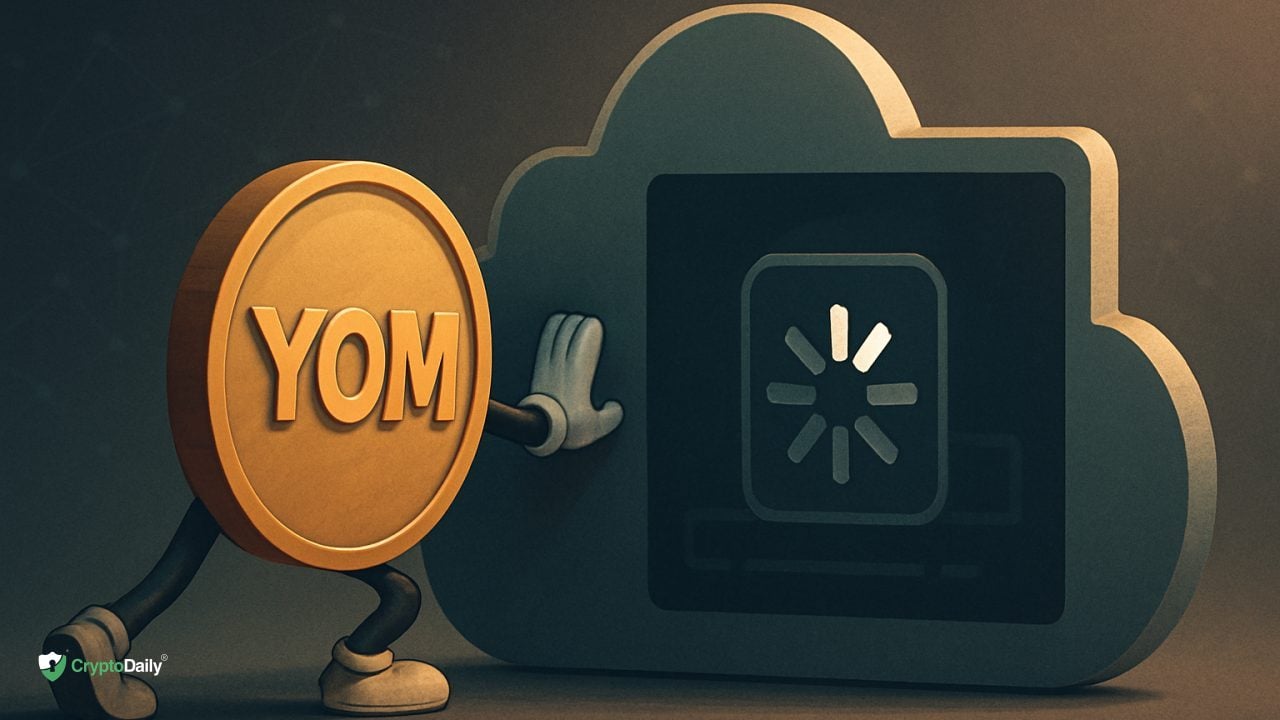
Cloud gaming has always promised high-fidelity play without expensive hardware. Decentralization adds a new twist: could a token actually coordinate compute, bandwidth, and payments better than a centralized platform? YOM’s upcoming launch puts that question in focus.
This article explains how a decentralized streaming stack might work for gaming, where a token could add genuine utility, what to test for in real sessions, and how YOM’s launch schedule and early metrics fit into the picture. You’ll also find comparisons to centralized services and other Web3 media networks, plus a practical checklist to avoid common pitfalls.
Quick Answer
Decentralized streaming can become a real token use case if the network consistently delivers low latency at scale, routes users to reliable GPU nodes, and aligns incentives for players, creators, and operators. YOM is positioned to test this thesis in 2026, with public metrics and launchpad activity drawing attention, but users should treat timelines and performance claims as provisional until verified under live load.
- Potential token roles: pay-per-minute compute, bandwidth routing incentives, QoS staking, and creator revenue sharing.
- Performance is paramount: sub-40ms end-to-end latency and rapid frame recovery are table stakes for fast titles.
- Launch signals are mixed: official and partner timelines differ; verify details on primary sources before committing.
- Biggest risks: variable node quality, regional ISP constraints, smart-contract bugs, and unclear content licensing.
How does YOM’s decentralized cloud gaming actually work?
At a high level, decentralized cloud gaming splits three jobs across a network: GPU rendering on provider “rigs,” encoding and transport over the internet, and client decoding and input return from the player. A coordinating layer matches a player’s session request to an available rig close enough to keep latency acceptable. Payments can occur per minute or per frame segment, and the token can help meter usage and collateralize service guarantees.
Rather than a single data center, a decentralized network aggregates many nodes. That can mean more edge coverage but also more variance in quality. Protocols often rely on standard real-time media tech (for example, WebRTC or UDP-based transports) and add cryptoeconomic incentives on top; in practice, exact implementations vary by project, and production behavior tends to look different from test results when real traffic hits.
For YOM specifically, the public site currently highlights network activity markers such as “30,000+ Rigchecks” and an average latency of “<12ms,” which are strong directional signals but not guarantees of gameplay QoS across titles and regions (YOM (official site)). Treat these as early indicators to be validated under concurrent user load and across diverse ISPs.
What does the YOM token actually do in a real session?
A token can become more than a fundraising instrument if it is needed to start, sustain, and verify sessions. In decentralized streaming, common utility patterns emerge:
- Usage metering: micro-settlements for GPU minutes, encoder cycles, or egress bandwidth.
- QoS collateral: operators stake to win routing priority and can be penalized for chronic underperformance.
- Discovery and routing: tokenized rewards for nodes that reliably accept jobs in underserved regions or time windows.
- Creator payouts: programmable splits to developers, publishers, and rights holders when sessions monetize.
- Governance and fees: community input on fee schedules and whitelisting rules for node hardware or regions.
YOM’s specific mechanics will be defined by its contracts and client software. Until those are audited and live, assume the token’s practical value will correlate with how often it is actually used to unlock sessions, prioritize routes, and settle payouts. If everyday players can’t start or sustain a session without the token in the loop, that’s real utility; if the token sits on the sidelines, the use case weakens.
Centralized services like GeForce NOW or Xbox Cloud Gaming optimize for tight integration between compute clusters and backbone links, which helps with jitter, frame pacing, and rapid input echo. Decentralized networks trade that central control for broader coverage and marketplace dynamics, which can win in some geographies but struggle in others, especially during congestion.
YOM’s homepage currently advertises “30,000+ Rigchecks” and “<12ms” average latency (YOM (official site)). Those numbers suggest active node validation and favorable round-trip measurements in test conditions. In live gaming, however, what matters is motion-to-photon latency, consistency across 60–120 fps, and recovery from packet loss during high-action scenes. Averages can mask tail behavior.
Practical test targets for fast games include: end-to-end latency under ~40ms for responsive play, 99th-percentile frame delivery within tight bounds, and quick rerouting when a node degrades. Watch for per-title performance, because encoding choices, bitrate caps, and input sampling frequency vary.
Pro tip: Don’t judge a real-time network on a single ping figure. Compare average, 95th, and 99th percentile latency, plus the time it takes to recover from induced packet loss or a cold route change mid-session.
How do costs and incentives line up for gamers, creators, and node operators?
Cloud gaming has three economic layers: the player wants smooth sessions at a fair price, the node operator wants steady utilization above electricity and depreciation, and the developer wants distribution and monetization without losing IP control. The token can connect all three if it enforces pay-as-you-go and fairly shares proceeds.
In a decentralized setup, price discovery can happen via dynamic rates per minute or per GB egress, while QoS staking reduces the risk of bait-and-switch nodes. Creators may opt-in to revenue splits on token-denominated session fees, with on-chain accounting improving transparency. The open question is whether token volatility and gas costs meaningfully erode margins; efficient L2s and batched micro-payments can help.
The table below contrasts typical characteristics of centralized cloud gaming with Web3 media projects that emphasize decentralized video or compute. It frames how a gaming-focused network like YOM could position itself, without assuming unannounced features.
Category Centralized Cloud Gaming YOM (decentralized, gaming-focused) Livepeer / Theta (decentralized video) Architecture Data-center clusters, managed backbone Distributed GPU nodes with protocol routing Distributed transcoders/relays for video Primary workload Interactive game streaming Interactive game streaming VOD/live video delivery; less interactivity Token role None Potentially metering, QoS staking, payouts Work rewards, staking, video distribution QoS control High (central control) Variable (market-based, policy-driven) Variable (video-first, not input echo) Content licensing Platform-driven contracts Creator opt-in, programmable splits Publisher/creator opt-in Scale bottleneck Capex and regional coverage Node quality variance, routing efficiency Throughput, relay density
For gaming, the hardest gap to close versus centralized incumbents is consistent interactivity under peak load. If YOM’s marketplace pricing reliably attracts high-quality rigs close to players, it can narrow the gap; if it doesn’t, the token won’t matter.
What should you watch during YOM’s launch window?
Timelines matter because they set expectations for token utility, liquidity, and early user testing. YOM’s official homepage currently lists a Token Generation Event scheduled for 5 June 2026 at 10:00 UTC (YOM (official site)). The project also announced it would launch on the TrustSwap Launchpad on 25 May 2026 at 17:00 UTC (YOM Partnerships (official)).
A TrustSwap announcements archive summarizing YOM details showed a TGE date of 2 June 2026, a reported raise amount of $50,000, and an initial market-cap figure of about $12.04M, indicating that partners and the project published differing schedules and numbers in late May 2026 (Telemetr (TrustSwap announcements archive)). Such discrepancies are common around launches; rely on official, real-time channels before making time-sensitive decisions.
- Verify final TGE and listing times on official links the day before and the day of the event.
- Check whether gameplay tests require the token, stablecoins, or are free-to-try with optional on-chain features.
- Confirm smart-contract addresses from the project’s verified profiles before any on-chain interaction.
- Monitor whether promised features (e.g., staking, creator payouts) are live at TGE or slated for later phases.
Is it worth testing in 2026 if you’re a player or builder?
Yes—if you approach it as a performance and economics experiment, not a guaranteed upgrade over centralized services. For players, the draw is access to high-spec sessions where incumbents have limited coverage or higher prices. For indie developers, decentralized distribution with programmable payouts may open new channels.
Before you dive in, consider a small, controlled test: run a fast-action title at your normal playtime, compare responsiveness to your baseline PC or console, and record metrics over 15–30 minutes. Builders should evaluate SDK stability, session start times, and how easily revenue splits can be configured.
- Test with wired Ethernet first, then Wi-Fi, to isolate last-mile issues.
- Measure average and 99th-percentile latency; note stutters tied to ISP congestion windows.
- Try different regions or nodes to see if routing adaptively selects better providers.
- Review any staking or deposit requirements for operators before provisioning rigs.
Common Mistakes
- Confusing ping with playability: A low ping doesn’t ensure smooth input or frame pacing. Test tail latency and recovery from packet loss to gauge real playability.
- Ignoring content rights: Running unlicensed or region-restricted titles through third-party nodes may violate terms. Use titles with clear permissions and read developer policies.
- Assuming token utility on day one: Features like staking or creator payouts may roll out post-TGE. Verify what is live before locking funds or planning monetization.
- Skipping operator due diligence: If you run a node, validate power costs, GPU wear, and expected utilization; don’t rely on headline APRs without workload data.
- Overcommitting on conflicting timelines: Partner pages and official posts can disagree near launch. Confirm final dates and contract addresses on the project’s primary channels.
- Neglecting regional ISP constraints: Good nodes can’t fix bad peering. If your route hits congestion, performance will suffer regardless of on-paper metrics.
If you want ongoing coverage, analyses, and risk framing across token launches and Web3 infrastructure, visit Crypto Daily.
Frequently Asked Questions
Does a “<12ms” average latency guarantee smooth gameplay?
No. An average can hide jitter and slow frames that matter more to your experience. For fast titles, focus on 95th and 99th percentile latency, frame pacing stability, and the network’s ability to recover from transient loss.
Can I run a node with consumer-grade GPUs?
Possibly, but profitability depends on power costs, utilization, and protocol requirements. Some networks may require specific encoder support or minimum uplink bandwidth. Run a small pilot before scaling hardware commitments.
What happens if a node drops mid-session?
Well-designed systems re-route to a backup provider with state handoff. Expect a brief hiccup; if the protocol also uses QoS collateral, chronically unreliable nodes could lose priority or face penalties, improving reliability over time.
Will token volatility affect session pricing?
It can. Networks often peg rates to stable assets or periodically update token-denominated prices. If prices float purely in the native token, volatility may make budgeting harder for both players and operators.
Are there legal concerns for streaming certain games?
Yes. Publishers set terms for where and how their titles can be streamed. Decentralized infrastructure doesn’t override IP rights; use whitelisted titles and follow developer policies to avoid takedowns or account actions.
Ask whether claims were measured under concurrency, across multiple ISPs, and during peak hours. Replicate with your own tests and look for third-party benchmarks rather than relying solely on marketing figures.
If launch dates conflict, which should I trust?
Default to the project’s official website and verified social channels on the day of launch. Partner launchpads and archives are useful context, but final times and contract addresses should match the project’s primary sources.
Disclaimer: This article is provided for informational purposes only. It is not offered or intended to be used as legal, tax, investment, financial, or other advice.