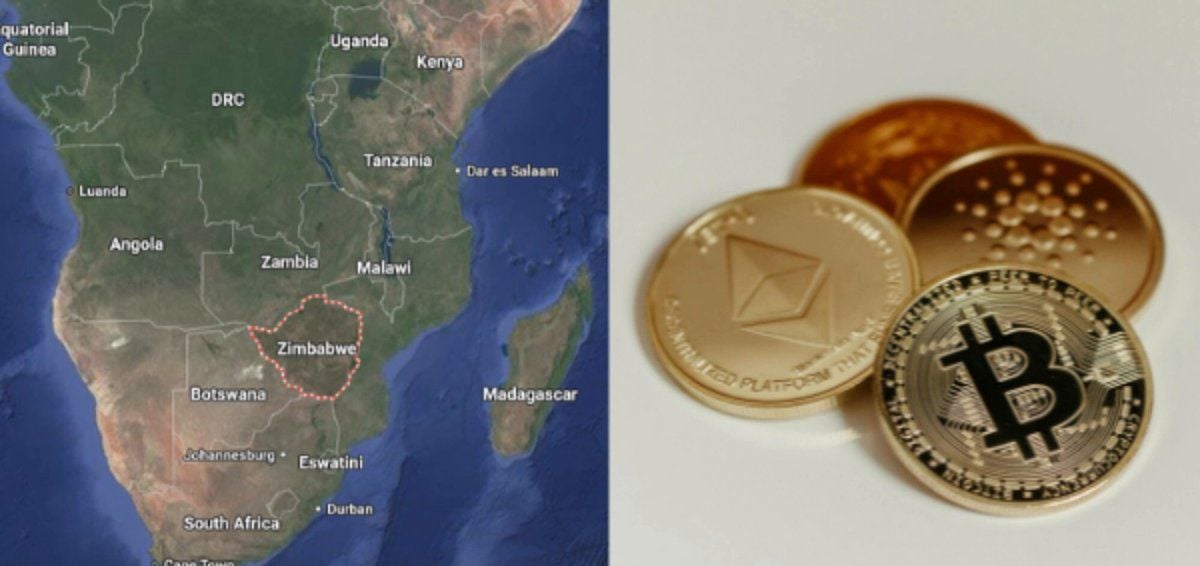
From Banking Ban to Formal Rulebook Zimbabwe has taken its most significant step yet toward bringing its crypto market into the open. Every business touching virtual assets must now register
Zimbabwe has taken its most significant step yet toward bringing its crypto market into the open. Every business touching virtual assets must now register with the country's Financial Intelligence Unit, paying a $500 annual fee. Operating without registration is a criminal offense.
The move formalizes a market that has spent years in the shadows. In 2018, the Reserve Bank of Zimbabwe directed banks to cut ties with crypto businesses, effectively pushing an entire industry onto peer-to-peer platforms and social media. Rather than disappearing, that market survived and grew through successive currency crises, with traders using $BTC and stablecoins as a hedge against hyperinflation and a substitute for hard currency they could not access through formal channels.
The new framework, introduced through Finance Act No. 7/2025, establishes a dual-layered compliance structure that spans both anti-money laundering standards and securities regulations. Operators must satisfy requirements from two bodies: the Financial Intelligence Unit and the Securities and Exchange Commission of Zimbabwe.
Africa's Regulators Are Paying Attention
Zimbabwe is not acting in isolation. Across Sub-Saharan Africa, regulators are moving to bring crypto activity under formal oversight, driven in part by the sheer scale of the market they can no longer ignore. According to Chainalysis, the region received over $205 billion in on-chain value between July 2024 and June 2025, a 52% increase from the prior year, making it the third-fastest-growing crypto economy in the world behind Asia-Pacific and Latin America.
That volume is largely retail-driven. Inflation, limited access to dollars, and an underdeveloped banking sector have made crypto a practical financial tool for millions across the continent, not just a speculative asset. Zimbabwe's own history reflects that dynamic precisely. Local traders have welcomed the regulatory shift, with Reuters reporting that many are relieved to operate without the risk of being treated as criminals.
For businesses that comply, the upside extends beyond legal certainty. Registered firms gain access to regulatory sandboxes for testing tokenized assets and tools such as ZimDigital ID for customer verification. Non-compliant operators, by contrast, face fines and potential imprisonment under the updated rules.
The formalization of Zimbabwe's crypto sector marks a broader continental shift: regulators who once viewed digital assets with suspicion are now writing the rules that will govern them.
SourcesVirtual Assets and Cryptocurrencies Finally Come Out of the Closet in Zimbabwe, Mushoriwa Moyo Corporate AttorneysSub-Saharan Africa Shows Strong Crypto Retail Activity, ChainalysisZimbabwe's New Tech Regulations: What Changes for Crypto, Mobile Money, and Startups in 2026, Tech In Africa