178 Organizations Exposed: Is Third-Party Software Crypto's Weak Link? A crypto wallet hack that began inside a website testing tool has exposed 178 organizations, including Ledger, Zoom, HSB
178 Organizations Exposed: Is Third-Party Software Crypto's Weak Link?
A crypto wallet hack that began inside a website testing tool has exposed 178 organizations, including Ledger, Zoom, HSBC, Equifax, CNN, Salesforce and IKEA. Researchers at Report URI traced the attack to November 16, when malicious JavaScript reached visitors through Optimizely, a platform those companies trusted.
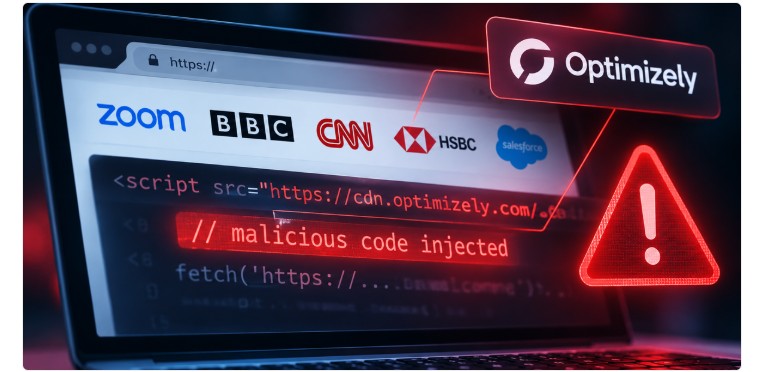
The code swapped wallet addresses, skimmed card details and delivered exploit kits aimed at iPhones, according to the Report URI investigation. The sums stolen so far look small, yet the method raises bigger questions about who controls the scripts running on payment pages.
How the Optimizely Cyberattack Reached 178 Organizations in One Day
Optimizely Web loads a script from the company’s own servers on every page of a customer site. Researcher Scott Helme tested 1,611 of those scripts and found 188 infected, linked to 178 organizations.
Optimizely later confirmed that attackers entered through a flaw in the signup flow and gained write access. They placed a loader in the Project JavaScript field, a section built for custom code.
Because the rest of each file stayed intact, the domain and certificate still looked legitimate. Banking and finance suffered most, with 32 organizations, while BBC, GitLab, Ledger and Air France-KLM also appeared on the list.
Once running, the loader pulled a payload called track.js, which was rebuilt about 26 times during the day. Its main job was to replace crypto addresses with ones the attackers controlled.
It scanned page text, forms, links, the clipboard, outgoing requests and the iOS share sheet. This method of crypto wallet theft covered several networks:
The code checked that an address was valid before swapping it, usually near payment wording. Later versions also skimmed card details from forms owned by the sites, though hosted fields from Stripe and Adyen were not targeted.
Readable cookies and screenshots were taken as well, and iOS exploit kits were sent to iPhones and iPads.
Wallet Hack Update: How Much Crypto Did the Attackers Receive?
The money side looks modest so far. Wallet tracking in the same report shows:
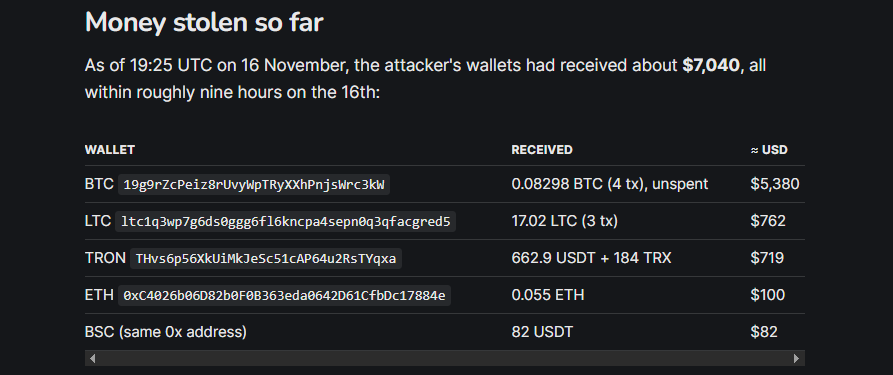
Total received by 19:25 UTC: about $7,040
Largest share:roughly 0.083 BTC, near $5,380
Other assets: Litecoin, ETH, USDT and TRX on TRON, and USDT on BSC
Exchange transfers: Some funds were transferred to exchange-linked wallets from about 13:03 UTC.
Those figures cover roughly nine hours of activity. One TRON wallet dates to March 2026, so not every deposit necessarily belongs to this campaign. Stolen cards, cookies and any successful iPhone compromises have not been quantified, and the full losses may prove higher.
How Are Optimizely and Affected Companies Responding?
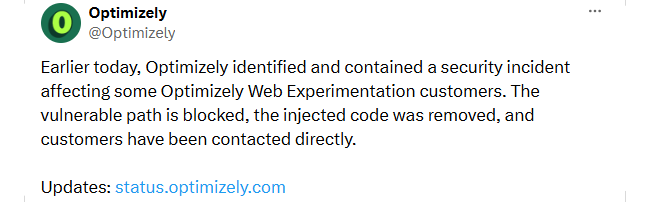
Optimizely says it closed the flaw, removed the injected code, secured accounts and notified customers. By about 21:52 UTC on November 16, only one of the 188 infected scripts remained.
Source: X Official
Salesforce and Equifax have disabled the scripts and opened investigations. Even so, the real number of victims could top 178, since researchers could only test the scripts they located in time.
What the Attack Reveals About Crypto Security and Third-Party Scripts
The crypto hack episode shows that digital asset security now extends beyond wallets and exchanges to every script on a payment page.
As Matt’s analysis points out, trusted third-party code can turn hostile without any change to a site’s own code. Websites can strengthen their security through measures such as:
Audit Project JavaScript fields
Rotate credentials and access
Treat November 16 card entries and readable cookies as exposed
Run Content Security Policy monitoring
Keep card entry in hosted payment fields
Senders can protect transfers by comparing a pasted address with a trusted source before confirming.
The next crypto news from the affected firms will decide how serious this episode was. Further disclosures could clarify how many visitors were exposed, and whether the $7,040 tally was the full story or only the first count.
Disclaimer: This article is for informational purposes only and does not constitute financial or investment advice. Crypto markets carry significant risk. Always do your own research before making any investment decisions.