A total of 250,000,000 USDC was minted at the USDC Treasury, a move that signals fresh stablecoin supply entering the pipeline and has drawn attention from on-chain watchers tracking liquidit
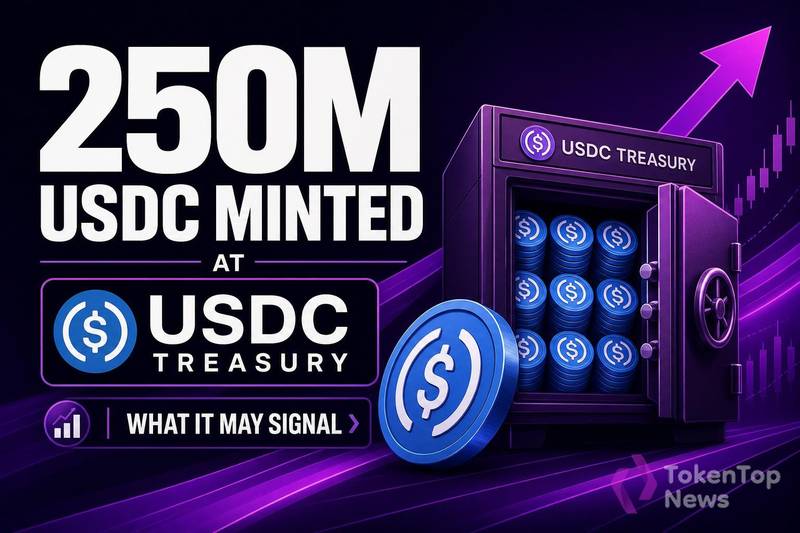
A total of 250,000,000 USDC was minted at the USDC Treasury, a move that signals fresh stablecoin supply entering the pipeline and has drawn attention from on-chain watchers tracking liquidity conditions across crypto markets.
The minting event was flagged by Whale Alert tracking data, which recorded the transaction on the Solana blockchain. A "mint" in stablecoin terms means new tokens have been created by the issuer, in this case Circle, at the treasury level.
Minting does not mean the tokens have immediately entered circulation on exchanges or been deployed into trading pairs. Newly minted USDC typically sits in treasury or intermediary wallets until it is distributed to meet redemption demand, fulfill institutional orders, or supply liquidity across supported chains.
Why Traders Watch Large Treasury Mints
Large stablecoin mints are closely monitored because they can precede increased buying activity across crypto markets. When fresh USDC enters exchanges, it expands the pool of dollar-denominated liquidity available for purchasing tokens like Bitcoin and Ethereum.
However, a mint does not guarantee bullish price action. The newly created supply may simply reflect routine operational activity, such as pre-staging tokens for expected client redemptions or rebalancing supply across blockchains. Similar large-scale wallet movements, like a recently created wallet withdrawing $3.43 million from Binance, often generate speculation that outpaces the actual market impact.
USDC serves as a core settlement and trading pair asset across centralized and decentralized exchanges. Its role in DeFi protocols, cross-border payments, and institutional trading means that supply changes at the treasury level can ripple across multiple sectors of the market.
Minting vs. Circulation in Stablecoin Supply Mechanics
The distinction between minted supply and circulating supply is critical for interpreting events like this one. Minted tokens exist on-chain but may not yet be "in the wild," meaning they have not been transferred to exchanges, protocols, or end users.
Circle, the issuer behind USDC, maintains reserves that back each token on a one-to-one basis with U.S. dollar-denominated assets. Minting new tokens generally corresponds to new dollar deposits or anticipated demand, not unbacked creation. The on-chain record of this transaction is visible on the Solana explorer.
ON-CHAIN DATA
- Transaction: 2acxGT3...FyRm
- Amount: 250,000,000 USDC
- Chain: Solana
- Action: Mint at USDC Treasury
Readers tracking stablecoin flows should watch for follow-on transfers from the treasury wallet to exchange deposit addresses or DeFi protocols. Those subsequent movements, rather than the mint itself, would more directly indicate where the new supply is headed and what demand it is filling. The broader trend of institutional capital flowing into crypto infrastructure, including developments like major banks planning tokenized deposit systems, provides additional context for why stablecoin issuance volumes continue to grow.
Large aggregated inflows to exchanges, such as recent BTC inflows recorded at Binance, are the type of downstream activity that would confirm whether this newly minted USDC is being deployed into active trading.
Disclaimer: This article is for informational purposes only and does not constitute financial or investment advice. Cryptocurrency and digital asset markets carry significant risk. Always do your own research before making decisions.
Read original article on tokentopnews.com