The chipmaker resolves claims it understated how much of its sales came from cryptocurrency mining demand. Nvidia has agreed to a $290 million settlement resolving claims that it misrepresent
The chipmaker resolves claims it understated how much of its sales came from cryptocurrency mining demand.
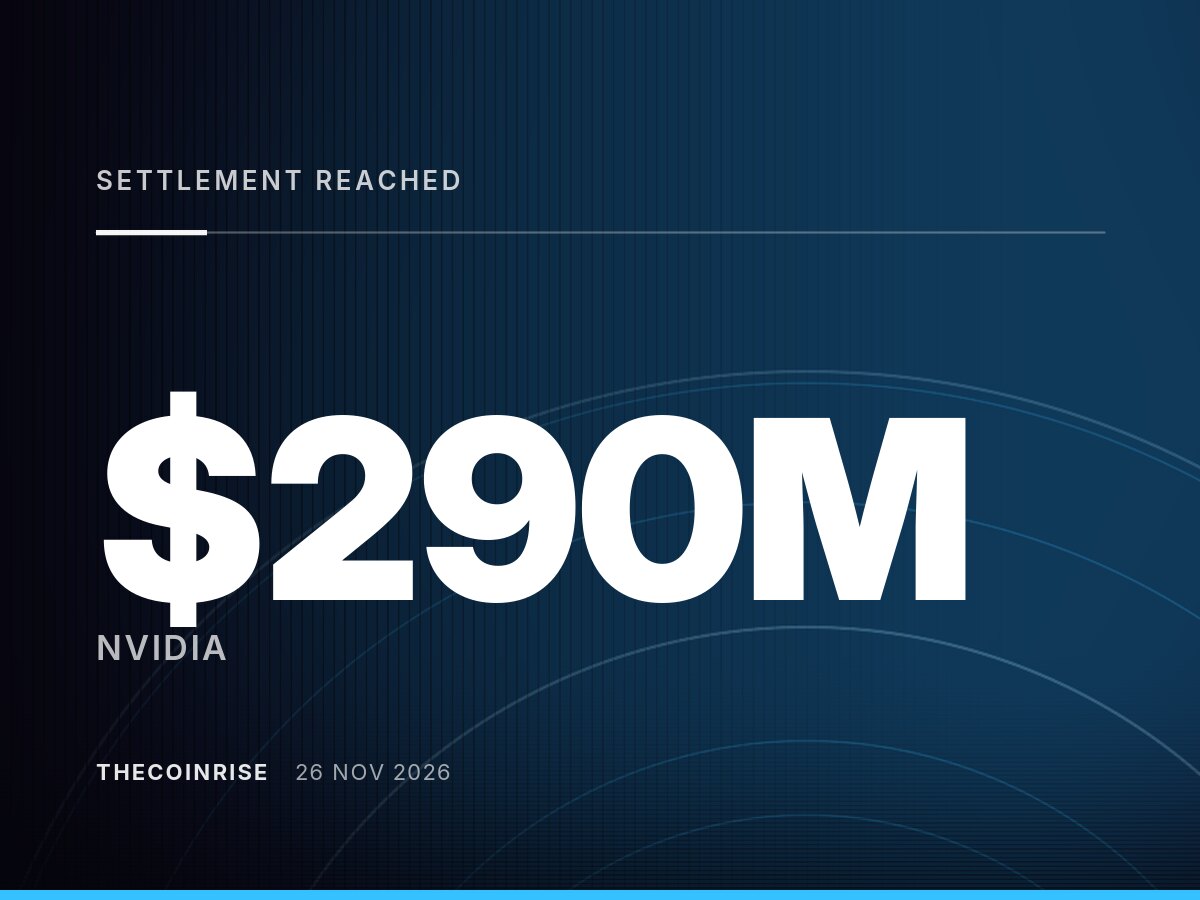
Nvidia has agreed to a $290 million settlement resolving claims that it misrepresented the extent to which cryptocurrency mining drove its sales, according to reports from CryptoBriefing, Cointelegraph and The Block. The settlement addresses allegations that the company's public disclosures did not fully reflect how much of its graphics processing unit revenue came from crypto miners rather than gamers or other end users.
The story in numbers
Settlement amount$290 millionCryptoBriefing
Understated crypto-related GPU sales$1.1 billionCointelegraph
Stock drop after revenue warning28.5%Cointelegraph
Legal fees sought by plaintiffs' lawyers$62 millionCryptoBriefing
Each figure as reported by the outlet named under it.
The dispute centers on a period when demand from cryptocurrency miners surged, pushing up sales of high-performance GPUs originally marketed for gaming and computing applications. Critics argued that Nvidia's reporting blurred the line between these two revenue streams, making it harder for investors to gauge the company's exposure to volatile crypto markets.
GPU makers like Nvidia found themselves at the center of crypto market cycles for years. When mining demand spiked, graphics card shortages followed, and gamers often struggled to find hardware at standard prices. When crypto prices fell, demand for mining equipment collapsed quickly, creating sharp swings in chipmaker revenue that were not always clearly broken out in financial statements.
How the Nvidia crypto-mining disclosure case unfolded
- August 10, 2017Start of the class period covered by the lawsuit
- November 15, 2018End of the class period, following Nvidia's revenue forecast cut
- March 2021District court dismissed the shareholder suit
- August 2023Appeals court reinstated key claims against Nvidia
- December 2024US Supreme Court dismissed its review without ruling on the merits
- March 2026Case certified as a class action
- Feb. 4, 2027Hearing scheduled on preliminary approval of the settlement
Sources: Coin Edition, Cointelegraph, CryptoBriefing, Decrypt
The $290 million figure represents a substantial settlement sum, even for a company of Nvidia's size. It signals the seriousness with which the underlying disclosure claims were treated by those pursuing the matter. Neither the specific terms of the settlement nor details of any admission of wrongdoing were included in the reports reviewed.
The Block's report placed the settlement within a broader context, noting it arrived amid separate turmoil involving Nvidia chief executive Jensen Huang. The report did not detail the nature of that turmoil, but its mention alongside the settlement suggests the company faced multiple points of scrutiny simultaneously.
Nvidia has grown into one of the most closely watched companies in global markets, driven largely by demand for artificial intelligence computing hardware. Its earlier history with cryptocurrency mining remains a notable chapter, given how closely tied its revenue once was to the fortunes of the crypto industry. This settlement revisits that period and closes out a dispute over how transparently that exposure was communicated to investors.
The crypto mining sector itself has evolved considerably since the period in question. Changes to how major blockchains validate transactions, along with shifting mining economics, have altered the relationship between chipmakers and crypto demand. Even so, the settlement serves as a reminder of how intertwined traditional technology companies and digital asset markets have become over the past decade.
New to this? The short explainer
What is a securities class action? It's a lawsuit where a group of shareholders who bought a company's stock during the same period join together to sue over the same alleged wrongdoing, usually a claim that the company misled investors. Rather than each shareholder suing separately, the court lets one case represent everyone in that group, called the 'class'. If the parties settle, any payout is typically shared among class members after lawyers' fees are deducted, and the company does not have to admit fault.
Settlement size versus potential damages at trial
Agreed settlement$290M
Estimated maximum damages at trial$2.06B
Source: Decrypt
Market Impact
The settlement is unlikely to materially affect Nvidia's current business, given the company's shift toward artificial intelligence hardware as its dominant revenue driver. However, it may renew scrutiny of how technology companies disclose crypto-related revenue streams more broadly, particularly for firms that supply hardware used in both consumer and crypto mining markets.
For the broader crypto industry, the case underscores ongoing regulatory attention to transparency around digital asset exposure, even for companies that do not directly hold or trade cryptocurrencies. Investors may watch for whether other hardware manufacturers face similar disclosure questions tied to past mining demand cycles.
Our readAnalysis by the AltcoinGordon desk. Opinion, not reporting.
What it means. The deal closes out a years-long dispute over whether Nvidia was clear enough with investors about how much of its gaming GPU revenue actually came from crypto miners. It mainly matters for people who held Nvidia stock during the 2017-2018 window, and for how chipmakers disclose cyclical, hard-to-isolate demand sources going forward.
What it does not show. Nvidia has not admitted wrongdoing, and the settlement still needs final court approval, so the underlying disclosure allegations remain unresolved as a matter of law.
What to watch next
- The Feb. 4, 2027 hearing on preliminary approval
- How much of the $290 million the court allows for legal fees
- Whether final approval alters the distribution to class members
The $290 million settlement closes a chapter tied to Nvidia's historical ties to crypto mining demand, even as the company's focus has shifted firmly toward artificial intelligence computing.
Frequently Asked Questions
What did Nvidia agree to pay in the settlement?
Nvidia agreed to a $290 million settlement, according to reports from CryptoBriefing, Cointelegraph and The Block.
What were the allegations behind the settlement?
The claims centered on allegations that Nvidia did not adequately disclose how much of its revenue came from cryptocurrency mining demand rather than other uses of its GPUs.
Does this settlement affect Nvidia's current business?
The reports did not indicate any impact on Nvidia's ongoing operations, which now center heavily on artificial intelligence computing hardware.
Was Nvidia's CEO involved in the issue?
The Block reported the settlement occurred amid separate turmoil involving CEO Jensen Huang, though specific details of that situation were not provided.
Update 26 Nov 2026, 08:19 UTC · added by Coin Edition, CoinGape, Crypto News Australia, Decrypt
Decrypt reports the lawsuit dates to 2018 and centers on alleged misstatements about gaming GPU revenue tied to crypto miners during the 2017-2018 boom, with Nvidia denying wrongdoing; the $290 million payout equals roughly 14% of the approximately $2.06 billion the plaintiffs’ expert estimated the class could have won at trial. Crypto News Australia notes the case had run for eight years and separately named CEO Jensen Huang as a defendant. Coin Edition adds that the settlement still requires court approval.
Originally reported by AltcoinGordon, written by AltcoinGordon Desk. Republished with permission.
View the original on AltcoinGordon →
The post $290 Million Settlement Reached Over Nvidia’s Crypto Mining Disclosures appeared first on TheCoinrise.com.