3 Best Cryptos for Staking in 2026 — ETH, BNB, POL
ETH: Strong decentralization, liquid staking options, and fee-driven rewards attract long-term investors. BNB: Simple staking process and Binance ecosystem support offer convenient passive in
A
AnonymousCryptoCompass newsroom
July 16, 2026
3 min read
NEWS
CryptoCompass editorial visual for altcoins coverage.
Staking remains one of the simplest ways to earn passive income from cryptocurrency holdings. Instead of leaving digital assets idle, investors can lock tokens and receive regular rewards. Every network offers different yields, requirements, and risks. Choosing the right option depends on investment goals and technical experience. Ethereum, Binance Coin, and Polygon continue to rank among the strongest staking choices for 2026 because each network combines steady rewards with proven ecosystems.
Ethereum (ETH)
Source: Trading View
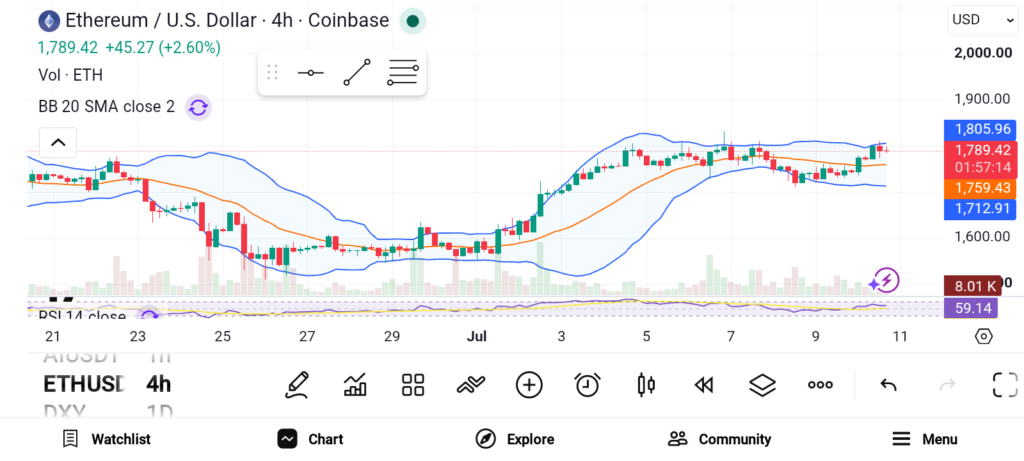
Ethereum remains the leading choice for investors seeking long-term security and decentralization. Current staking rewards average about 2.71% annual percentage rate. Rewards come from transaction fees and new token issuance. That structure creates returns supported by real network activity instead of relying only on inflation. Solo staking appeals to experienced users who value complete control. Running a validator requires exactly 32 ETH and dedicated hardware. Technical knowledge also remains essential because regular maintenance keeps validators running correctly. Many investors prefer a simpler alternative through liquid staking services. Platforms such as Lido provide stETH after deposits, allowing investors to maintain liquidity while earning staking rewards. That approach removes the large capital requirement while offering greater flexibility.
Binance Coin (BNB)
Source: Trading View
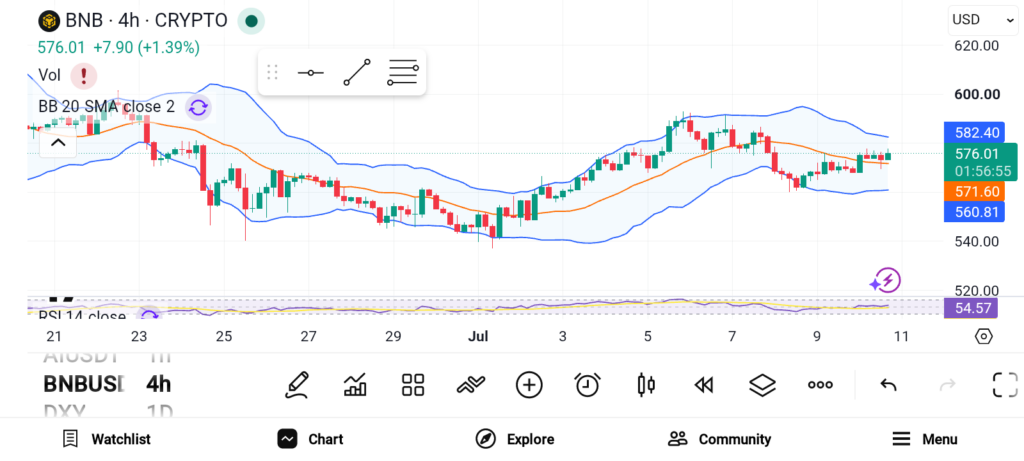
BNB offers a straightforward staking experience for investors already using the Binance ecosystem. Current staking rewards average around 1.5% annually. However, nominal yields tell only part of the story. Real returns become lower after accounting for token inflation. Comparing both figures helps investors understand actual purchasing power growth. Most users choose direct staking through Binance because the platform automatically manages validator selection. That process removes technical complexity while keeping participation simple. More experienced users can also stake directly through Binance Smart Chain validators. That option provides greater control while supporting self-custody for digital assets.
Polygon (POL)
Source: Trading View
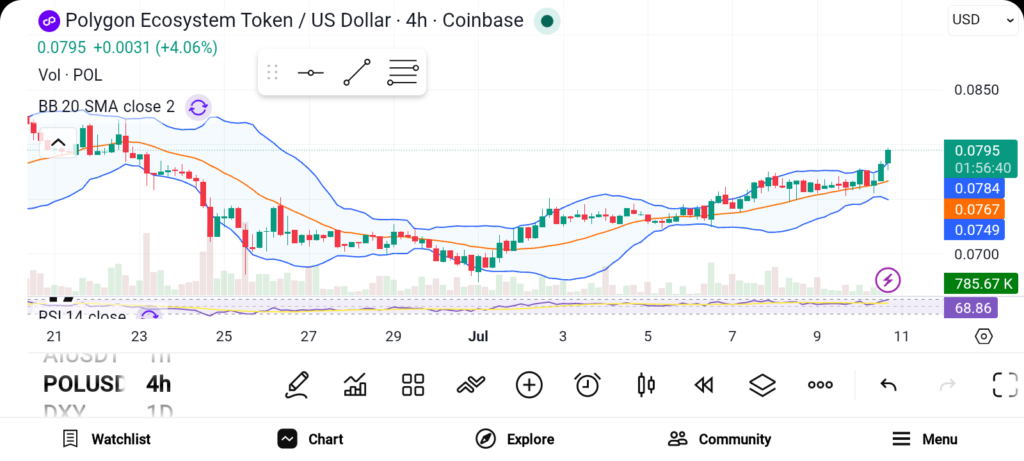
Polygon remains another attractive staking choice for investors seeking moderate rewards. Current staking returns average roughly 3.4% annual percentage rate. Rewards come from token issuance on the Polygon Proof of Stake network. Total staking participation influences reward levels, causing annual returns to change over time. Delegating tokens through the official Polygon staking dashboard remains the standard method. This process applies only to the Polygon Proof of Stake chain. Other Polygon products follow different staking models with separate reward structures. Investors should also understand the withdrawal process before staking. The unbonding period lasts around three to four days, depending on checkpoint timing.
Ethereum, Binance Coin, and Polygon each offer valuable staking opportunities for different investors. Reward rates, liquidity, and technical requirements vary across every network. Careful research helps investors choose the option matching personal goals. A thoughtful staking strategy can generate steady passive income throughout 2026.
Bybit and Franklin Templeton announced a partnership letting institutional clients pledge Franklin Templeton’s tokenized money-market fund shares as collateral on Bybit The tokenized shares,
Stablecoin issuer Tether said it helped authorities freeze nearly $550 million in Iran-linked USDT during 2026, as a Senate Democrat called for an investigation into the stablecoin issuer on
Shiba Inu slipped 2.6% in 24 hours. Yet 3,300 fresh holders still joined in two weeks. That tug of war frames this Shiba Inu price prediction. Shiba Inu launched in August 2020 as an Ethereum


 Source: Trading View
  Source: Trading View
 Source: Trading View