The Numbers Behind the Biggest Bitcoin ETF Exodus on Record The U.S. spot Bitcoin ETF market has been through rough patches before, but nothing quite like this. Over the past 30 days, investo
The Numbers Behind the Biggest Bitcoin ETF Exodus on Record
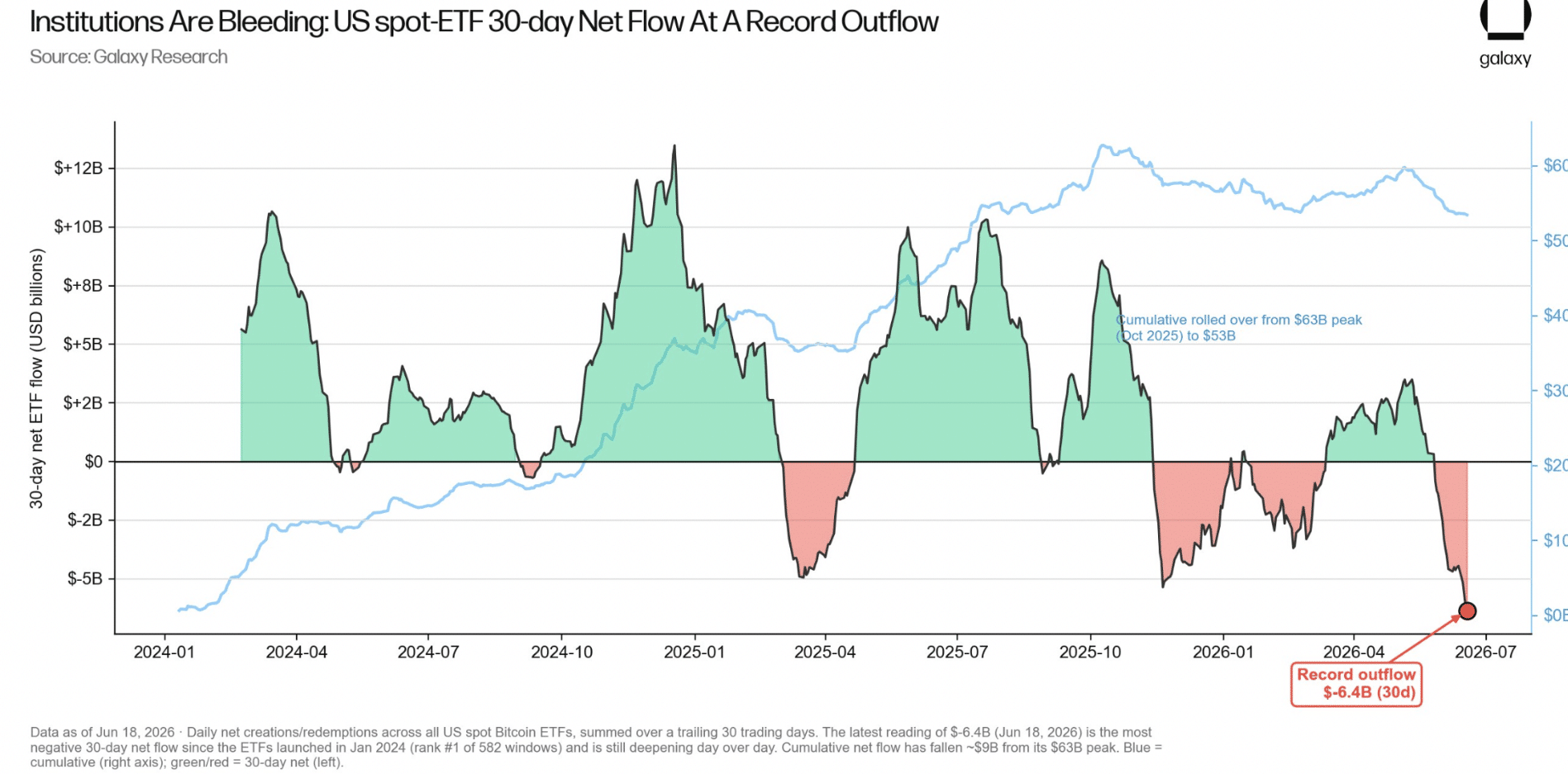
The U.S. spot Bitcoin ETF market has been through rough patches before, but nothing quite like this. Over the past 30 days, investors pulled a staggering $6.35 billion out of spot Bitcoin ETFs, the largest net outflow recorded across all 582 rolling 30-day periods that Galaxy Research tracks. To put that in perspective, this is not a minor correction or a brief panic sell-off. This is institutional capital walking out the door in a way the market has not seen since these products launched in January 2024.
The scale of the Bitcoin ETF outflows is drawing comparisons to some of the more turbulent moments in traditional finance, similar to when investors fled bond funds during rapid interest rate hikes. The mechanics are different, but the psychology is remarkably similar: when prices fall and uncertainty creeps in, even the most committed institutional players start reassessing their exposure.
Bitcoin Price Decline Triggered the Capital Flight
Price and sentiment tend to move together in crypto markets, and this episode is no different. Bitcoin dropped from approximately $76,000 in early May to around $64,000 at the time of reporting, a decline that essentially lit the fuse on what became a month-long outflow cycle. As Bitcoin slid lower, confidence among ETF holders eroded, prompting a wave of redemptions that further weighed on the market.
This kind of feedback loop is worth understanding clearly. When Bitcoin ETF outflows accelerate, it reduces one of the key structural demand pillars supporting BTC prices.
These products brought a large pool of institutional and retail capital into Bitcoin without those investors ever holding the underlying asset directly. When that capital exits, the demand signal it sent during inflows gets reversed. The implication going forward is that sustained outflows could continue to suppress short-term price recovery, at least until new buyers step in with conviction.
BlackRock IBIT Takes the Hardest Hit Among Bitcoin ETF Products
Not all Bitcoin ETF products bled equally during this period.
BlackRock’s IBIT, widely regarded as the flagship spot Bitcoin ETF since launch, recorded the heaviest outflows of the bunch, with $4.51 billion leaving the fund over the 30-day window. Given that IBIT had attracted enormous inflows in its early months, becoming one of the fastest-growing ETFs in Wall Street history, watching that capital rotate out is a notable shift in narrative.
On the flip side, Morgan Stanley’s MSBT proved to be a quiet winner in a chaotic month, drawing $1.25 billion in inflows while its peers were hemorrhaging capital. That divergence matters because it shows investors did not abandon Bitcoin ETF exposure entirely. Some moved it around, which could reflect differences in fee structures, distribution channels, or client mandates rather than a pure flight from crypto risk.
Ethereum ETFs Follow a Similar Painful Script
The pain in Bitcoin ETF markets was not isolated to BTC. Spot Ethereum ETFs recorded $1.149 billion in net outflows over the same period, mirroring the bearish trend that gripped the broader digital asset ETF landscape. BlackRock’s ETHA once again bore the brunt of the exodus, posting the largest individual outflows among Ethereum products, while Fidelity’s FETH managed to attract the most inflows on the ETH side of the ledger.
The parallel performance between Bitcoin and Ethereum ETF outflows is telling. It suggests this is not a rotation from one digital asset to another but rather a broader risk-off move among investors who entered crypto through regulated fund vehicles and are now reducing exposure in response to falling prices.
Solana, XRP, and HYPE ETFs Carve Out a Different Path
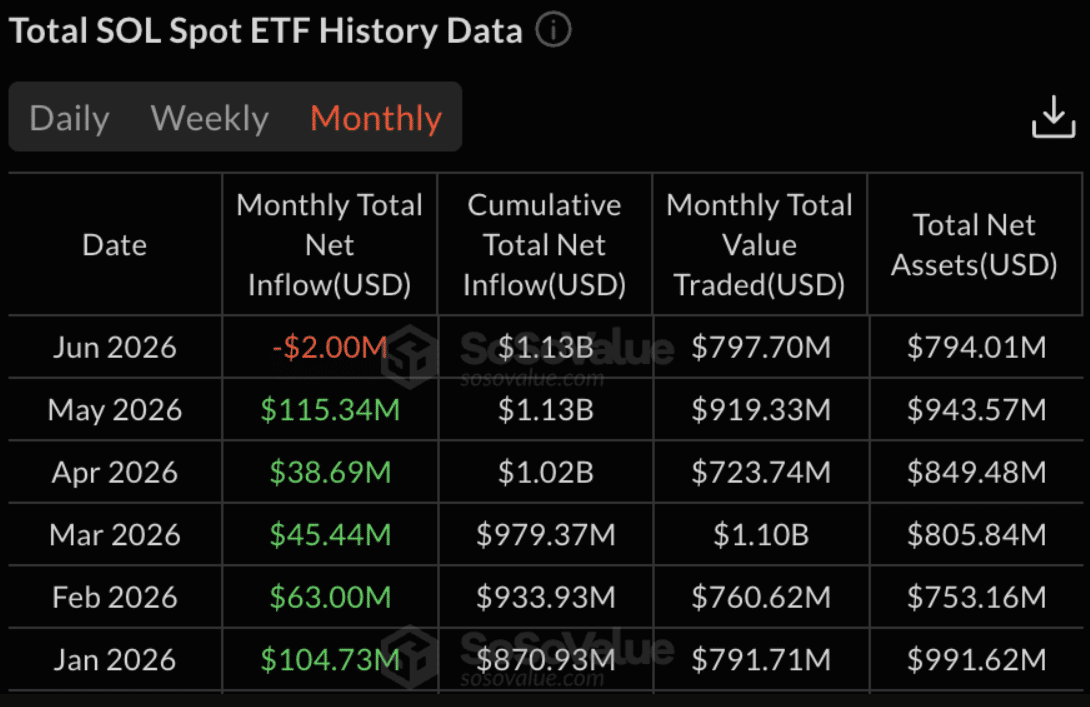
While Bitcoin ETF and Ethereum ETF investors were heading for the exits, several other digital asset ETF products quietly posted positive flows during the same stretch. Solana ETFs brought in $113.34 million in inflows over 30 days, a modest but meaningful signal that institutional appetite for alternative layer-one blockchains remains intact. XRP ETFs and HYPE ETFs also recorded net positive flows, suggesting some investors used the broader market weakness as an opportunity to build positions in assets they view as undervalued.
This divergence across product categories reflects a maturing crypto ETF market where not every asset moves in lockstep. Portfolio managers are beginning to treat digital assets with more nuance, using pullbacks in Bitcoin ETF products as potential entry points into smaller-cap alternatives.
Franklin Templeton Files for a Bitcoin Dividend Reinvestment ETF
Even as the outflow data painted a grim picture, Franklin Templeton moved in the opposite direction entirely. The firm submitted a proposal to the U.S. Securities and Exchange Commission for the Franklin US Equity Bitcoin DRIP Index ETF, a product designed to take stock dividends and redirect them into Bitcoin exposure. The proposed fund would track the VettaFi US Large-Cap 500 Bitcoin DRIP Index, combining traditional equity income with digital asset growth in a single vehicle.
The timing of the filing, coming directly during the worst 30-day Bitcoin ETF outflow on record, is either boldly contrarian or a calculated long-term bet that institutional demand for Bitcoin ETF exposure will recover. Given Franklin Templeton’s track record in traditional markets, it is probably worth paying attention to.
Conclusion
The $6.35 billion in Bitcoin ETF outflows over the past 30 days is a record no one wanted to set, and it reflects genuine pressure on crypto markets from falling prices and shifting investor sentiment. BlackRock’s IBIT absorbed the worst of it, while Morgan Stanley’s MSBT stood out as the unexpected standout.
Ethereum ETFs followed Bitcoin’s downward trend, though products tied to Solana, XRP, and HYPE managed to attract fresh capital. With Franklin Templeton pressing ahead with a new Bitcoin ETF filing, the longer-term institutional thesis for these products appears intact, even if the short-term picture is challenging.
Frequently Asked Questions
What caused the record Bitcoin ETF outflows in the past 30 days?
Bitcoin’s price fell from roughly $76,000 in early May to around $64,000, which eroded investor confidence and triggered a wave of redemptions across spot Bitcoin ETF products. The outflows then created additional downward pressure on prices, reinforcing the cycle.
Which Bitcoin ETF saw the most outflows?
BlackRock’s IBIT recorded the largest individual outflows, totaling $4.51 billion during the 30-day period.
Which ETF performed best during the Bitcoin ETF outflow period?
Morgan Stanley’s MSBT attracted $1.25 billion in inflows, making it the top-performing Bitcoin ETF product during the same stretch.
Did Ethereum ETFs also experience outflows?
Yes. Spot Ethereum ETFs recorded $1.149 billion in outflows over the same period, with BlackRock’s ETHA posting the largest losses among ETH products.
Glossary of Key Terms
Spot Bitcoin ETF: An exchange-traded fund that holds actual Bitcoin as its underlying asset, allowing investors to gain BTC price exposure through traditional brokerage accounts without directly owning cryptocurrency.
Net Outflows: The total dollar amount withdrawn from a fund after accounting for new inflows. A negative net flow means more money left the fund than entered it.
Institutional Capital: Money managed by large financial organizations such as asset managers, banks, pension funds, and hedge funds, as opposed to individual retail investors.
Risk-Off Positioning: A market behavior pattern where investors reduce exposure to higher-risk assets like cryptocurrencies or equities and move toward safer alternatives such as cash or government bonds.
Sources
galaxy
SEC
Read More:30 Days, $6.35B in Outflows: What the Bitcoin ETF Data Is Really Saying">30 Days, $6.35B in Outflows: What the Bitcoin ETF Data Is Really Saying