The federal government of Nigeria has announced a $1 trillion Gross Domestic Product target by 2030. At the core of the strategy is to diversify the economy and reduce dependence on crude oil
The federal government of Nigeria has announced a $1 trillion Gross Domestic Product target by 2030. At the core of the strategy is to diversify the economy and reduce dependence on crude oil sales, the major revenue driver. Other than boosting agriculture, the next key possible growth driver is technology and the digital economy.
This will mean strengthening connectivity, grooming local talent, expanding digital infrastructure and providing the key drivers for an economy that is driven by a mobile and youthful population.
Notably, over the last two decades, the digital economy has grown, currently contributing between 18% and 20% to GDP, largely driven by the ICT and telecoms sectors. With continued mobile usage, fintech expansion and internet coverage, the digital economy is predicted to increase to over 21%.
This article spotlights key tech policy that will potentially define the digital future that Nigeria seeks in 5 years:
1. The Digital Switch Over
17 years after the late and former President Umaru Yar’Adua initiated the TV switch from analogue to digital, the much-needed change is yet to happen. But that might begin on June 17, 2026.
After four major misses (2012, 2015, 2017 and 2022), Nigerians can now enjoy higher-quality HD pictures and audio, and vastly more free-to-air channels.
The Minister of Information and National Orientation, Muhammed Idris, explained that all preparations are set for the Digital Switchover (DSO) and that there’s an additional improvement to the previous transmissions that failed to launch. The Nigerian Communications Satellite Agency (NigComSat) has been making countdowns.
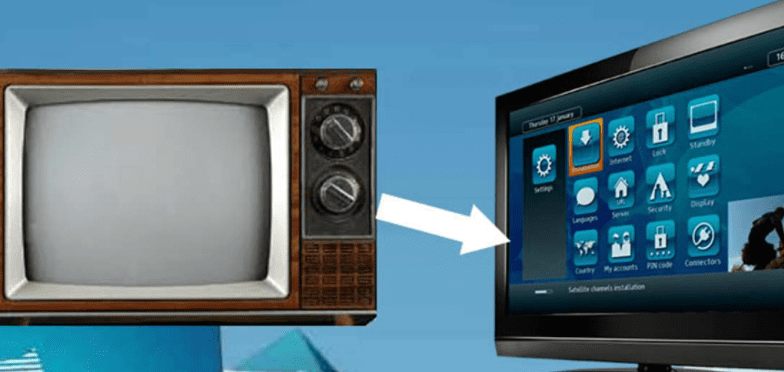
The switch is more than moving from older analogue TVs to new digital transmission. For the broader economy, especially the digital economy, it brings broadband expansion. It also frees up spectrum for more internet.
In fact, the Nigerian Broadcasting Corporation (NBC) has projects that the DSO will unlock N605.2 billion in the national ad market, including the creation of more jobs from set-up box/smart TVs, manufacturing, content production, and transmission.
Also Read: 4 times Nigeria has missed a digital broadcast switch deadline since 2012 and what happened.
2. The 2026 to 2030 Spectrum Roadmap
The NCC’s spectrum roadmap for 2026 – 2030 is another strategy at the helm of Nigeria’s digital economy transformation.
The roadmap answers how Nigeria plans to accommodate the growing number of telecom and internet subscribers. These include spectrum expansion, infrastructural upgrades, granting licenses to more players and other government intervention plans.
Nigeria’s 5G-network has been projected to increase from 13% to 50% coverage by 2030. Active internet users are expected to reach about 200 million by 2030, while average mobile data consumption per user is expected to grow from 8.5 GB to 17.7 GB.
In addition, total annual traffic is projected to shift from 14.8 million terabytes to 37 million terabytes.

The projections demand expanded spectrums to reduce internet traffic. The fact that the International Mobile Telecommunications (IMT) council has increased assignable licenses from the current 1.07 GHz to 3.8 GHz by 2030 signals possibilities.
Leveraging Starlink’s direct satellite-to-phone service is another clear path to meet this target. Direct satellite-to-phone service will enable uninterrupted internet service to areas where telecom sites are difficult to locate or maintain.
3. The Nigerian Telecommunications Policy Review
For the first time in 26 years, the Nigerian Communications Commission (NCC) has attempted to review the policy guiding the affairs and goals of the telecoms industry. The new policy, when reviewed and adopted, will aim to address changes and current realities.
Between 2000 and 2025/26, the industry has witnessed significant growth, a surge from 20,000 subscribers in 2000 to over 180 million. This has also been accompanied by rapid expansion, increased competition, multiple market shifts, multiple licence approvals and infrastructure growth.
The review comes at a time when the industry is at the centre of Nigeria’s connectivity and digital economy. It will address emerging issues ranging from providing an enabling investment environment for operators to customer protection and improving the quality of experience for subscribers.

The review will be incomplete without considering technology shifts and the emergence of artificial intelligence. Stakeholders mentioned the importance of encompassing cybersecurity, digital trust, internet governance, data protection, and investment sustainability.
Policy reviews, such as this, help align industry restructuring with the digital economy and broader national goals.
Also Read: Nigeria targets better, inclusive internet connectivity with telecoms policy review.
4. The Internet Protocol version 6 (IPv6)
IPv6 is another strategy Nigeria is accelerating to unlock more digital economy potential and digital competitiveness. While the adoption rate is low at 5%, the National IPv6 Implementation Strategy launched by the NCC aims to achieve a 30% nationwide compliance rate by 2030.
The present dependence on IPv4, a technology that’s already becoming obsolete, is pressured by a growing demand. This stresses the existing telecoms infrastructure and puts telcos in a position to achieve the impossible.
Transition to IPv6 is expected to unlock an estimated $18 billion economic value. It will provide an infinite address space needed to support 5G, the Internet of Things (IoT), AI, and smart city initiatives.
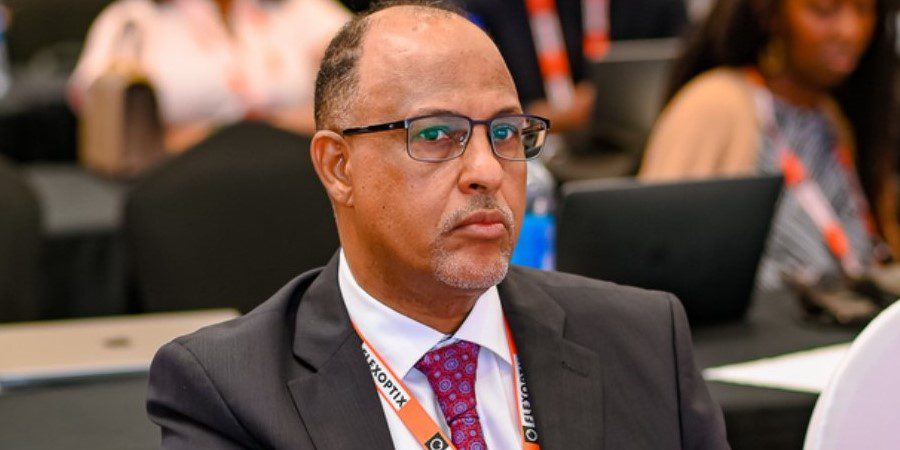
Muhammed Rudman, Chief Executive Officer of Internet Exchange Point of Nigeria (IXPN)
The re-appointment of Muhammed Rudman, Chief Executive Officer of Internet Exchange Point of Nigeria (IXPN), as the IPv6 Council Chairman continues the push for the transition and phase out the reliance on IPv4.
Beyond the transition, a major goal is to boost compliance in government platforms to 20% and telecom operators to 25% by 2027.
5. The Internet Code of Practice 2026
On February 13, 2026, the NCC released Internet Code of Practice (ICP) 2026, a revised version of the 2009 edition. The document seeks to define the rights and obligations of telecom operators in handling the rights of internet users to an open internet.
With a few modifications and additions of new sessions to address changes in trends, ICP 2026 supports the digital economy by ensuring a trusted and resilient online environment for businesses, fintechs, and Nigerians at large.
A key addition is how the Code establishes guidelines on AI and emerging technologies usage, requiring providers to notify the NCC before deploying AI tools that impact network traffic or customer engagement.

An internet user
Another significant addition is outlining procedures for digital platforms to handle unlawful content. It also introduces rules for safeguarding children online through simple-to-enable parental control tools.