After the NEAR Intents exploit, NEAR raises the bar on code checks
@near_intents is back online following a $3.8 million exploit on October 1, 2026, though several chains remain under restricted service while repairs continue. The incident has prompted @NEAR
A
AnonymousCryptoCompass newsroom
October 1, 2026
2 min read
NEWS
CryptoCompass editorial visual for markets coverage.
@near_intents is back online following a $3.8 million exploit on October 1, 2026, though several chains remain under restricted service while repairs continue. The incident has prompted @NEARProtocol co-founder @ilblackdragon to lay out a set of measures aimed at hardening the protocol against future attacks.
How the exploit unfolded
According to the NEAR Intents team, the breach stemmed from a bug in the way the NEAR Intents smart contract interacted with the Omni deposit and withdrawal infrastructure. The team confirmed a total loss of roughly $3.8 million and pledged to reimburse every affected user in full. The NEAR token fell sharply in the immediate aftermath, sliding from around $5.50 to $4.70 as investors digested the news.
Before the protocol was paused, SHIELD, an AI-powered monitoring layer built into NEAR Intents, flagged the unusual activity. SHIELD works by pulling signals from know-your-transaction providers, independent researchers, and industry partners to identify transactions linked to known exploits or suspicious behavioral patterns. The system had already demonstrated its value days earlier, when it intercepted more than $50 million in attempted laundering flows tied to the separate Bitget breach.
What comes next for NEAR Protocol security
Illia Polosukhin said the @NEARProtocol ecosystem will add formal verification to its release process. Formal verification uses mathematical logic to prove that code behaves correctly for every possible input, offering a stronger guarantee than conventional testing or manual audits alone. As security firm Nethermind notes, it provides "the strongest possible correctness and security guarantees" for protocols that handle significant on-chain value, where exploits can lead to immediate and irreversible losses.
Polosukhin also invited other development teams to join the SHIELD network and contribute threat intelligence, with the goal of shortening the time between detection and response across the wider ecosystem. The call reflects a broader push in the industry to treat security monitoring as a shared resource rather than a competitive advantage held by individual protocols.
With more than $25 billion in lifetime trading volume processed through NEAR Intents, the protocol's scale makes robust security infrastructure a necessity rather than an optional addition.
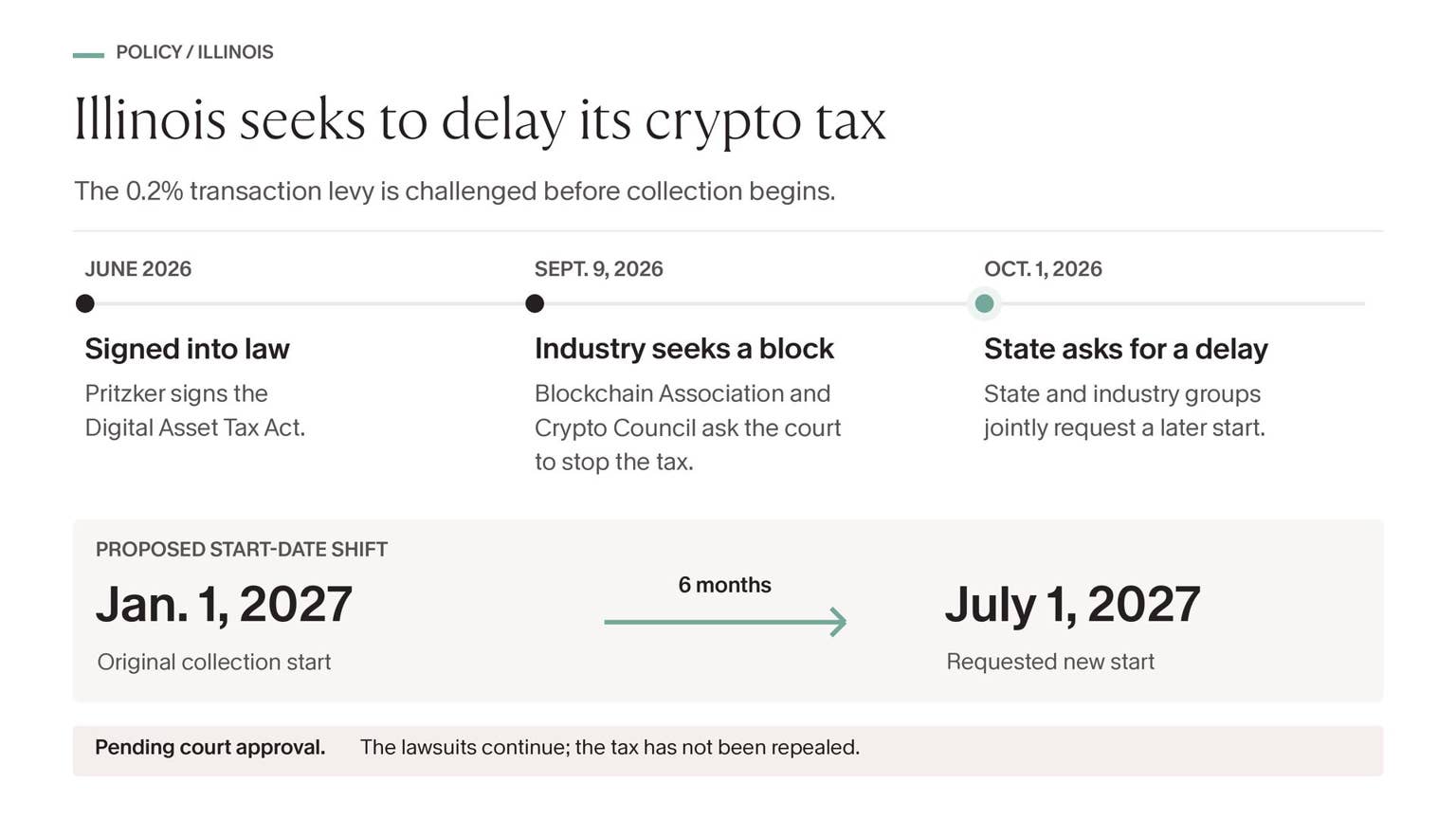
In June, Illinois created a tax no state had tried before. Every time someone buys crypto, sells it, or even moves their own coins from one wallet to another, the state takes 0.2%. It doesn't
Glassnode, the on-chain analytics firm, has characterized Bitcoin's current rally as both early-stage and speculative, a framing that distinguishes present market conditions from the kind of
The ethereum price is sitting at a turning point that most traders have not fully priced in yet. On September 27, Vitalik Buterin called Hegotá the last "normal" fork Ethereum will ever run,