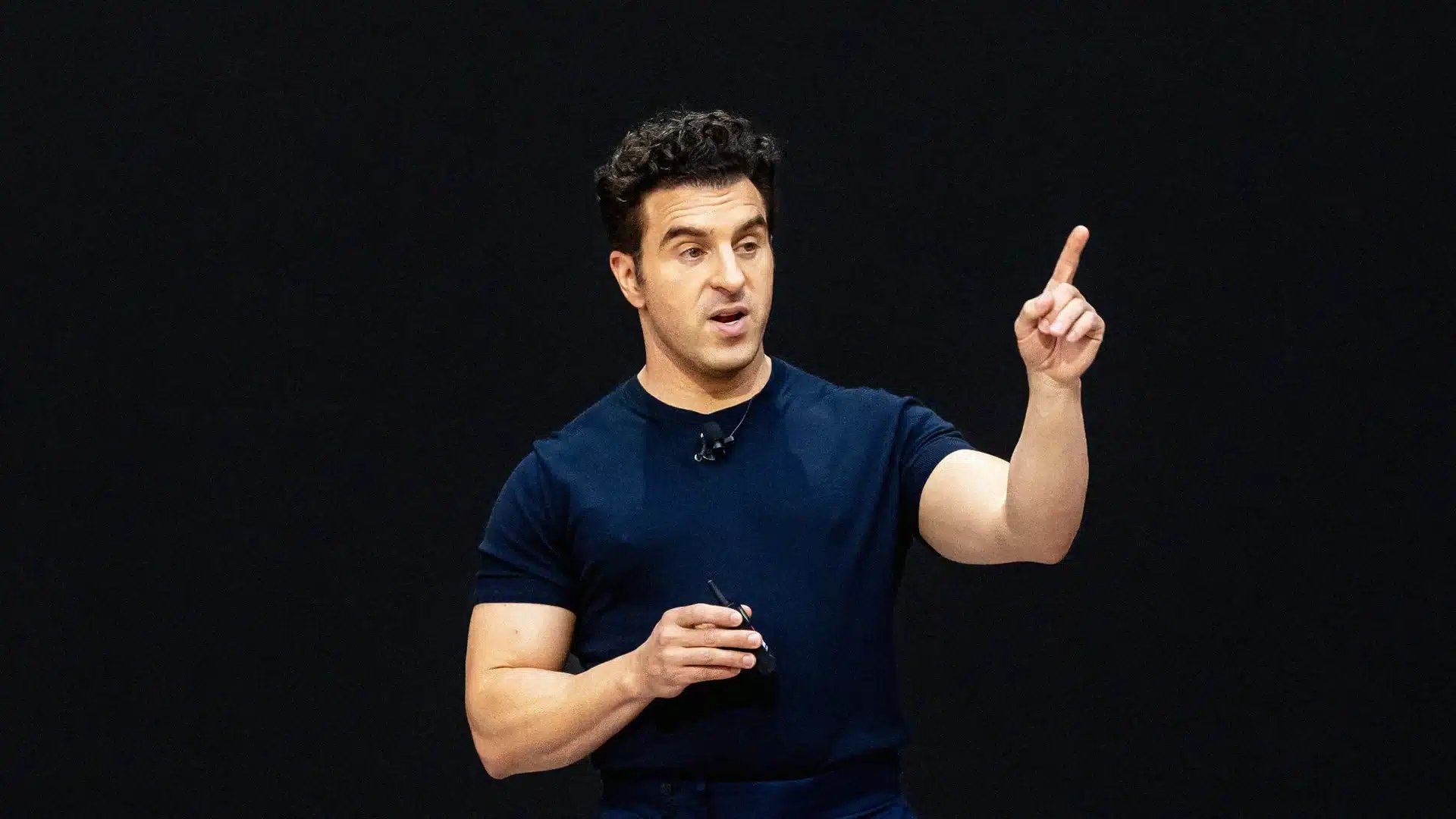
Airbnb CEO Brian Chesky said real-world asset tokenization succeeds by making ownership more accessible while reducing long-standing investment barriers. Chesky argued that fractional ownersh
- Airbnb CEO Brian Chesky said real-world asset tokenization succeeds by making ownership more accessible while reducing long-standing investment barriers.
- Chesky argued that fractional ownership, faster settlement, and broader market access matter more than the underlying blockchain technology.
- He said trust in platforms and underlying assets will determine long-term adoption as financial institutions expand tokenization initiatives.
Airbnb CEO Brian Chesky has argued that trust and accessibility will determine whether real-world asset tokenization becomes widely adopted. According to Chesky, the technology’s greatest contribution is removing barriers to ownership instead of promoting blockchain itself.
Chesky shared his views while discussing the growing interest in tokenized real-world assets. He said many conversations focus heavily on digital tokens and blockchain networks. However, he believes the real value comes from making ownership easier for ordinary investors.
According to Chesky, ownership should become as simple as sending a message. He said people should easily own portions of buildings, bonds, or investment funds without facing the traditional barriers that have limited participation for decades.
His remarks highlight a broader shift across financial markets. Instead of concentrating only on blockchain infrastructure, industry participants are increasingly looking at how tokenization can improve accessibility and investment efficiency.
Also Read: Cardano Whales Accumulate 25.6 Billion ADA as Retail Investors Cut Holdings
Accessibility Remains the Main Goal
Real-world asset tokenization converts traditional assets into digital representations on blockchain networks. Consequently, investors can purchase fractional ownership instead of buying an entire asset. This model applies to assets such as real estate, government bonds, private credit, and investment funds. Besides lowering capital requirements, tokenization can shorten settlement times and support transactions outside conventional market hours.
According to Chesky, those practical benefits matter more than the underlying technology. He suggested that successful innovation removes complexity rather than introducing it. He added that easier ownership could expand investment opportunities to more participants. As a result, markets could become more inclusive while allowing investors to diversify with smaller amounts of capital.
Moreover, tokenized assets could improve cross-border participation by reducing several operational barriers found in traditional financial systems.
Trust Remains the Critical Factor
Despite those advantages, Chesky stressed that technology alone cannot guarantee adoption. Instead, he said trust must support every transaction involving tokenized assets. Drawing on Airbnb’s early experience, Chesky explained that people only became comfortable sharing homes after trusting the platform facilitating those exchanges. He believes tokenized assets require the same level of confidence.
According to Chesky, investors must trust that every token represents a legitimate underlying asset. They also need confidence that those assets are properly managed and can be redeemed whenever required. His comments come as banks, asset managers, and fintech companies expand tokenization projects across several financial markets. Many institutions now view tokenized securities, bonds, and funds as practical applications of blockchain technology rather than experimental products.
Consequently, investment firms have increased efforts to develop regulated tokenized offerings for both institutional and retail investors. Industry participants increasingly view real-world assets as one of blockchain’s strongest long-term use cases because they connect traditional finance with digital infrastructure. Chesky also suggested that successful technologies eventually become invisible to users. He compared tokenization with the internet, noting that people focus on convenience rather than the systems operating behind the scenes.
Conclusion
Chesky’s remarks place accessibility and trust at the center of the tokenization conversation. While blockchain provides the infrastructure, he argued that simple ownership experiences and reliable platforms will ultimately shape the future of real-world asset tokenization.
Also Read: Former Ripple CTO Says SEC Tried to Label XRP a Security Before Courts Rejected the Argument
The post Airbnb CEO Says Trust Will Decide Whether Tokenized Assets Reach the Mainstream appeared first on 36Crypto.