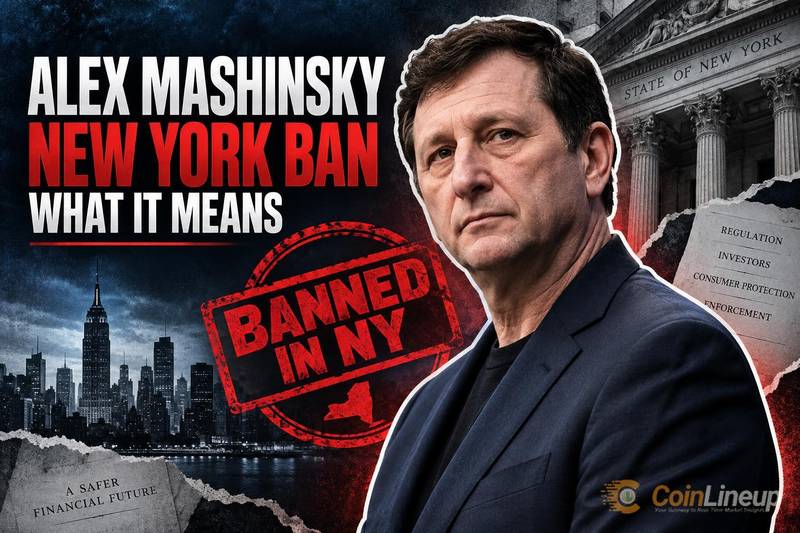
Alex Mashinsky, the founder of failed crypto lending platform Celsius, has agreed to a permanent ban that bars him from operating securities, commodities, and cryptocurrency businesses in New
Alex Mashinsky, the founder of failed crypto lending platform Celsius, has agreed to a permanent ban that bars him from operating securities, commodities, and cryptocurrency businesses in New York. The agreement marks a significant regulatory outcome following Celsius's collapse, which left hundreds of thousands of users unable to access their funds.
KEY TAKEAWAYS
- Alex Mashinsky has agreed to a permanent ban on running securities, commodities, and crypto businesses in New York.
- The ban covers all three major financial-product categories, not just cryptocurrency.
- The agreement does not automatically return funds to former Celsius users.
What Ban Did Alex Mashinsky Agree To?
Mashinsky agreed to be permanently barred from operating or controlling any business in New York that deals in securities, commodities, or cryptocurrency. Those three categories cover a broad range of financial products, from stocks and bonds to futures contracts and digital assets like Bitcoin or Ethereum. For related coverage, see Mystery Whale Pays $30M to Exit BlackRock Bitcoin ETF — What It Means.
The scope of the restriction is notable. A ban limited only to crypto would still leave room to operate in traditional finance. By covering securities and commodities as well, the agreement closes that door entirely for New York-based activity. For related coverage, see Why a 3x Bitcoin ETF Can Lose Money at Breakeven.
Mashinsky co-founded Celsius Network, a crypto lending platform that promised customers high yields on deposited digital assets. Celsius froze withdrawals in June 2022 and filed for bankruptcy the following month, leaving users locked out of billions of dollars in funds. You can read more background on the settlement in our report on Alex Mashinsky accepting a lifetime New York crypto ban. For related coverage, see Evernorth Completes Armada Merger With 473M XRP Before Nasdaq Debut.
Why the New York Ban Matters for Crypto Users
For people who had funds on Celsius, the ban represents a form of accountability, but it does not directly unlock frozen assets or guarantee repayments. The bankruptcy process handles creditor claims separately from regulatory enforcement actions.
For the wider crypto community, the agreement signals that state regulators are willing to pursue permanent, career-ending restrictions against crypto founders, not just fines. Securities are ownership stakes in companies. Commodities include raw materials and some financial instruments. A ban across all three categories means Mashinsky cannot pivot to a new financial venture within New York's jurisdiction.
This matters for anyone considering placing funds with a crypto platform. Regulatory actions like this one are part of a broader pattern of enforcement following high-profile platform failures. For context on how enforcement actions have targeted other bad actors in crypto, see how investigators traced $12 million linked to the 2025 Bybit theft, illustrating the increasing reach of crypto-focused oversight.
What the Agreement Signals for New York Crypto Regulation
New York has long been one of the most active states for crypto regulation. The state requires crypto businesses to hold a BitLicense to operate, and its attorney general has pursued multiple enforcement actions against digital asset platforms.
A permanent restriction agreed to by a major crypto founder reinforces that New York treats crypto businesses as financial businesses, subject to the same accountability standards as traditional securities or commodities firms. The word "permanent" in this context means there is no scheduled expiration or review period built into the agreement, unlike temporary suspensions or time-limited bans.
If you hold crypto assets on any platform, this case is a practical reminder to understand how a platform is regulated, where it is based, and whether funds are insured or protected. No regulatory agreement reverses losses already suffered, but enforcement actions like this one shape what future platforms must do to operate lawfully.
Additional source references: source document 1, source document 2.
Disclaimer: This article is for informational purposes only and does not constitute financial or investment advice. Cryptocurrency and digital asset markets carry significant risk. Always do your own research before making decisions.
Read original article on coinlineup.com