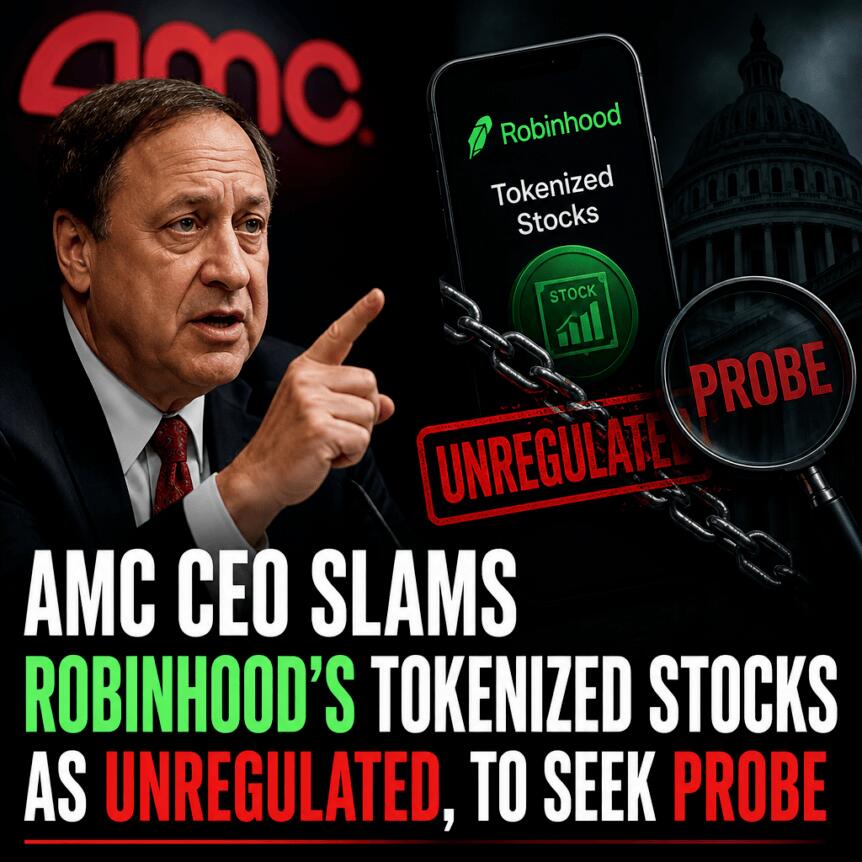
AMC Entertainment CEO Adam Aron has publicly challenged Robinhood’s tokenized stock offerings, calling them “outrageous” and stating AMC has no affiliation with the platform’s products. Aron
AMC Entertainment CEO Adam Aron has publicly challenged Robinhood’s tokenized stock offerings, calling them “outrageous” and stating AMC has no affiliation with the platform’s products. Aron said Robinhood will face an investigation by outside securities counsel.
Aron’s comments add to a growing wave of attention directed at tokenized stock products—blockchain-based instruments designed to track the value of traditional equities. The dispute arrives amid earlier disruptions where crypto platforms pulled back from tokenized IPO campaigns, underscoring how legal and operational questions continue to surround the sector.
Key takeaways
- Adam Aron says AMC has no affiliation with Robinhood’s tokenized stock offerings and called them “outrageous.”
- Aron said Robinhood will request scrutiny from its outside securities counsel and suggested restrictions may apply to US and other investors.
- Robinhood’s tokenized stock offerings are described as not registered under US securities laws, according to Aron’s remarks.
- The broader scrutiny of tokenized stocks follows recent cancellations tied to tokenized IPO access, including SpaceX-related campaigns.
Aron challenges Robinhood’s tokenized AMC exposure
In a Friday post on X, Adam Aron criticized Robinhood’s tokenized stock offering that provides economic exposure to AMC shares. Aron said the company has “no affiliation” with the product and characterized the offering as “outrageous.” He added that Robinhood’s outside securities counsel would investigate the matter.
Aron also indicated that the tokens may not be available to US investors and that they are subject to restrictions in other jurisdictions, citing Canada, Switzerland and the UK.
The remarks are notable not only for their directness, but because they frame the dispute as a regulatory and compliance issue rather than a simple branding or commercial disagreement. If tokenized securities are marketed or structured in ways that investors perceive as linked to the underlying issuer, those concerns can quickly escalate.
For context, tokenized stock products typically aim to mirror the price movement of conventional equities through blockchain-based representations. However, Aron’s comments highlight how questions about registration status, investor eligibility, and issuer affiliation can become central to the legality and reputational impact of these offerings.
Robinhood responds by seeking specifics
Robinhood co-founder and CEO Vlad Tenev responded on X, asking Aron to share his exact concerns tied to the tokenized offering. The platform did not issue a broader public statement in response to the criticism.
Cointelegraph reported that it reached out to Robinhood for comment regarding both Aron’s claims and the regulatory status of its tokenized stock offerings.
That back-and-forth illustrates a recurring tension in tokenized securities: traditional executives may view such instruments as potentially misleading or insufficiently authorized, while token issuers and platforms often argue they are structured under specific legal frameworks. The next step—whether Aron’s concerns translate into formal findings or enforcement action—will likely determine how far this dispute spreads.
Tokenized stock scrutiny follows past operational pullbacks
The Aron–Robinhood episode arrives as tokenized stocks have faced renewed scrutiny in the wake of earlier market disruptions. Earlier in June, some crypto exchanges canceled their tokenized SpaceX IPO allocations and promised refunds.
According to Cointelegraph reporting referenced in the article, platforms including Bybit, Binance, Bitget Wallet and MEXC canceled their tokenized SpaceX IPO campaigns after SpaceX went public on the Nasdaq. Several participants blamed the inability of Kraken-owned xStocks to deliver the underlying assets.
While that SpaceX incident was framed around delivery and execution—rather than issuer affiliation—the underlying theme is similar: tokenized offerings depend on complex relationships between blockchain intermediaries and traditional market infrastructure. When any link breaks, user trust and regulatory scrutiny tend to intensify.
In that light, Aron’s insistence on no affiliation and his emphasis on securities counsel investigation reflect how tokenized products can trigger fast-moving reactions from the companies whose stock they reference, even if platforms believe the economic exposure is properly handled.
Robinhood’s tokenization push has expanded beyond debt-like instruments
Robinhood’s tokenized equities initiative did not appear overnight. The first generation of Robinhood stock tokens launched in July 2026 as tokenized debt securities issued by Jersey-based Robinhood Assets, distributed as ERC-20 tokens. Those tokens were designed to provide economic exposure to underlying assets such as US stocks and exchange-traded funds.
Robinhood has also been building infrastructure to support tokenized assets. In February, the company launched a public testnet for Robinhood Chain, an Ethereum layer-2 network built using Arbitrum technology intended to host tokenized assets.
Further expansion has been reported in prior coverage. In October 2025, Robinhood shared plans to tokenize nearly 500 US stocks and ETFs on Arbitrum. And in July 2026, Bernstein analysts raised their price target on Robinhood Markets, arguing that a next phase of growth would be driven by tokenized equities and prediction markets rather than traditional crypto trading.
Taken together, the sector-wide moment suggests that tokenized securities are moving from experimental phases toward broader rollout—while regulators, issuers, and exchanges continue to test how these products should be structured, marketed, and delivered.
For investors and market participants, Aron’s comments serve as a reminder that tokenization does not eliminate the legal and compliance layers that govern securities markets. Even if a platform believes a product is compliant under one framework, issuer objections can still raise practical questions about authorization, disclosures, and eligibility for different investor regions.
Readers should watch whether Robinhood clarifies the precise legal basis for its tokenized stock offerings, and whether Aron’s complaint leads to formal regulatory engagement or other enforcement steps. Just as importantly, the industry will be looking for whether prior delivery-related issues in tokenized IPO campaigns repeat in other tokenized equity products—or whether platforms tighten operational and compliance controls to reduce the risk of abrupt cancellations.
This article was originally published as AMC CEO Slams Robinhood’s Tokenized Stocks as Unregulated, to Seek Probe on Crypto Breaking News – your trusted source for crypto news, Bitcoin news, and blockchain updates.