Bitcoin (BTC) and Ethereum (ETH) are flashing a supply-side signal that on-chain analysts say bodes well for the market's long-term health. Currently, the crypto market is flashing signs of a
Bitcoin (BTC) and Ethereum (ETH) are flashing a supply-side signal that on-chain analysts say bodes well for the market's long-term health.
Currently, the crypto market is flashing signs of a slow and painful recovery. Nowhere are they anywhere near their all-time highs.
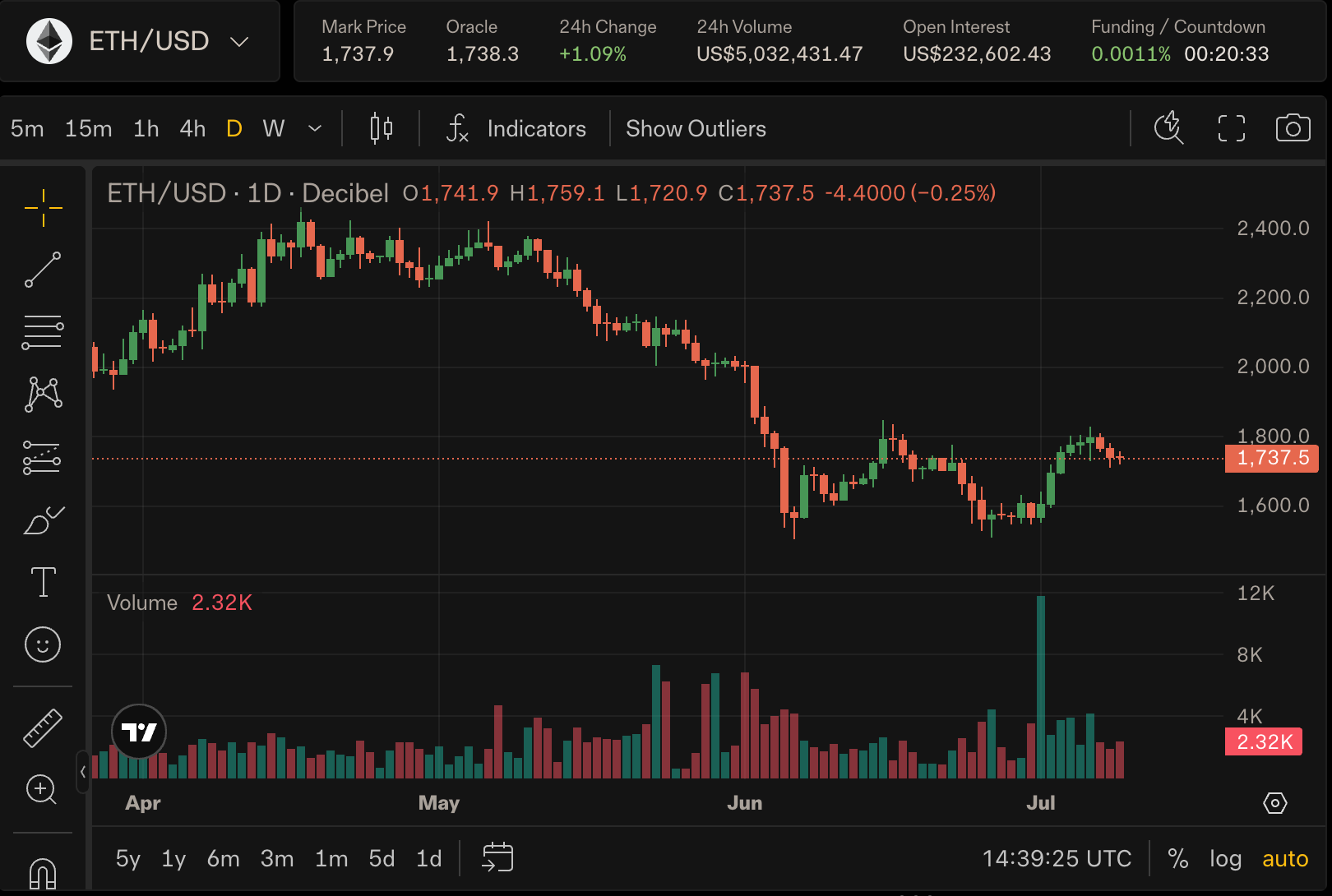
In fact, at press time, Bitcoin was trading about 50% lower than its peak in October 2025, near $62,766, as per Decibel. Ethereum, on the other hand, was about 64%, trading near $1,738.
ETH/USD. Source:
DecibelDecibel
Related: Nearly 40 million investors could face a crypto ban
Exchange supply hits multi-year lows
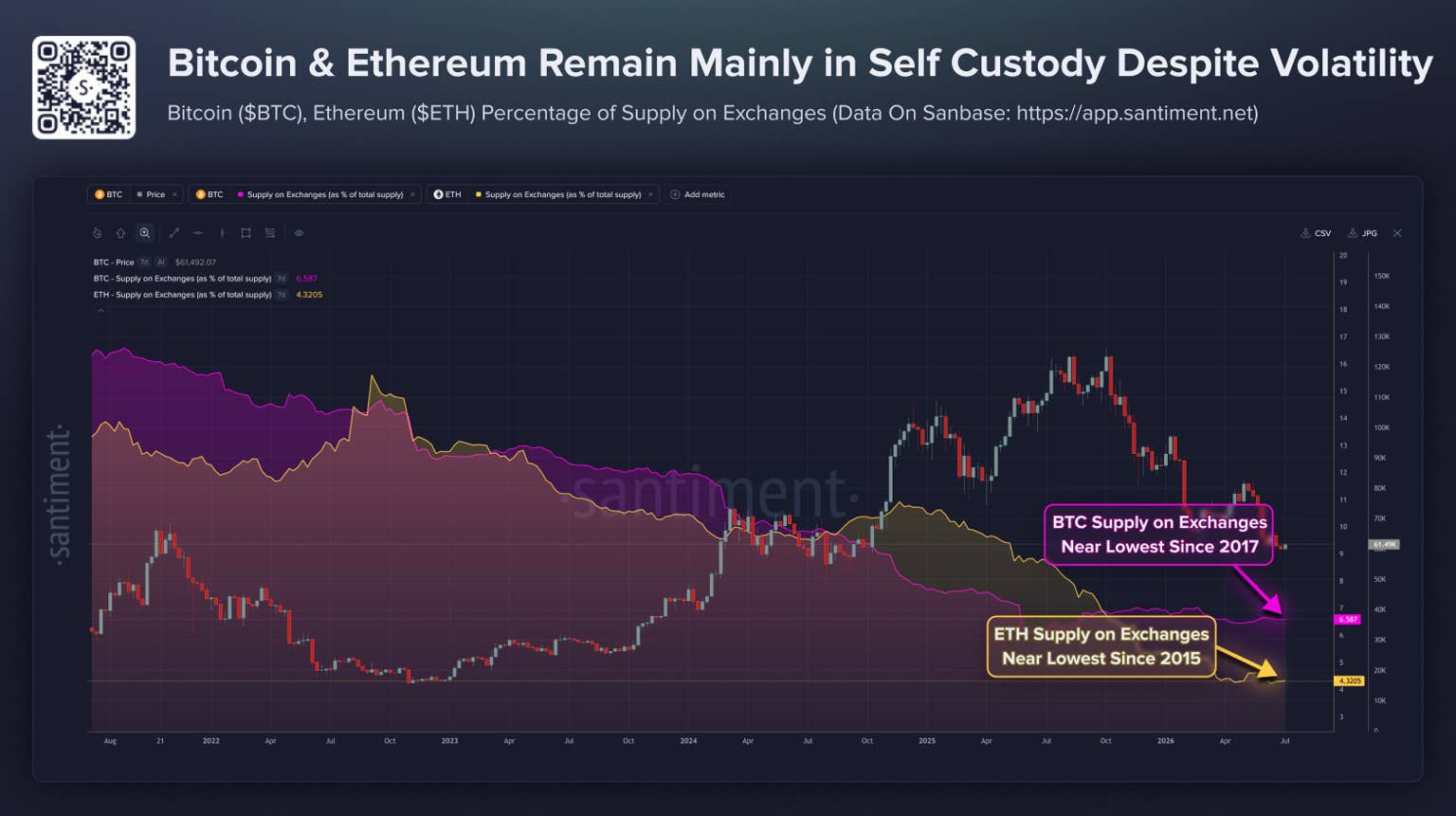
According to a July 9 post from crypto analytics firm Santiment on X, the share of BTC's total supply sitting on crypto exchanges is near its lowest level since 2017, while ETH's exchange supply is near its lowest since 2015.
Bitcoin and Ethereum supply on exchanges
@SantimentData on X
Santiment's chart, pulled from its Sanbase platform, shows BTC's exchange supply at 6.587% and ETH's at 4.3205% as of the post.
Santiment said fewer coins are being held on trading platforms. This means fewer coins are immediately available to sell, even after a volatile stretch for both assets.
The firm called this one of crypto's "most encouraging signals" for the long term, though it stopped short of framing it as a guarantee of higher prices.
Trending on TheStreet Roundtable:
What does it mean for the next cycle
Santiment argued that declining exchange balances typically reflect stronger conviction among holders. Investors moving coins into self-custody are signaling an intent to hold rather than trade.
Because Bitcoin and Ethereum still anchor the broader crypto market, the firm said low exchange supply across both assets could help set up a healthier foundation for crypto's next sustained bull cycle, provided investors remain patient through near-term volatility.
The metric doesn't account for coins held in cold storage that were never on exchanges to begin with, and it can't rule out a selloff driven by other sources of liquidity, such as derivatives markets or over-the-counter desks.
Still, the divergence between falling exchange supply and choppy spot prices is one that analysts are likely to keep watching in the months ahead.
Related: Bitcoin just crossed 200 days of warning sign investors cannot ignore