People always ask me where the crypto industry is actually heading. My answer is simple. We are standing at a massive crossroads between artificial intelligence and blockchain technology. Dur
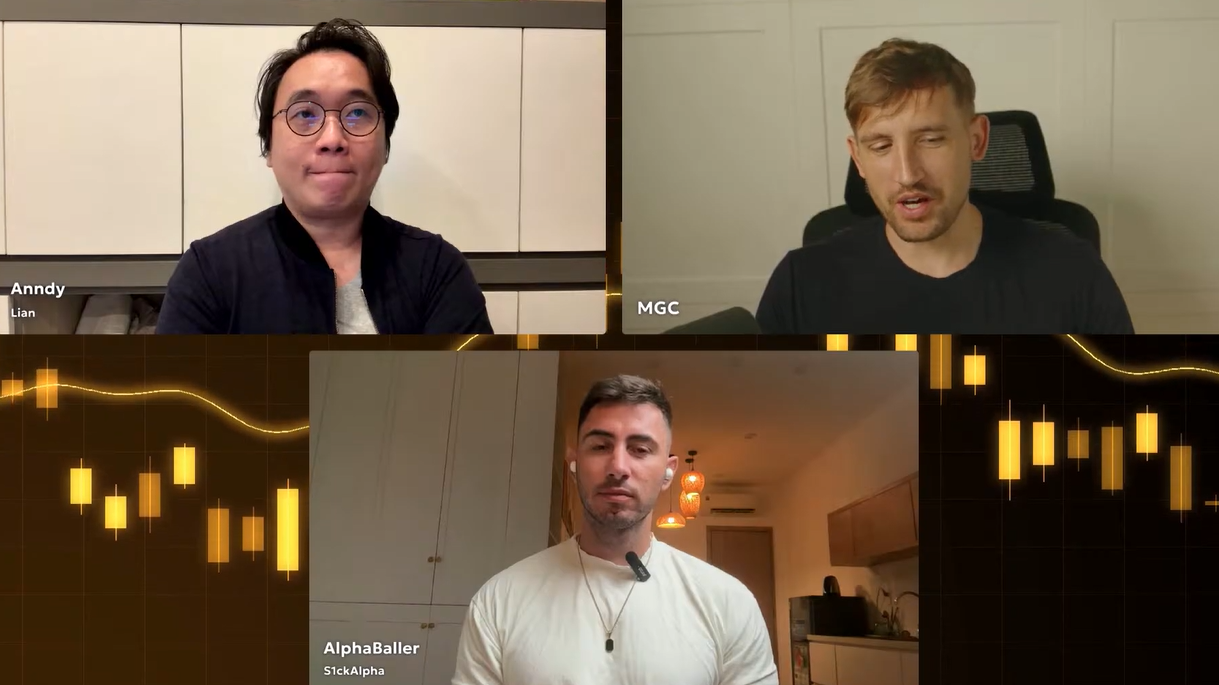
People always ask me where the crypto industry is actually heading. My answer is simple. We are standing at a massive crossroads between artificial intelligence and blockchain technology. During my recent conversation with MGC and AlphaBaller, I laid out exactly why I believe our current trajectory is flawed and how we can fix it. As the author of Web4: The Age of Autonomous Intelligence, I have spent years analyzing market cycles and technological shifts. The promises of Web3 have largely fallen short, and I firmly believe AI is the exact connective layer we need to rescue the ecosystem.
One of my most pointed observations is that much of the decentralization in Web3 is entirely fake. When I evaluate new projects, I frequently encounter centralized control disguised as distributed power. Flawed governance models and dysfunctional decentralized autonomous organizations prove that the industry has largely failed to deliver on its core promise. This gap between rhetoric and reality became the catalyst for my thinking about Web4. At the heart of my thesis is a simple but powerful idea. Artificial intelligence serves as the connective layer that Web3 has always lacked. In my framework, AI functions as the brain of the decentralized ecosystem. It provides natural language understanding, adaptive reasoning, and autonomous execution. I argued that human beings can no longer be trusted to make unbiased decisions for the ecosystem. Intelligent systems are required to evaluate proposals and execute tasks without the self-interest that plagues human-led governance.
I outlined a concrete architecture for what a Web4 blockchain could look like. The structure is divided into four distinct layers. At the top sits an interface layer designed for intent-based interaction and multi-chain operations. Below that is an agent layer where autonomous AI agents navigate protocols and manage cross-chain states. The protocol layer features programmable trust through AI-enhanced smart contracts and adaptive protocols. At the very bottom is the foundation layer, which handles decentralized storage and zero-knowledge data structures. Together, these layers form the foundation for a fully autonomous blockchain.
On the geopolitical stage, I acknowledged the United States' dominance in AI fundraising and GPU infrastructure. I noted that adoption patterns differ across regions. When comparing the output of American frontier models against Chinese alternatives, I observed almost no difference in quality. I strongly suggested that users and developers consider Chinese models, as their output is nearly identical while the cost is significantly lower. Furthermore, I predicted that frontier AI models will eventually become free or nearly free. The current pricing is merely an early premium. Once that initial phase passes, nobody will pay high fees for API token credits.
Regarding the broader crypto market, I adopted a distinctly bearish short-term outlook. I strongly advised against dollar-cost averaging into the market at the current moment. I pointed to several impending liquidity drains, including massive initial public offerings from major tech companies and the upcoming World Cup. These events will pull capital away from digital assets. I predicted that Ethereum could drop to $400 or even lower. For Bitcoin, I suggested a bottom could form in the $45,000 to $55,000 range. I emphasized that there is no urgent need to buy the dip right now, as the market lacks fresh liquidity and positive catalysts.
Throughout the discussion, I returned to the theme of industry control. The crypto space has shifted from focusing on real-world use cases to endless player-versus-player memecoin trading. I blamed launchpads for accelerating this toxic cycle. To fix this, the industry needs people who genuinely believe in its mission. I warned that existing industry organizations remain too weak to drive meaningful change. Without proper controls and a foundation of trust, the industry risks undermining itself. I insisted that the crypto community must establish its own guardrails and self-regulate. Leaving regulatory decisions to government officials who do not understand decentralization will only lead to poor outcomes.
I closed the interview by urging listeners to define their investing style. I asked them to determine whether they are relying on luck or actual skill. I reminded the audience that true wealth in crypto is made by buying during moments of absolute market despair and selling during peaks of euphoria. My vision of Web4 offers a structured framework for integrating AI into decentralized systems. For anyone navigating the rapidly converging worlds of blockchain and artificial intelligence, my insights provide a valuable roadmap for the future.
About Anndy Lian's new book:
Web4: The Age of Autonomous Intelligence by Anndy Lian
https://www.amazon.com/Web4-Autonomous-Intelligence-Anndy-Lian-ebook/dp/B0H35597HS
Youtube link:
https://youtu.be/PcwQUXfVsOQ