Key Points Apple is requesting authorization to incorporate Chinese memory semiconductors into products distributed internationally, citing supply constraints and cost management Micron Techn
Key Points
- Apple is requesting authorization to incorporate Chinese memory semiconductors into products distributed internationally, citing supply constraints and cost management
- Micron Technology, America’s sole major memory chip producer, is actively opposing this initiative through extensive lobbying efforts
- Memory semiconductor costs have surged fourfold in the last twelve months, primarily due to AI infrastructure requirements
- The Pentagon has classified both Chinese manufacturers — CXMT and YMTC — as military-affiliated entities
- The White House faces a critical choice between consumer affordability and safeguarding domestic semiconductor capabilities
A high-stakes confrontation is unfolding that places Apple, the Trump administration, and US manufacturing interests on a collision course.
Tim Cook, Apple’s chief executive, has engaged in multiple meetings with top Trump administration figures, including Commerce Secretary Howard Lutnick and Treasury Secretary Scott Bessent. The objective: securing approval to source memory chips from ChangXin Memory Technologies and Yangtze Memory Technologies, both Chinese firms.
Apple’s argument centers on addressing worldwide memory supply constraints while keeping prices manageable for consumers. Critically, these Chinese-made components would be restricted to Apple products distributed in foreign markets, not domestically.
However, Micron Technology stands as a formidable obstacle. As America’s only substantial domestic memory chip manufacturer, Micron’s CEO Sanjay Mehrotra has delivered stark warnings to government officials that permitting American technology giants to purchase from Chinese manufacturers — regardless of where the final products are sold — poses significant risks to the domestic semiconductor sector.
Micron has drawn parallels to the decline of American steel and manufacturing industries, where Chinese competition contributed to widespread industrial erosion.
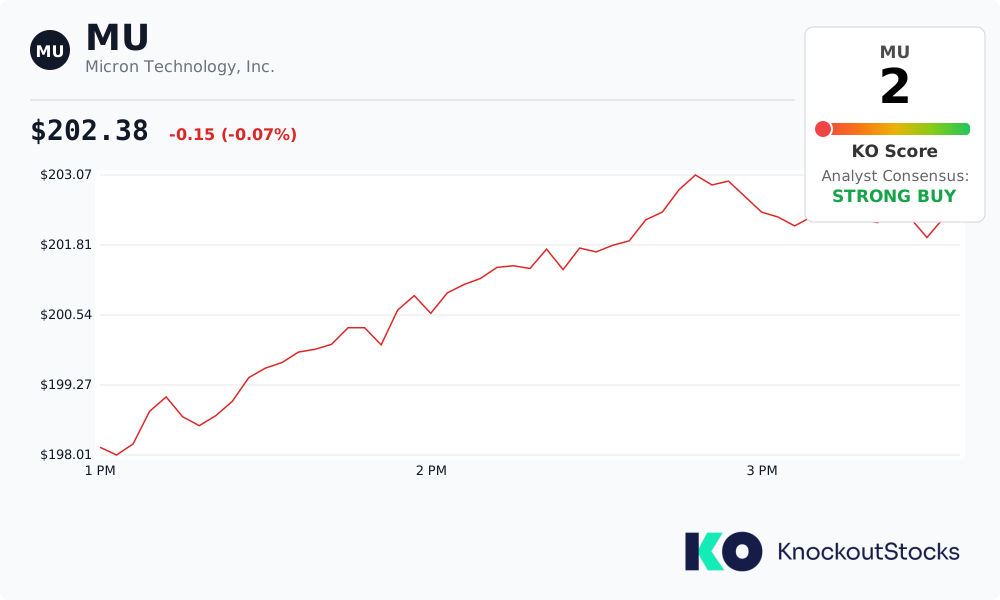 Micron Technology, Inc., MU
Memory Chip Costs Skyrocket
The memory semiconductor market has experienced dramatic price inflation, with costs multiplying by four over the past year according to TechInsights data. The primary driver is unprecedented demand from artificial intelligence data centers, which consume massive quantities of cutting-edge memory at elevated price points.
This AI-driven consumption has significantly reduced available inventory for smartphones, automotive systems, and medical equipment — fundamentally altering Apple’s traditional negotiating leverage with semiconductor suppliers.
Apple has directly accused Micron of exploiting the supply shortage for excessive profits. The tech giant highlights Micron’s gross profit margins, now surpassing 80%, as proof of unreasonable pricing practices. Apple further alleges that Micron is prioritizing production expansion for AI customers over consumer electronics manufacturers.
Micron disputes these allegations entirely. The company maintains that price increases reflect broader market dynamics beyond simple memory costs, while emphasizing its commitment to invest $250 billion in expanding American manufacturing infrastructure.
Security Concerns Add Complexity
The two Chinese manufacturers central to this controversy carry substantial national security implications. YMTC appears on the US Entity List — a restrictive trade designation — while both CXMT and YMTC have received Pentagon classifications as Chinese military-affiliated companies.
Michael Kratsios, the White House technology adviser, stated explicitly to congressional members this week that American corporations should avoid commercial relationships with Entity List-designated firms.
Apple attempted a similar partnership with YMTC in 2022 but withdrew following intense political backlash, including a pointed warning from then-Senator Marco Rubio that Apple was “playing with fire.” Rubio now serves as Secretary of State and remains actively engaged in current deliberations.
President Trump has publicly commended both Apple and Micron for their domestic investment commitments and has refrained from declaring a position on this matter. The timing is further complicated by ongoing trade negotiations with China, adding strategic dimensions to any resolution.
The post Apple (AAPL) vs Micron (MU): Trump Faces Critical Decision on Chinese Chips appeared first on Blockonomi.