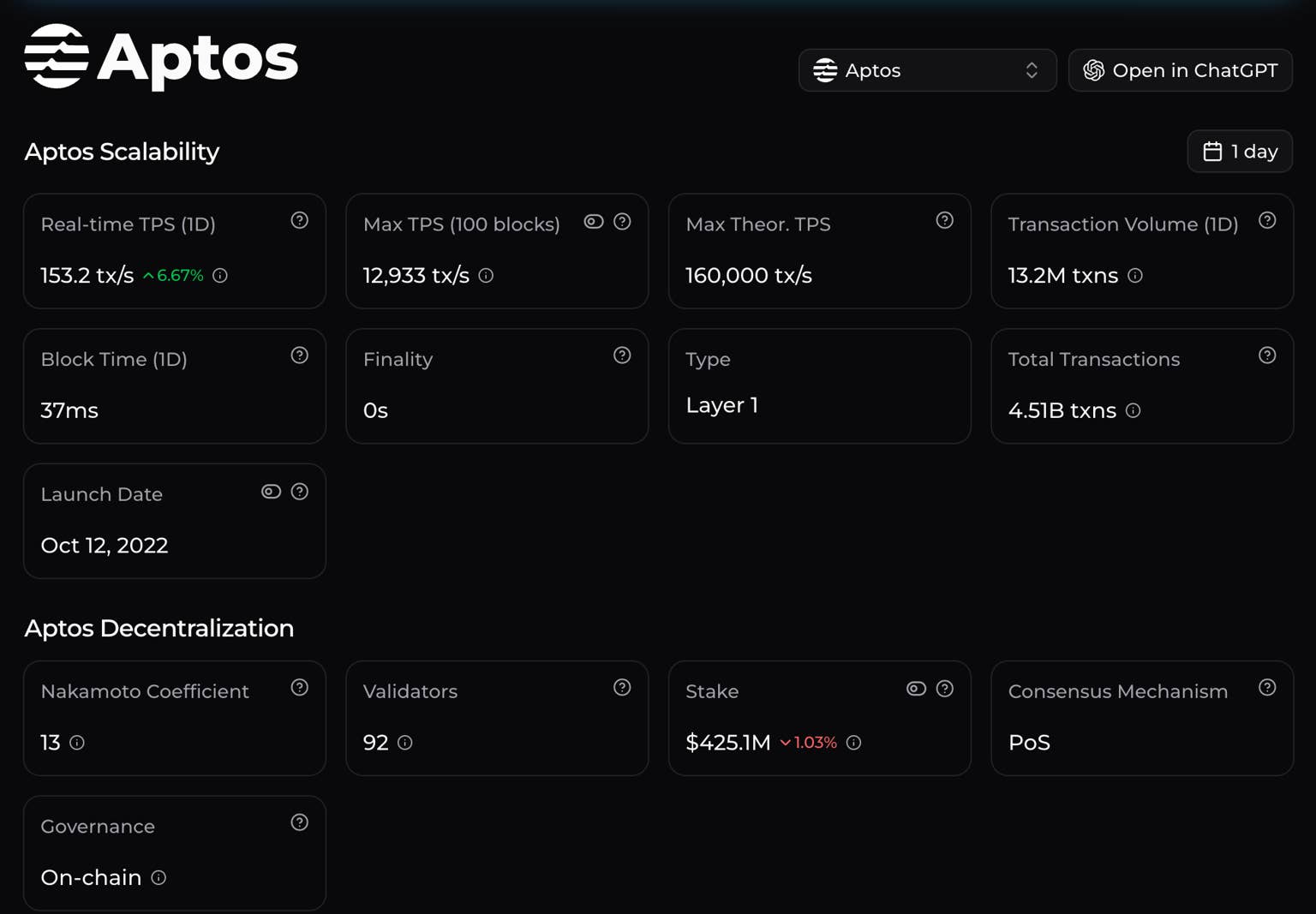
Aptos is processing transactions at a pace that few blockchains have matched, and its latest numbers make that case plainly. The network recorded 13.2 million transactions in a single 24-hour
Aptos is processing transactions at a pace that few blockchains have matched, and its latest numbers make that case plainly.
The network recorded 13.2 million transactions in a single 24-hour window, its highest daily activity level in the past week, according to data from Chainspect. To put that figure in context, Aptos has now processed more than 4.51 billion transactions since launching in October 2022, roughly one transaction for nearly every other person on Earth, as Chainspect noted on X.
Aptos is a layer-1 blockchain built for high transaction throughput and low fees, designed to support everything from DeFi and payments to real-world asset tokenization on a single network.
Related: Mark Zuckerberg's 'superintelligence' is colliding with his own track record
Built for speed
The transaction surge is happening on infrastructure designed for exactly this kind of load. Aptos currently processes 153.2 transactions per second in real time, up 6.67% in the past day, with a peak tested throughput of 12,933 transactions per second and a theoretical ceiling of 160,000 transactions per second, one of the highest published capacities among mainstream blockchains.
Block time, the time it takes to bundle and record a new batch of transactions, sits at 37 milliseconds, and finality, the point at which a transaction is permanent and irreversible, registers at zero seconds.
The Aptos network in real time. Source:
ChainspectPopular on TheStreet Roundtable:
That last figure matters more than it might seem. Most blockchains take anywhere from seconds to minutes to finalize a transaction. Zero-second finality means a transaction is confirmed the moment it is processed, a meaningful advantage for applications requiring instant settlement, from payments to DeFi to real-world asset trading.
Average transaction fees currently sit at just $0.0000267, less than a fraction of a cent, making microtransactions economically practical at any scale.
A developer ecosystem building steadily
Behind the transaction numbers is a developer community that has been building consistently. Aptos currently counts 1,200 active developers across 134 GitHub repositories, where developers share and build code publicly, with 54,120 total code commits and 9,866 GitHub stars, figures that reflect sustained ecosystem development rather than a handful of isolated projects.
The network runs 92 validators under a Proof of Stake consensus model, with a Nakamoto Coefficient of 13. The Nakamoto Coefficient measures how decentralized a network is; a score of 13 means at least 13 independent entities would need to collude to disrupt consensus.
While that trails larger networks like Ethereum and Solana by validator count, the coefficient reflects a decentralization profile that has been improving alongside the network's growth.
Related: Michael Saylor warns Bitcoin's biggest threat is here