Most blockchains pay for security by printing new tokens. Validators, the operators who run the network’s computers and confirm transactions, earn freshly issued coins as a reward. That keeps
Most blockchains pay for security by printing new tokens. Validators, the operators who run the network’s computers and confirm transactions, earn freshly issued coins as a reward.
That keeps the network running, but it also steadily dilutes everyone who already holds the token.
Aptos, a layer-1 blockchain built by former Meta engineers and live since October 2022, spent early 2026 trying to break that habit.
According to a new report from Blockworks Research, pub. October 20 and funded by the Aptos Foundation, those changes have put its APT token on a credible path toward deflation.
Deflation here means more tokens get destroyed than created.
Related: JPMorgan’s 31-year-old report embraces once-mocked asset
Four votes in four weeks
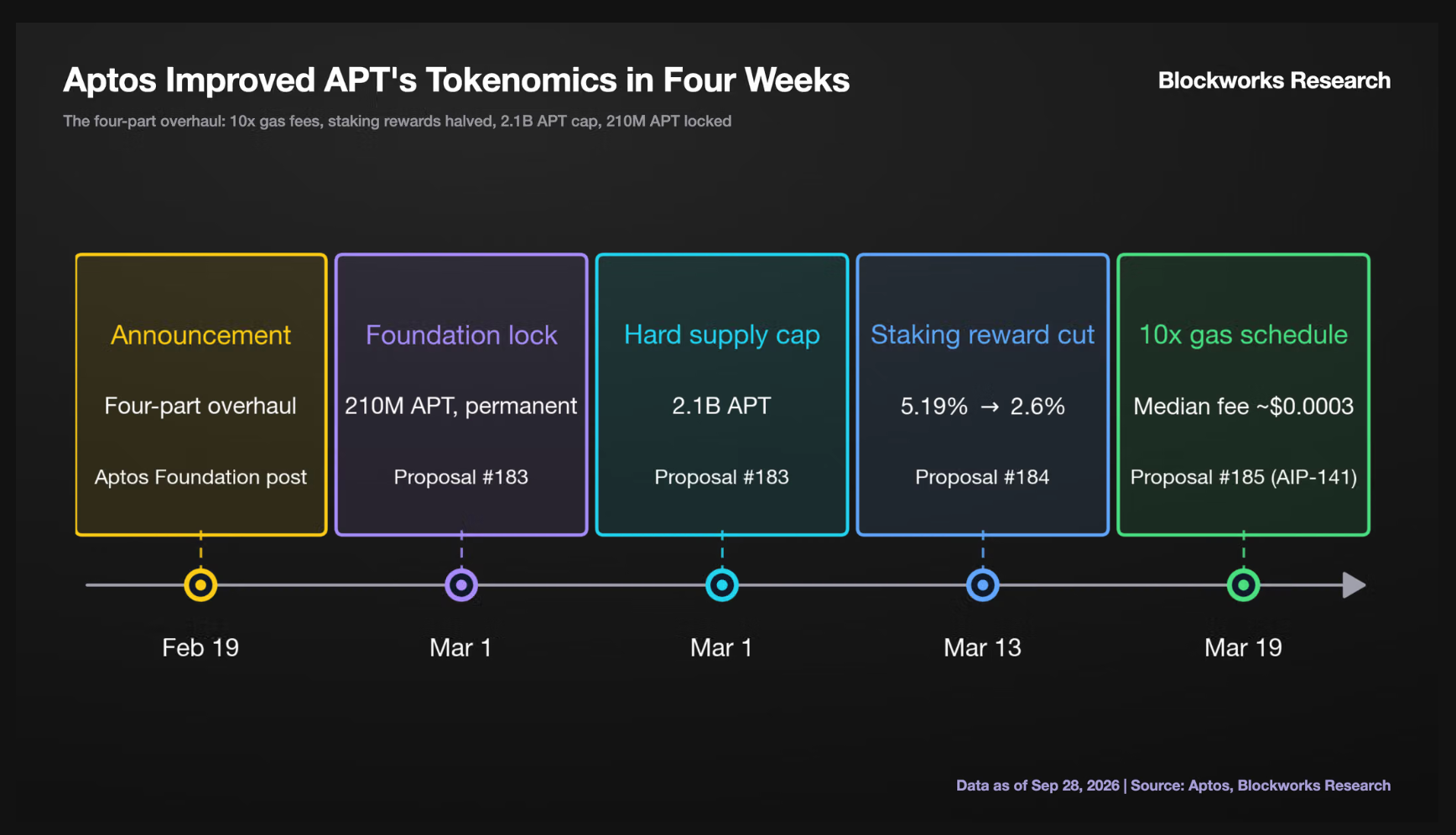
Between Feb. 19 and March 19, APT holders approved four governance proposals.
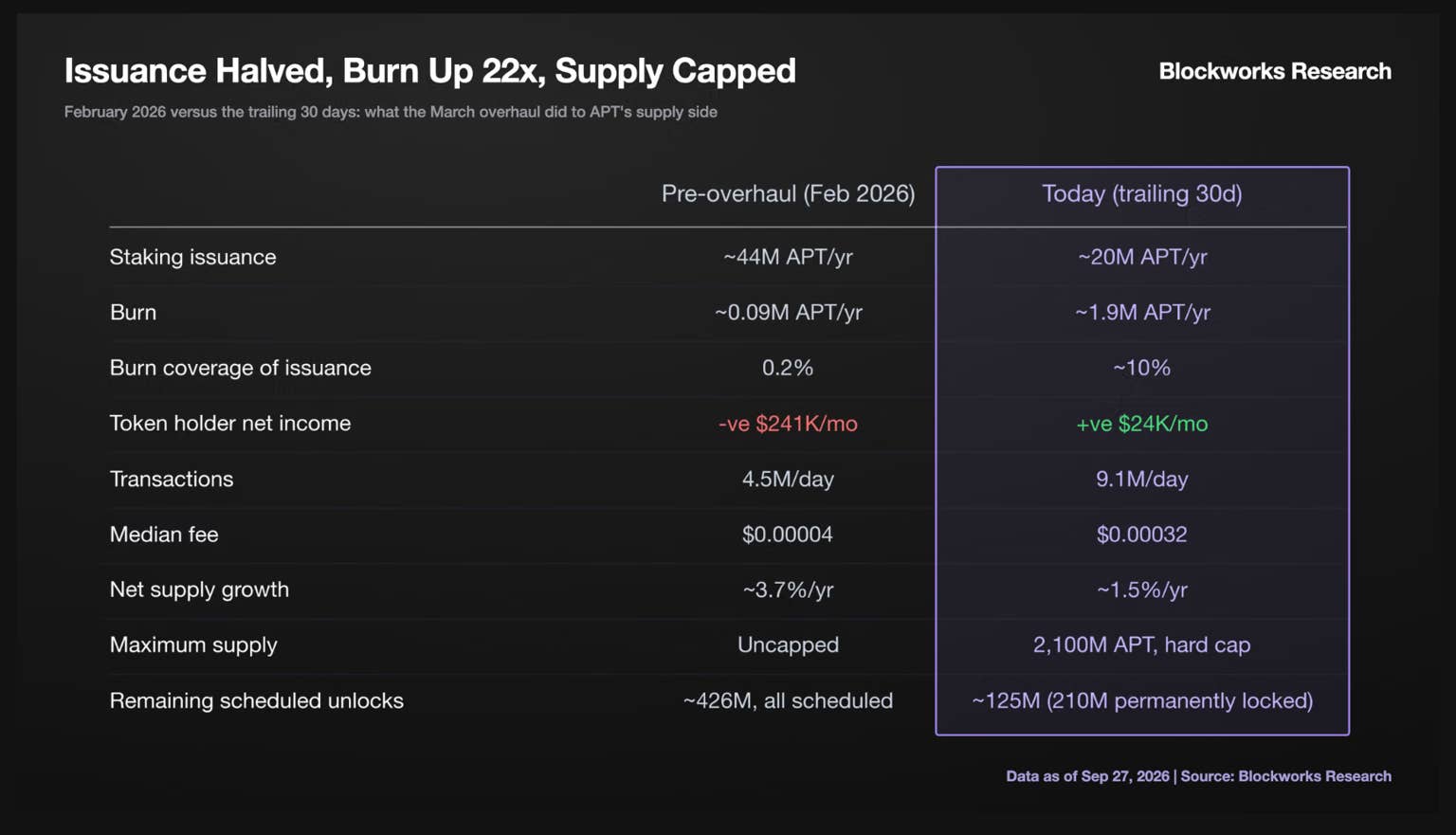
The first capped APT’s total supply at 2.1 billion tokens. Supply currently sits at about 1.21 billion. The same proposal permanently locked 210 million Foundation and Community tokens, which can no longer be moved or unstaked.
Next, staking rewards were cut roughly in half, from 5.19% to a flat 2.6%. Staking means locking up tokens to help secure the network in exchange for rewards.
The cut reduced annual issuance from about 43 million APT to about 20 million.
Source:
Blockworks Research
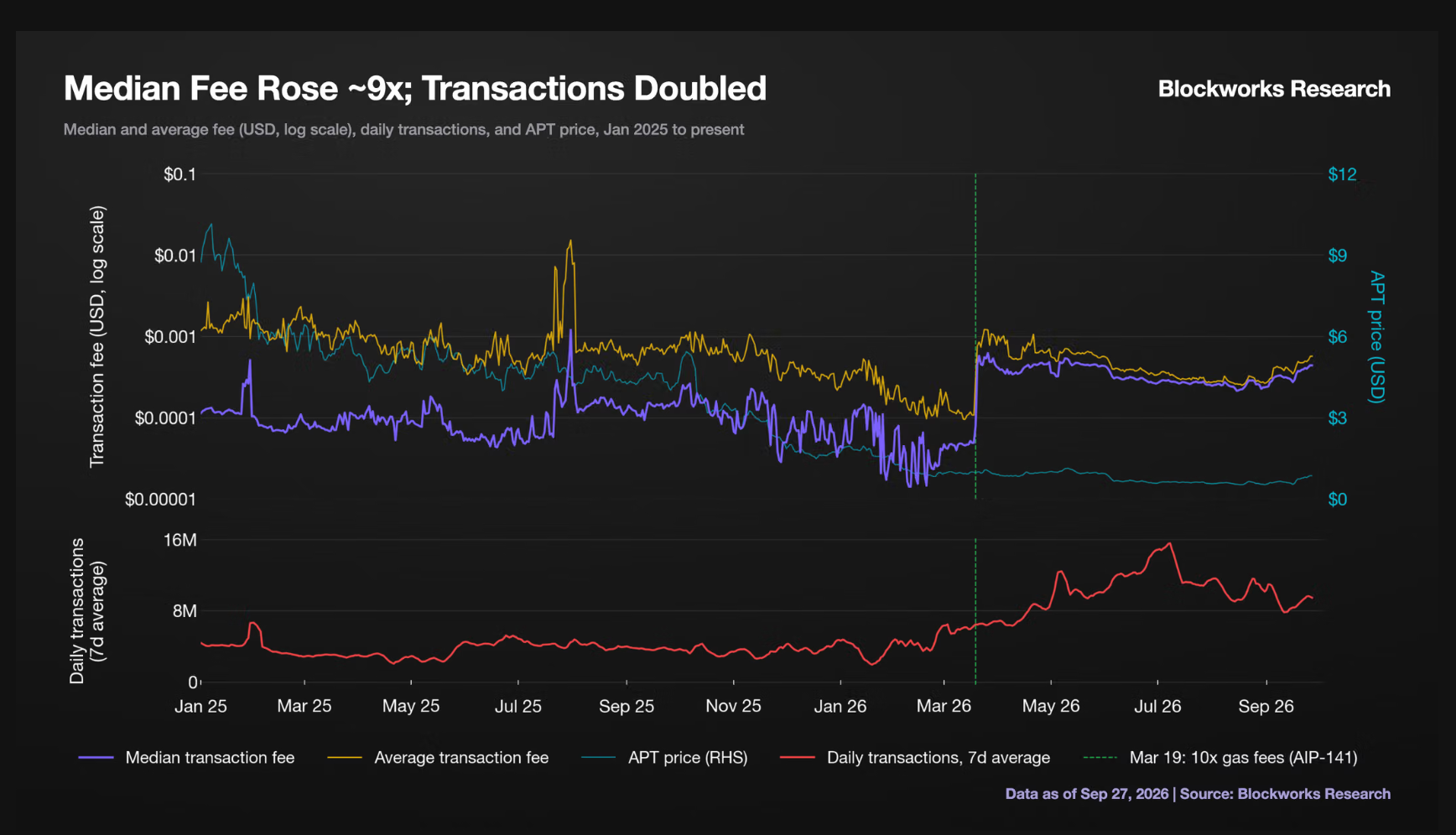
Finally, Aptos raised gas fees, the small charges users pay to process transactions, about tenfold. The median fee went from roughly $0.00004 to $0.0003, which is still a fraction of a cent.
Put together, the report says, net supply growth fell about 70%, from roughly 5% a year to 1.5%.
Trending on TheStreet Roundtable:
Every fee goes up in smoke
The fee change matters because Aptos has burned its gas fees since launch. Burning means those tokens are permanently removed from circulation.
Before the repricing, daily burns averaged about $242, which offset only around 0.2% of new issuance. Over the trailing 30 days, the report puts the daily burn at about $3,500, covering roughly 10% of issuance.
Blockworks credits about half of that improvement to the staking cut. It attributes the rest to APT’s lower price, which shrinks the dollar value of newly issued tokens.
Activity has helped too. Daily transactions rose from about 4.5 million in February to more than 12 million by June, then settled near 9 million in September.
 Source: Blockworks Research
Much of that came from Decibel, a perpetual futures exchange incubated by Aptos Labs.
Perpetual futures are derivatives that let traders bet on price moves without an expiry date. The report says Decibel accounts for about 98% of Aptos transactions.
The road to breakeven
Aptos isn’t deflationary yet. The report estimates the network would need about 10 times its current Decibel-style trading activity, roughly 1,050 transactions per second against today’s 105, for burns to match issuance.
The supply picture is also improving. Investor and team vesting wraps up this month, so yearly token unlocks drop from about 135 million APT to about 21 million.
Source: Blockworks Research
Using Token Holder Net Income, a Blockworks metric that measures what a network earns after paying its validators, Aptos came out at about +$4.21 per $10,000 of fully diluted value as of August.
Solana came in at +$0.15, Ethereum at −$0.67 and Sui at −$5.67.
Whether Aptos actually reaches deflation now depends on traders showing up in far greater numbers.
Related: Dave Ramsey turns Pokémon addiction into a marriage lesson