ARK Invest’s DeFi Quarterly noted a broad recovery in the third quarter of 2026. The rebound was spurred largely by tokenized stocks, even though a large part of the activity is still reliant
ARK Invest’s DeFi Quarterly noted a broad recovery in the third quarter of 2026.
The rebound was spurred largely by tokenized stocks, even though a large part of the activity is still reliant on brokerage distribution and token incentives. There was a drop in Ethereum’s mainnet revenue to ~$40.6 million from $63 million.
Tokenized equities grow into a $50 billion market
The report noted a glaring shift in the location traders choose to put their money. In fact, there was a ninefold increase in the trading of tokenized stocks on decentralized exchanges, hitting the $50 billion mark.
Decentralized exchanges offer users the opportunity to swap assets in the absence of an intermediary. The $50 billion figure amounts to about 9% of spot DEX volume globally, up from ~1% in Q2.
There was an upward trend in the overall spot DEX volume. It saw a 13% increase, hitting the $571 billion mark. This also happened to be its first quarterly gain in 12 months. The ratio of decentralized to centralized exchange spot trading also swung back to 23.3% from 20.3%.
The top venues for tokenized equity trading were BNB Chain (~ $16.5 billion) and Robinhood Chain (~$13.7 billion). The most-traded names were NVIDIA (NVDA) at ~$3.1 billion and the SPDR S&P 500 ETF Trust (SPY) at ~$2.5 billion.
Robinhood Chain stood out as a clear example of how quickly a consumer brokerage can seed a network. Q1 saw the chain produce around $65 billion in DEX volume and network revenue of about $51 million, almost at par with BNB Chain.
Perp traders hold bigger, fewer positions
Perpetual futures DEXs saw a 76% increase, hitting the $24 billion mark, while trading volume also dropped by 16%. Also, the percentage of decentralized futures dropped to 11.7%.
The trend could be blamed on fewer but larger and longer-held positions, led by Hyperliquid and its HIP-3 markets, according to ARK.
Stablecoins and RWAs rise as supply dips
There was an increase in the amount of stablecoin transactions, with adjusted volumes going up by 16% each quarter to about $781 billion. The average monthly active addresses reached 73 million, a 39% increase from previous figures.
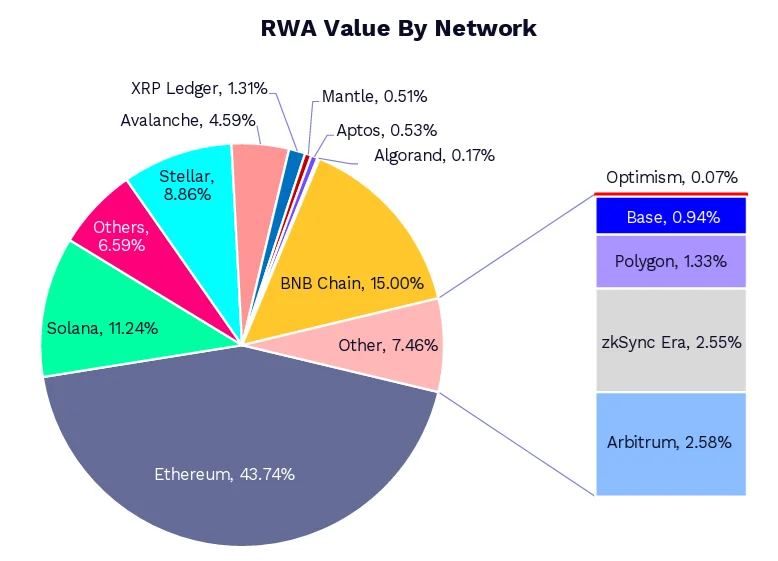
RWA share by network. Source: ARK Invest
However, the total supply of stablecoins saw a downward trend. A 3% drop took it to about $309 billion, even though USDT and Ethereum (which make up the majority of the market) maintained previous levels.
Another report confirmed the downward trend. Based on the report, there was a growth in stablecoin payments by 45%, hitting the $482 billion point. This occurred through September.
Supply, on the other hand, went up a little by 0.4%.
This trend is as a result of transfers happening more frequently but at a smaller scale.
Real-world asset value in ARK’s data grew 19% to around $39 billion. Lending protocol deposits rose by 51% to $81 billion, with Morpho reaching a 19% deposit share, while active loans grew about 41% to $29 billion.
Ethereum’s yield runs on fresh issuance
Cryptopolitan reported that Ethereum hit record levels in terms of supply, with about 43.8 million staked by the end of Q3. There was some bad news, though, as the average annualized yields dropped from 2.81% to 2.61%. This is due to the fact that rewards are spread across a much larger pool. Almost the entire yield was from new issuance, while about 3% came from MEV and priority fees.
There was a drop in Ethereum’s network revenue, with ETH dropping from $63 million to about $40.6 million in Q3.
Solana set its own staking record at 440.5 million SOL, about 69% of supply, with newly issued tokens making up roughly 90% of returns. Across both chains, the rewards paying stakers are largely inflation, not fees from real demand.
If you're reading this, you’re already ahead. Stay there with our newsletter.