The AscendEX collapse didn’t arrive with fireworks. It arrived with frozen withdrawals, a shutdown notice, and a lot of uncomfortable questions. After operating since 2018, the centralized cr
The AscendEX collapse didn’t arrive with fireworks. It arrived with frozen withdrawals, a shutdown notice, and a lot of uncomfortable questions. After operating since 2018, the centralized crypto exchange permanently halted trading, deposits, staking, and swap services effective July 1, 2026, while placing all remaining withdrawals under mandatory manual review.
Officially, the exchange blamed the full enforcement of the European Union’s MiCA regulations and the failure of a strategic liquidity transaction. Together, those developments left the platform unable to continue normal operations.
Shutdown Raises Bigger Liquidity Questions
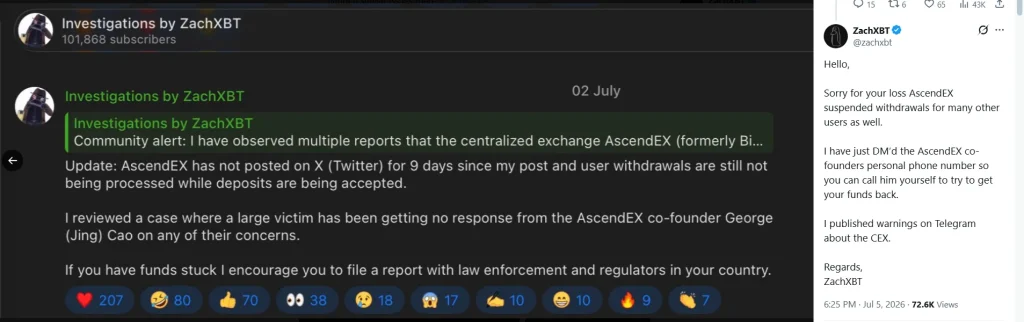
The regulatory explanation doesn’t tell the entire story. Independent on-chain observations by ZachXBT had already raised concerns weeks before the closure.
Public hot wallets across Ethereum, Tron, and Solana reportedly showed significantly reduced balances of major assets including ETH, SOL, and USDT. That fueled concerns that liquidity issues may have existed well before the July deadline. The exchange had also previously suffered a $78 million hack in December 2021, adding to speculation that financial pressure had been building for years.
Meanwhile, reports suggested users could still deposit funds while withdrawals were delayed or blocked, creating further uncertainty around the platform’s financial condition.
Manual Withdrawals Offer Little Certainty
Perhaps the most worrying detail lies inside the exchange’s own shutdown terms.
ascendex

ascendex

AscendEX is the top online trading platform and digital asset exchange, connecting the decentralized cryptocurrency market with the centralized financial industry. It provides millions of cryptocurrency traders worldwide with a wide range of products and high-quality digital assets. Company Details Founders: George Cao, Ariel Ling, Cao Jing Founded: 2018 Headquarters: Singapore CEO: George Cao Key Features: Provides a variety of trading options, such as margin, cash, and spot trading. Allows users to generate passive income from their holdings by supporting both fixed and adjustable staking options. Provides an intuitive user interface that is appropriate for both new and expert users. Offers instructional materials, like as articles, tutorials, and tips, to help traders comprehend cryptocurrency investing and trading. Centralised Exchange

acknowledged that it cannot guarantee either the timeline or the final amount users may receive through the manual withdrawal process.
That’s hardly reassuring. Manual reviews can be expected during extraordinary events, but uncertainty over payout amounts has intensified concerns among users whose assets remain locked.
Some investors have reportedly been unable to obtain transaction IDs for pending withdrawals, leaving them waiting without a clear resolution.
AscendEX Collapse Rekindles Custody Debate
The AscendEX collapse is another reminder that centralized exchanges remain dependent on operational resilience, liquidity, and regulatory compliance. As stricter frameworks like MiCA reshape the industry, platforms unable to satisfy those requirements may face increasing pressure.
For users affected by the shutdown, the immediate priority remains recovering their funds. For everyone else, the episode reinforces an old lesson the crypto market keeps repeating: exchange access and asset ownership aren’t always the same thing.