Balancer token holders have approved a liquidation plan and simultaneously rejected an official fork proposal in a governance vote, setting the protocol on a path toward wind-down rather than
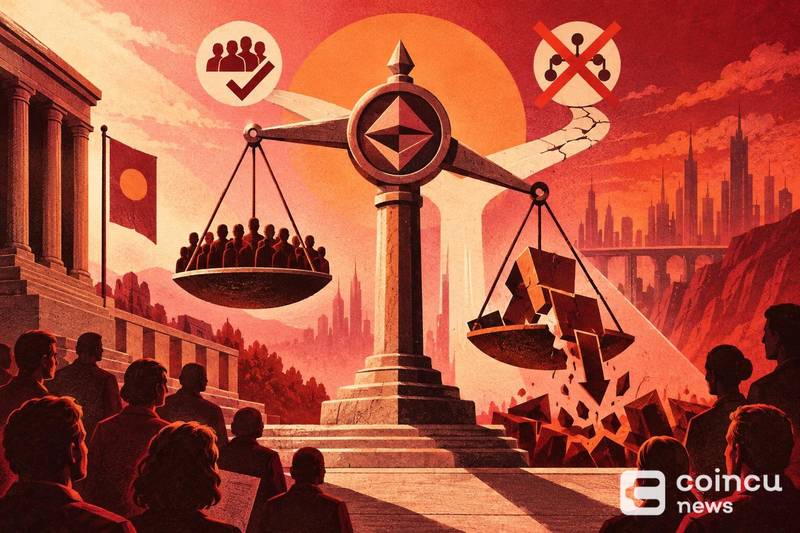
Balancer token holders have approved a liquidation plan and simultaneously rejected an official fork proposal in a governance vote, setting the protocol on a path toward wind-down rather than continuation under a new structure. The dual outcome closes off the fork route that had been presented as an alternative, leaving liquidation as the holder-endorsed direction for the protocol.
Holders Endorse Liquidation as the Governance-Approved Route
The governance decision confirms that a majority of BAL holders voted in favor of a structured liquidation plan, making it the formally approved outcome for the protocol. No vote tally, execution date, or specific asset breakdown has been confirmed in publicly available governance materials as of this reporting; those details should be verified directly against official Balancer governance records at gov.balancer.fi. For related coverage, see Balancer Hacks: 2,000 ETH Laundered via Tornado Cash.
The approval marks a definitive governance signal, distinct from a soft sentiment poll, because it converts holder preference into an actionable mandate. For DeFi protocols facing existential decisions, a passed liquidation vote typically triggers a defined sequence of treasury management, LP position unwinding, and token holder distributions, though the specific mechanics here remain unconfirmed pending official documentation. For related coverage, see Balancer Hackers Launder ETH via Tornado Cash.
Official Fork Proposal Fails to Win Holder Backing
Alongside the liquidation vote, holders rejected an official fork proposal that would have charted an alternative continuation path for the protocol. The rejection means the fork, as formally presented, lacks the holder mandate needed to proceed under official governance authority. Details about the proposal's technical design, its authors, or the margin of defeat have not been independently verified and should not be assumed from the headline alone.
The contrast between the two outcomes is governance-structurally significant: approving liquidation while rejecting a fork signals that the holder base did not view the proposed fork as a credible or preferable alternative. Unofficial or community-driven forks remain theoretically possible outside the governance process, but they would carry no formal protocol authority derived from this vote. Balancer has previously navigated significant protocol stress, including a composable stable pool exploit in late 2023 and subsequent hacker activity involving large ETH positions, making this governance outcome the latest in a sequence of consequential decisions for the protocol.
What the Combined Outcome Means for BAL Holders and Protocol Participants
With liquidation approved and the fork route rejected, the governance record now reflects a clear directional mandate. Liquidity providers, BAL token holders, and integrating protocols face the practical question of how and when the liquidation will be executed, none of which is confirmed from current evidence. Participants should treat the governance outcome as the confirmed fact and all implementation details as pending.
For DeFi builders and integrators that rely on Balancer's weighted and stable pools, the approved liquidation plan introduces counterparty and liquidity risk that was not previously governance-formalized. Protocols with active Balancer integrations, including those using BAL-weighted treasury positions similar to those the team managed during prior exploit negotiations, will need to assess exposure against whatever wind-down timeline governance ultimately publishes.
What to Monitor as the Liquidation Plan Moves Toward Execution
The next concrete trigger to watch is the publication of execution terms: the asset liquidation schedule, the distribution mechanism for remaining treasury value, and any defined timeline for closing active pools. These details have not been confirmed as of this report and must be sourced from official Balancer governance posts or on-chain governance transactions.
Holders should also monitor whether any community-driven fork proposals emerge outside the official governance track following the rejection of the formal proposal. Such efforts would carry no mandate from this vote but could still attract developer and liquidity interest independently. The governance forum at gov.balancer.fi and the official Balancer X account are the primary sources to watch for execution updates.
FAQs
What did Balancer holders approve?
Balancer token holders approved a liquidation plan through a governance vote. Specific terms, asset scope, and execution timeline have not been confirmed in publicly available sources as of this reporting.
Was the official Balancer fork proposal approved?
No. Holders rejected the official fork proposal in the same governance process. The fork, as formally presented, does not carry holder-endorsed authority to proceed. Community-initiated forks outside the official governance process are a separate matter not resolved by this vote.
What details should holders watch for next?
Holders should track the official publication of liquidation execution terms, including asset schedules, distribution mechanics, and pool closure timelines, via gov.balancer.fi and official Balancer communications. Any subsequent governance proposals, including revised fork attempts, should also be monitored for quorum and approval thresholds.
Additional source references: source document 1, source document 2.
Disclaimer: This article is for informational purposes only and does not constitute financial or investment advice. Cryptocurrency and digital asset markets carry significant risk. Always do your own research before making decisions.
The post Balancer holders approve liquidation plan, reject fork was initially published on Coincu.