Thanksgiving is just a day away, and crypto investors aren't feeling very thankful. Why? Bitcoin (BTC) fell 2.8% to $58,478.85 early Wednesday. That puts it near its lowest level since last w
Thanksgiving is just a day away, and crypto investors aren't feeling very thankful. Why?
Bitcoin (BTC) fell 2.8% to $58,478.85 early Wednesday. That puts it near its lowest level since last weekend's selloff. At the time of writing, it was trading at $58,632.
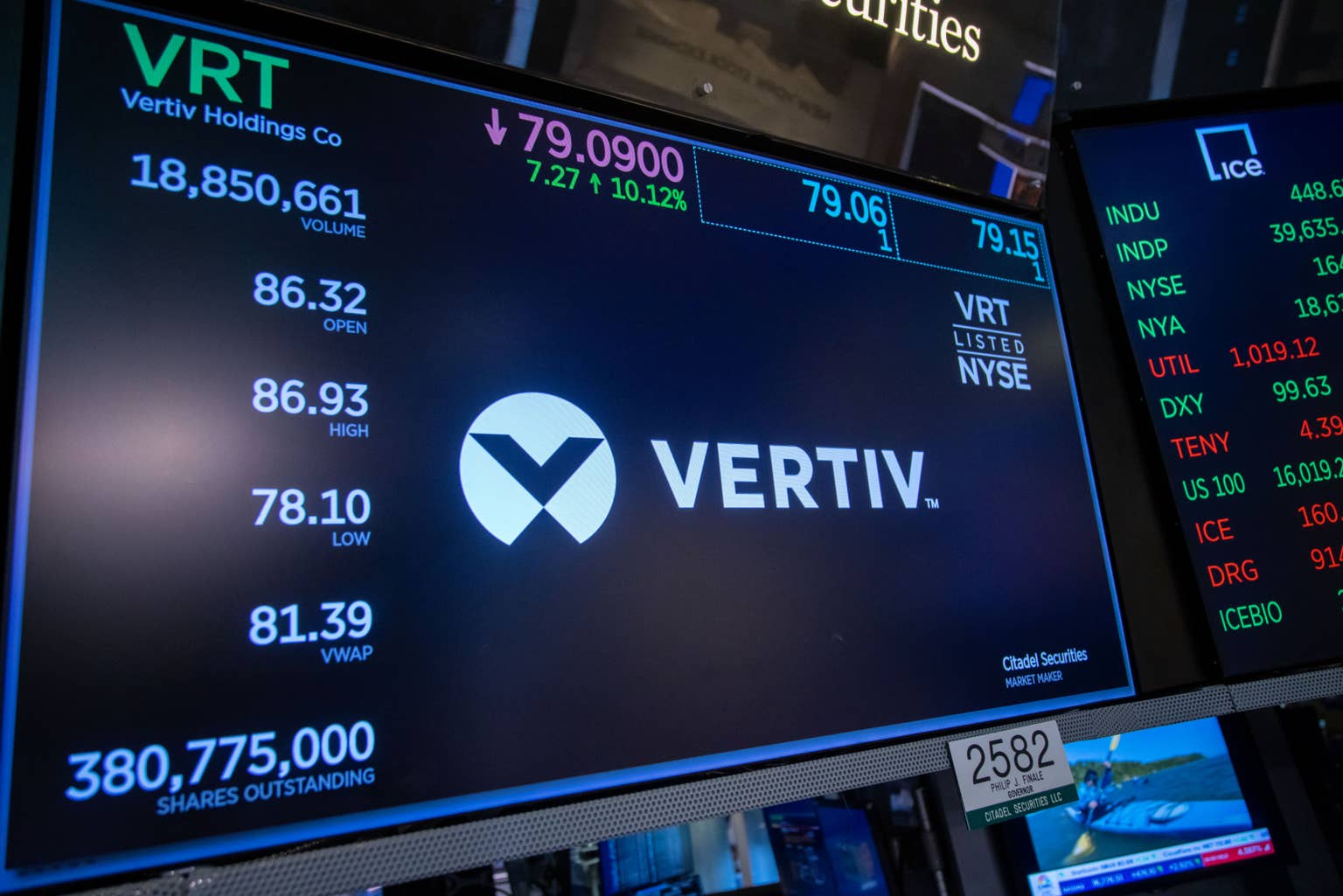
Crypto stocks are sliding with it. Strategy (MSTR), the largest corporate BTC holder, fell 3.56% in premarket trading, and Coinbase (COIN) dropped 2.56%.
Bitcoin miners were hit harder. MARA Holdings (MARA) lost 4.07%, while IREN (IREN) sank 6.25%.
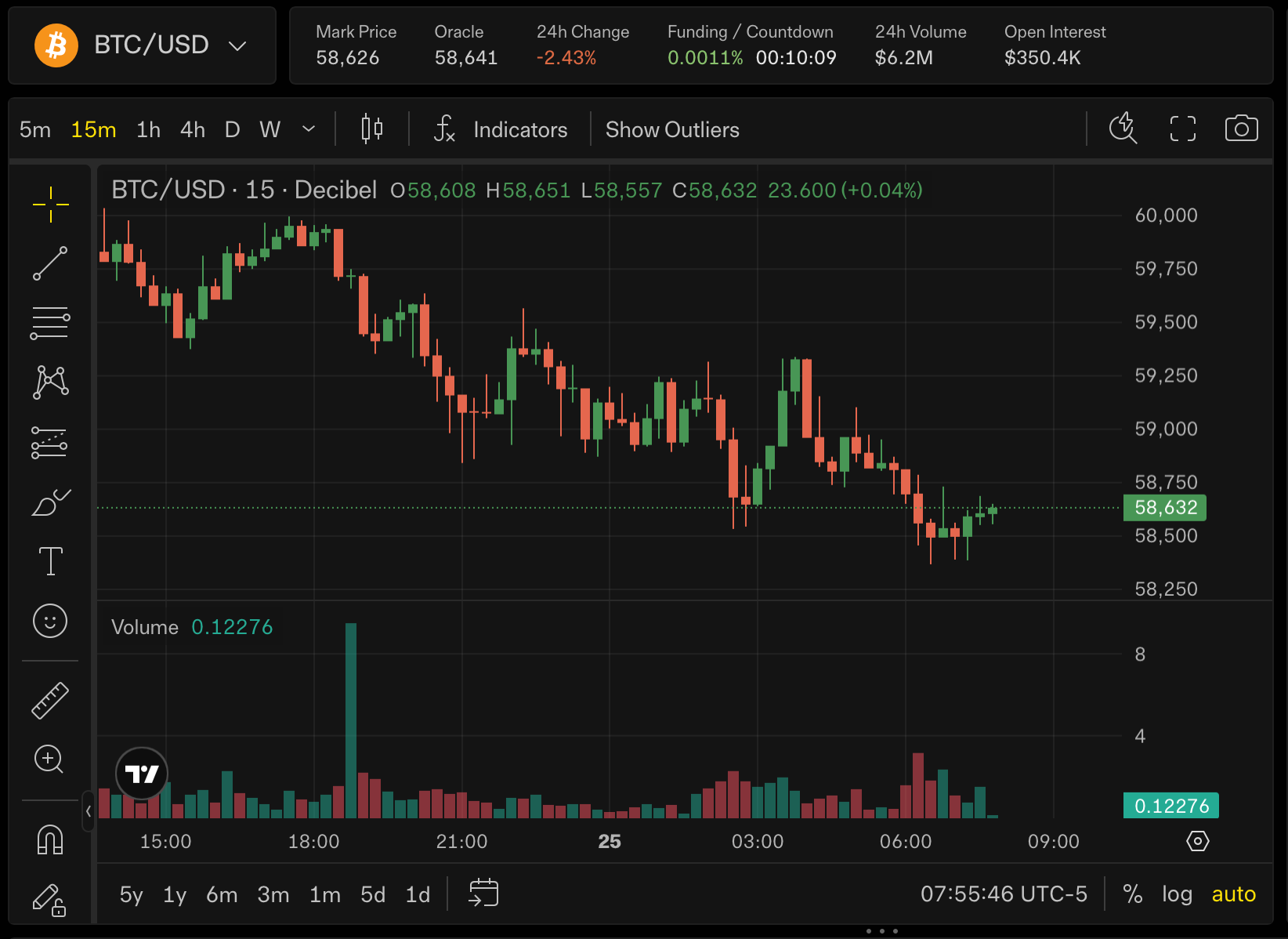
BTC/USD. Source:
Decibel
The trigger may have come from Washington.
The Trump administration is preparing to announce new tariffs on 16 major U.S. trading partners, including China and the European Union.
Tech stocks were hit hard. Nasdaq 100 futures dropped more than 3%, while S&P 500 futures fell 1.96%.
Futures refer to contracts that allow traders to bet on where an index is going, so they show the mood on Wall Street before the opening bell.
Investors are also hunting for bigger swings.
The Cboe Volatility Index, or VIX, Wall Street’s fear gauge, rose more than 18% to roughly 31. The figure is well above a long-term median of around 17.6, according to a Reuters report.
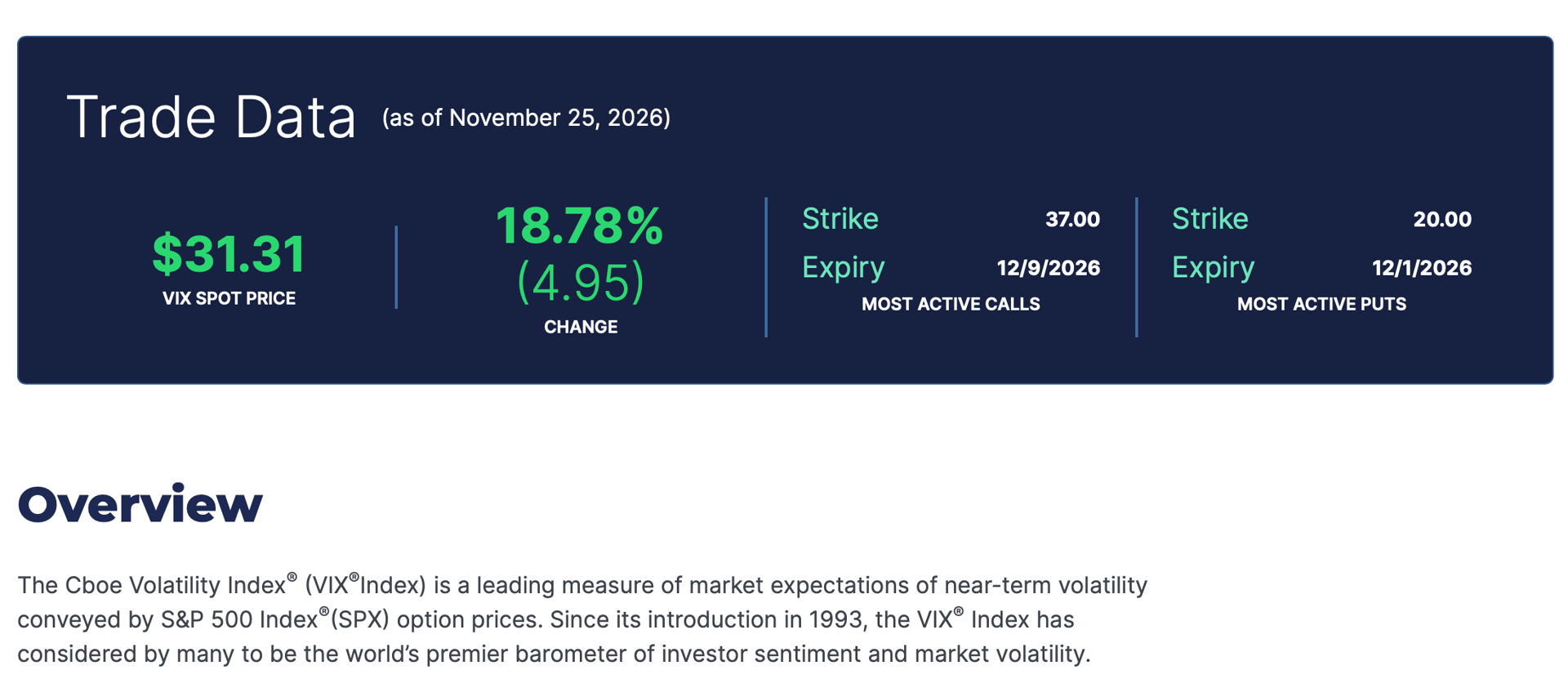
VIX sits well above its long-term median. Source:
CBOE
That spills over into crypto. Bitcoin has often moved in step with tech stocks. Since January 2024, it has fallen on 77% of the trading days when the Invesco QQQ Trust (QQQ), which tracks the Nasdaq 100, dropped 1% or more, according to market maker DWF Labs.
Not everyone expected that link to hold. Just last week, BlackRock's head of digital assets, Robbie Mitchnick, pointed to a "very big decoupling" between bitcoin and AI stocks on The Pomp Podcast.
Days later, both sold off together. Wednesday morning followed the same pattern, with Nasdaq 100 futures down more than 3% and bitcoin down 2.8%.
Related: China tariff threat knocks Bitcoin below $60,000
Where does the cash go?
Investors are still pulling money out.
U.S. spot Bitcoin ETFs recorded net outflows of $231.56 million on Tuesday, SoSoValue data showed. Money has now left these funds for six straight days. BlackRock’s iShares Bitcoin Trust (IBIT) accounted for $175.3 million of Tuesday’s outflows.
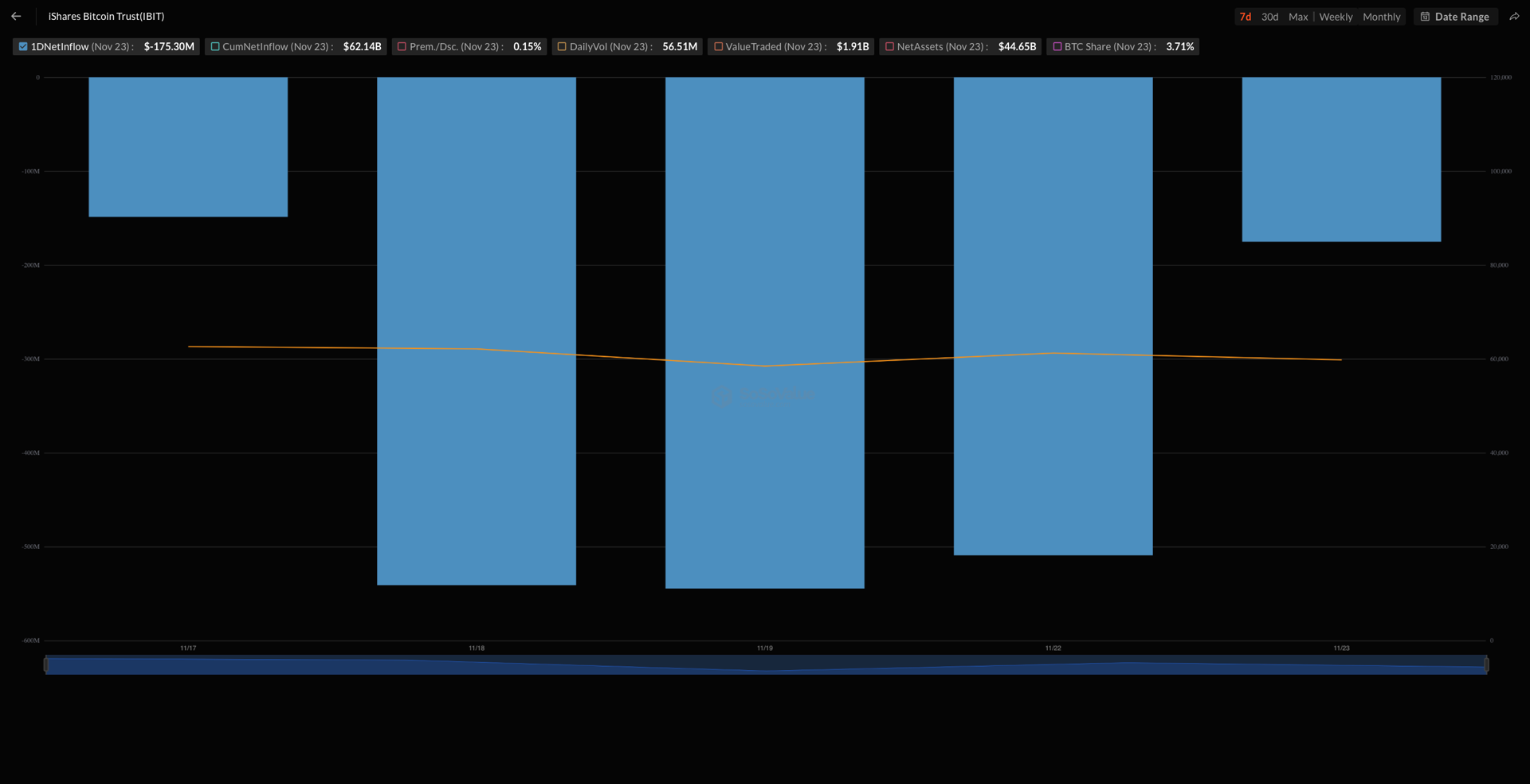
IBIT 1-week performance. Source:
SoSoValue
The situation as a whole is more complex.
The funds' total assets fell to $72.01 billion from $94.43 billion on Nov. 9. That’s around $22 billion evaporated in just over two weeks, mostly by way of falling prices.
Related: Nvidia's stock surge is crypto's worst nightmare, Arthur Hayes warns
Investors face one more test before the opening bell
The government publishes October data on Personal Consumption Expenditures (PCE), the Fed’s preferred inflation measure, at 8:30 a.m. ET. It will be released with an updated forecast for third-quarter GDP. Both reports will be posted on the Bureau of Economic Analysis Website.
This is the last major inflation reading before the Fed meets on Dec. 9. Economists are forecasting that annual inflation will increase to 3.8%, up from 3.6%.
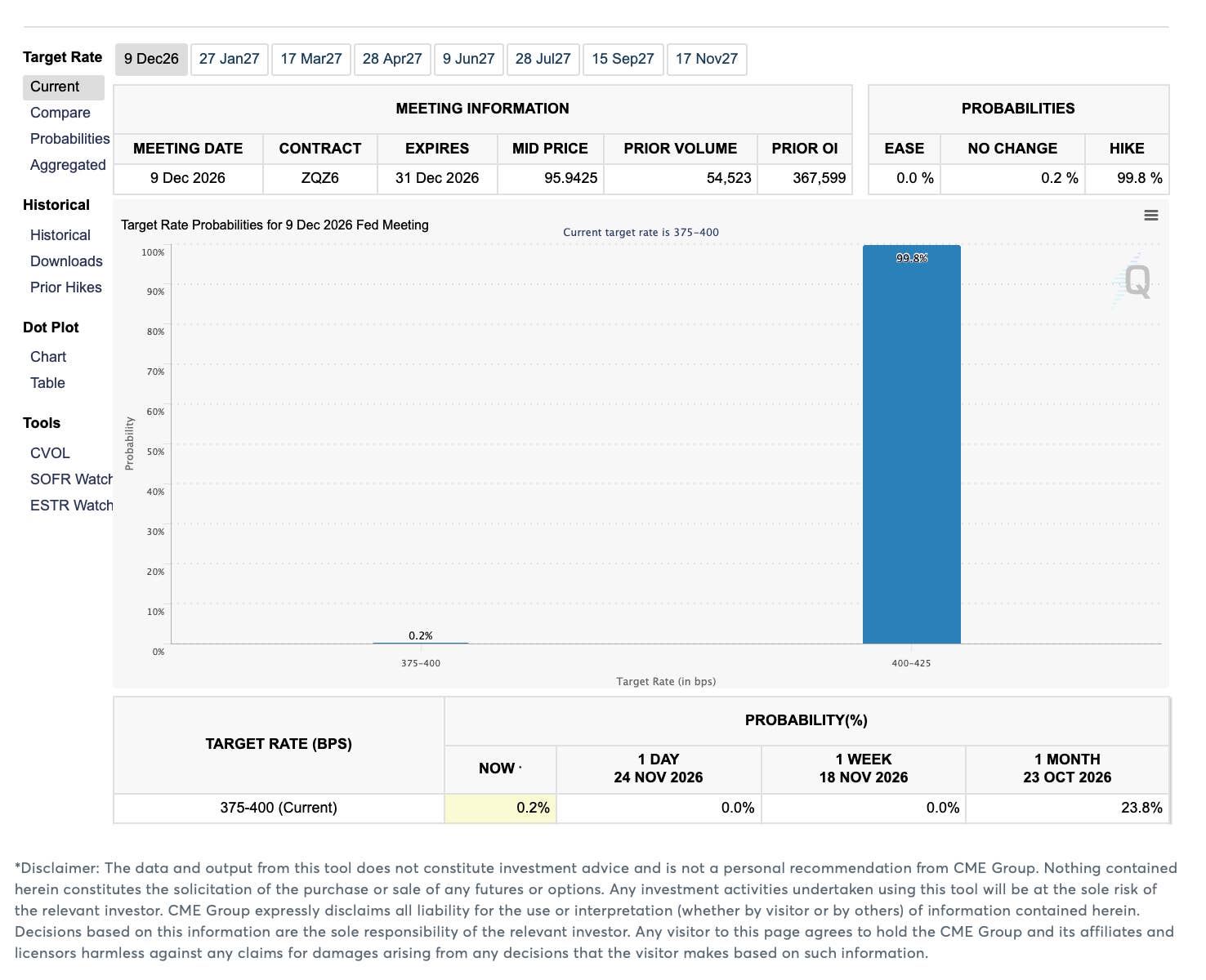
Traders are already placing big bets on a rate increase. The odds are at around 97%, according to CME’s FedWatch tool, which tracks those bets.
Traders are betting on a December hike. Source:
FedWatch
A hotter number could drive bets for more hikes next year. That is important for your money. Higher rates drive up the cost of loans and make safer alternatives like Treasuries more attractive. That can siphon money away from riskier bets like bitcoin.
More on TheStreet Roundtable:
Wall Street takes a break on Thanksgiving
U.S. stock markets close Thursday for the Thanksgiving holiday. They close at 1 p.m. on Friday. ET, Black Friday.
Bitcoin continues to trade through the holiday, but not Bitcoin ETFs and crypto stocks. If Bitcoin moves big on Thursday, people holding it have to wait until Friday to react with funds like IBIT or stocks like Strategy.
Markets might also be closed when the tariff announcement comes. Holiday trading is often light, which can lead to larger-than-normal price swings.
Bitcoin is down over 20% so far in November, on pace for its worst month since June 2022.
Disclaimer: This article is for informational purposes only and does not constitute financial advice. Cryptocurrency investments are highly volatile and risky. Always conduct your own research before making any investment decisions.