Sen. Bernie Sanders has unveiled a sweeping legislative proposal for artificial intelligence giants. In an opinion piece published in the New York Times on June 1, the Vermont senator outline
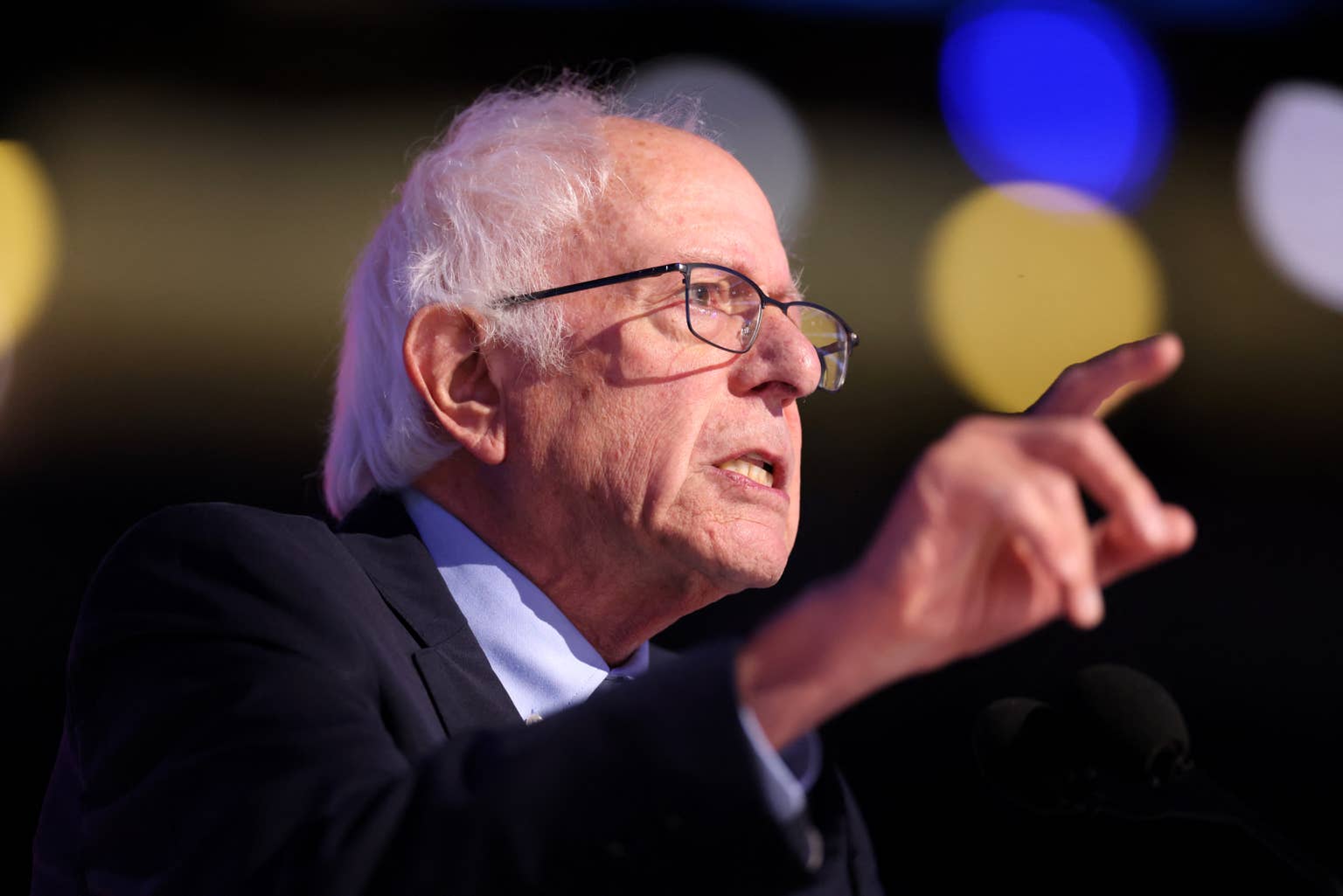
Sen. Bernie Sanders has unveiled a sweeping legislative proposal for artificial intelligence giants.
In an opinion piece published in the New York Times on June 1, the Vermont senator outlined what he is calling the American A.I. Sovereign Wealth Fund Act.
This comes at a time when some of the major tech and AI giants are gearing up for their public debut.
Related: Elon Musk's SpaceX moves millions in Bitcoin amid IPO reports
A 50% stock tax on AI giants
Sanders said the bill would impose a one-time 50% tax, paid in stock rather than cash, on companies like OpenAI, Anthropic, and xAI.
Interestingly, Anthropic revealed confidentially filing for an IPO the same day Sanders' op-ed went live. Although the details are not public yet, it did beat its rival OpenAI in the IPO race.
Meanwhile, xAI is no longer a single entity. SpaceX acquired it in a record $1.25 trillion merger to build the SpaceXAI division focusing on orbital data centers for AI compute. Now SpaceX itself filed its S-1 with the SEC on May 20, targeting a June 12 IPO and at least $1.8 trillion, which would be the largest listing in history.
Under Sanders' proposal, the federal government would acquire half of each major AI company's equity through a one-time levy. Those shares would be placed into a newly created sovereign wealth fund, giving the public voting rights and equal representation on each company's board.
"The federal government would have the power, through its voting shares and an equal representation on each company's board, to block decisions that hurt our citizens and to push for policies that help them," Sanders wrote.
The senator framed the proposal as a return of value to its rightful owners, arguing that AI was built on the collective creative output of millions, including books, songs, journalism, scientific research, and code, much of which was used without consent or compensation.
He also noted that OpenAI itself has proposed a "public wealth fund" giving every citizen a stake in AI-driven growth, and that Anthropic CEO Dario Amodei has endorsed a similar concept.
Sanders said the fund's proceeds would initially flow as direct payments to Americans and eventually finance universal access to health care, education, and housing.
More News:
What it means for crypto public companies
While Sanders' bill targets pure-play AI developers, the broader principle could ripple across crypto-adjacent public companies that have pivoted aggressively into AI infrastructure.
Bitcoin miners, including IREN (NASDAQ: IREN), Core Scientific (NASDAQ: CORZ), TeraWulf (NASDAQ: WULF), Hut 8 (NASDAQ: HUT), Cipher Digital (NASDAQ: CIFR), and Applied Digital (NASDAQ: APLD) have all reoriented portions of their businesses toward AI and high-performance computing hosting, signing multi-billion-dollar deals with hyperscalers and AI labs.
Even Coinbase (NASDAQ: COIN) has rolled out AI-driven features for its retail and institutional users.
If Congress were to expand the sovereign wealth framework beyond top-tier AI labs, these crypto-native firms could find themselves caught in the regulatory net, particularly those whose valuations have been re-rated upward on the strength of AI hosting revenue rather than digital asset operations.
For instance, IREN just bagged a $3.65 billion investment-grade GPU financing facility to support delivery under its Microsoft AI cloud contract. In November 2025, Microsoft signed a five-year, $9.7 billion deal with the company for access to Nvidia chips.
Related: Popular exchange reportedly lays off ahead of IPO