Bitcoin’s market rhythm is changing, and the old calendar may no longer explain the full picture. For years, traders leaned on the halving cycle as a rough map: supply gets cut, demand rises,
Bitcoin’s market rhythm is changing, and the old calendar may no longer explain the full picture. For years, traders leaned on the halving cycle as a rough map: supply gets cut, demand rises, price runs, and then the market cools. That pattern still matters, but fresh data now shows a weaker demand base, softer liquidity, and a more mature market structure. The result is a serious debate over whether the Bitcoin 4-year cycle is still driving BTC or simply becoming one part of a much larger machine.
Bitcoin 4-Year Cycle Looks Less Predictable in 2026
The Bitcoin 4-year cycle has long been tied to the halving, which reduces the amount of new BTC entering circulation. In past cycles, that supply cut helped create pressure when demand stayed strong. This time, the setup looks different.
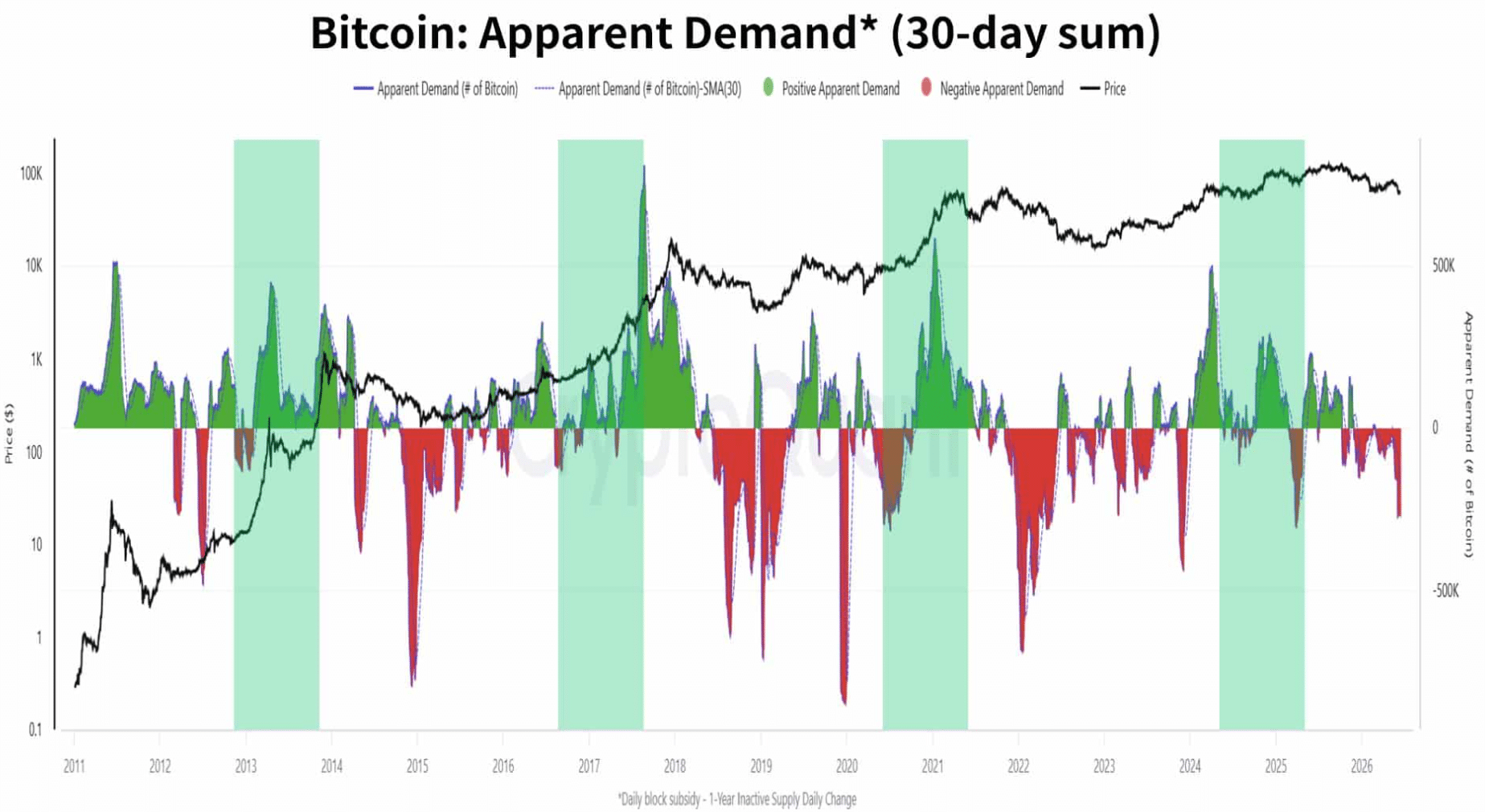
Fresh demand has been weak through much of 2026. Apparent demand reportedly dropped near -147,000 BTC in May, showing that buyers have not absorbed supply with the same force seen in earlier post-halving periods. That does not mean Bitcoin has lost its market appeal. It means the market is no longer moving on scarcity alone.
BTC was recently trading near the mid-$60,000 range, which shows demand has not disappeared. Yet price action has looked heavier than many bulls expected after the halving. The Bitcoin 4-year cycle may still influence sentiment, but it is no longer enough to explain every move.
MVRV Shows a Cooler Market
One of the clearest signs comes from the MVRV ratio, a metric that compares Bitcoin’s market value with its realized value. In simple terms, it helps show whether BTC looks overheated or undervalued compared with the price at which coins last moved.
The latest cycle saw MVRV peak around 2.74 in 2025. That is far below earlier cycle peaks of 3.96, 4.72, and 5.88. The message is fairly plain. Bitcoin did not reach the same level of speculative heat this time.
That can be read in 2 ways. A lower MVRV peak may point to weaker upside momentum. It may also show that Bitcoin has become a larger, deeper, and more institutionally held asset. Mature markets often move with less drama, just as large-cap stocks rarely behave like early-stage tech names.
Liquidity Is Now the Main Driver
The Bitcoin 4-year cycle once worked because supply shocks had a clearer effect on a smaller market. Today, liquidity may matter more than the halving itself. ETF flows, stablecoin growth, global money supply, and institutional risk appetite now sit at the center of the BTC outlook.
Spot Bitcoin ETFs brought a new type of buyer into the market, but 2026 has also shown signs of fatigue. Outflows from these products point to weaker institutional appetite during periods of uncertainty. When ETF demand slows, Bitcoin loses one of its strongest post-2024 support pillars.
Stablecoin supply has grown near $320 billion, but new issuance has cooled. That matters because stablecoins often act like dry powder in crypto markets. When fresh stablecoin supply rises, traders usually have more capital ready to move into BTC and altcoins. When growth slows, the market can feel stuck in second gear.
Exchange Reserves Tell a Mixed Tale
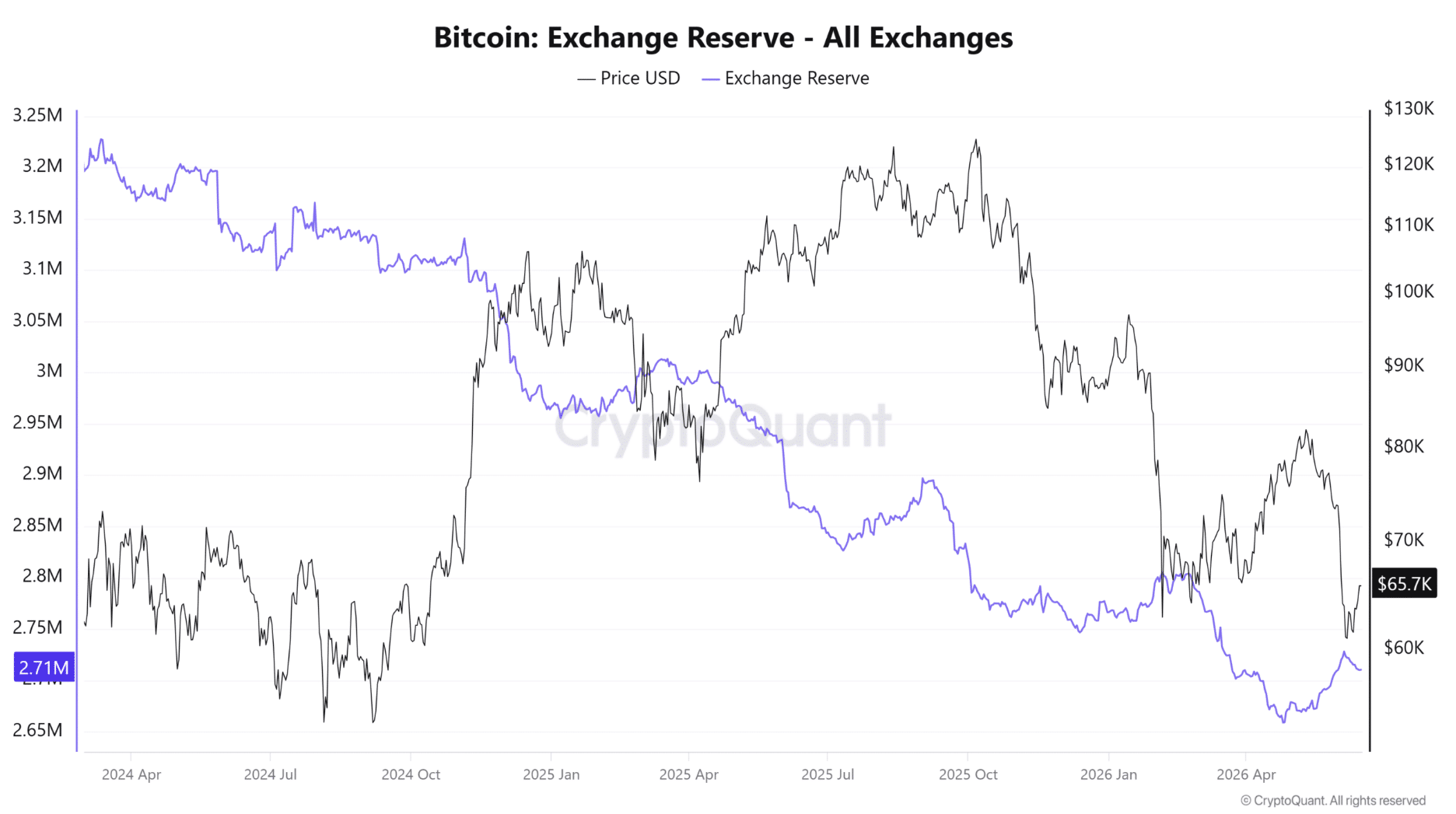
Exchange reserves have reportedly fallen toward 2.7 million BTC, which means fewer coins are sitting on trading platforms. That often supports a bullish view because it shows more holders are moving coins into self-custody or long-term storage.
Still, low exchange reserves do not guarantee higher prices. Bitcoin also needs active demand. A tight supply can support the market, but it cannot create a rally by itself. That is why the Bitcoin 4-year cycle now looks more complicated than before.
The current drawdown has also been less severe than past bear markets. Bitcoin has avoided the kind of 70% to 80% collapse seen in older cycles. Institutional ownership may be helping absorb panic selling, even as it reduces the explosive upside that retail-led cycles once produced.
What Traders Should Watch Next
The key signals are not hard to spot. Traders should watch ETF flows, MVRV, stablecoin issuance, exchange reserves, global liquidity, and spot demand. Together, these indicators give a cleaner view than the halving calendar alone.
If ETF inflows return and stablecoin growth improves, Bitcoin could regain stronger momentum. If demand remains negative, BTC may continue to trade sideways or retest lower support zones. The Bitcoin 4-year cycle is not dead, but it is evolving. That is the point many traders may miss.
Conclusion
Bitcoin is no longer a small market driven mainly by halving excitement and retail speculation. It is now tied to institutional flows, global liquidity, and long-term holder behavior. The Bitcoin 4-year cycle still has value as a broad framework, but it should not be treated like a fixed clock. In 2026, demand is the real test. If fresh capital returns, BTC can recover its strength. If it does not, the old cycle playbook may keep losing power.
Frequently Asked Questions
Is the Bitcoin 4-year cycle dead?
The Bitcoin 4-year cycle is not fully dead, but it appears weaker. Halvings still affect supply, yet demand, ETFs, liquidity, and macro conditions now have a larger impact on price.
Why is Bitcoin demand important now?
Bitcoin demand matters because reduced supply only helps price when buyers are strong enough to absorb available BTC. Weak demand can limit rallies even after a halving.
What does MVRV show about Bitcoin?
MVRV shows whether Bitcoin is overheated or undervalued compared with realized value. A lower peak suggests less speculative pressure than in previous cycles.
Can Bitcoin recover if ETF flows improve?
Yes. Strong ETF inflows can bring fresh institutional capital into BTC, which may improve liquidity and support a stronger recovery.
Glossary of Key Terms
Bitcoin Halving: An event that cuts miner rewards by 50% and reduces new BTC supply.
MVRV Ratio: A valuation metric comparing market value with realized value.
ETF Flows: Money entering or leaving Bitcoin exchange-traded funds.
Stablecoin Supply: The total value of dollar-pegged crypto assets available in the market.
Exchange Reserves: The amount of BTC held on crypto exchanges.
Sources
sparkmoney
galaxy
Disclaimer: This article is for informational purposes only and does not offer financial advice. Crypto assets are volatile, and readers should do independent research before making investment decisions.