The regulator's new framework sets the stage for regulated crypto exchange-traded funds in the Thai market. Thailand's Securities and Exchange Commission has completed a regulatory framework
The regulator's new framework sets the stage for regulated crypto exchange-traded funds in the Thai market.
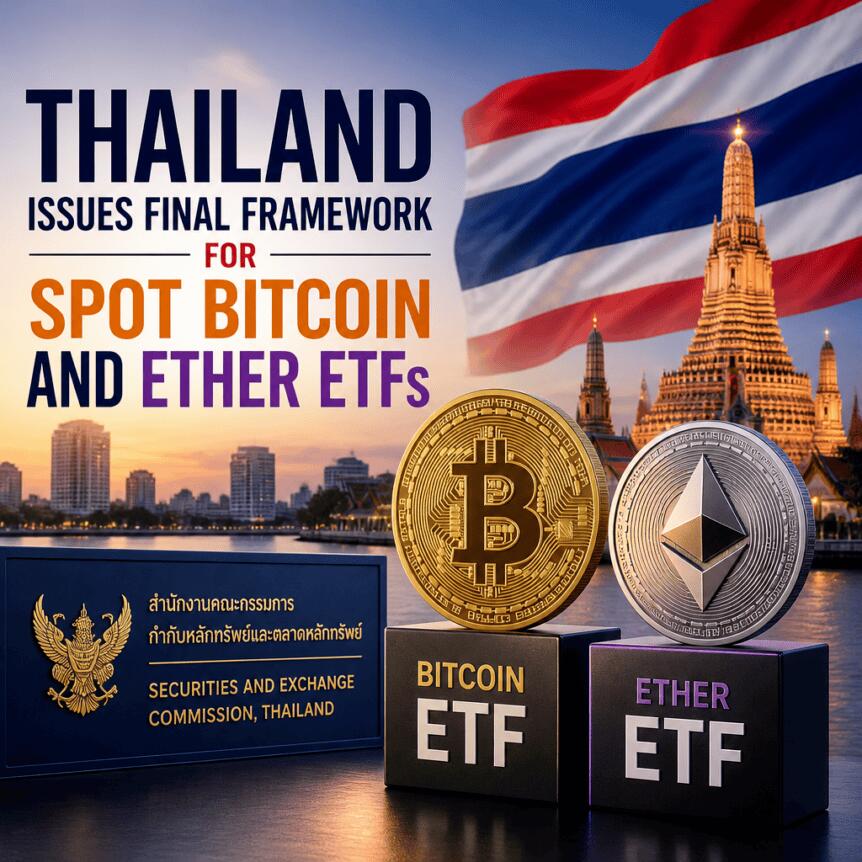
Thailand's Securities and Exchange Commission has completed a regulatory framework allowing exchange-traded funds tied to Bitcoin and Ether. The finalized rules mark a formal step toward bringing regulated crypto investment vehicles into the country's mainstream financial markets.
The announcement follows a broader pattern across Asia, where regulators have moved cautiously but steadily toward accommodating digital asset products. Thailand has historically taken a measured approach to cryptocurrency regulation, balancing investor protection concerns with growing public demand for exposure to digital assets. The new rules suggest regulators judged the market mature enough to support exchange-traded products built around the two largest cryptocurrencies by market capitalization.
Exchange-traded funds offer investors a way to gain exposure to an asset without directly holding or custodying it themselves. For Bitcoin and Ether, this structure has proven significant in other markets. The approval of spot Bitcoin ETFs in the United States in early 2024 reshaped institutional access to the asset, drawing substantial inflows from traditional finance. Thailand's move follows that broader global trend, even as specifics of local implementation remain to be detailed by issuers and the exchange.
The finalized framework does not necessarily mean products will launch immediately. Typically, regulatory approval of rules precedes applications from asset managers seeking to list specific funds. Those issuers must still meet requirements around custody, disclosure, and market surveillance before any fund reaches investors. The timeline for the first Thai-listed Bitcoin or Ether ETF to begin trading was not specified in the available reporting.
Thailand's capital markets regulator has previously taken incremental steps on digital assets, including rules governing digital asset exchanges, brokers, and dealers operating within the country. This latest move extends that regulatory architecture into the fund management space, which had largely remained separate from direct crypto trading rules until now.
The development also reflects a wider trend of regulators distinguishing between retail access to spot crypto trading and access via regulated, exchange-listed investment products. Many jurisdictions view ETFs as a way to channel investor demand through existing securities law protections, rather than leaving investors to navigate unregulated exchanges directly. This approach has become a common template as governments seek to balance innovation with oversight.
For Thai investors, the practical effect of finalized rules is the removal of a key regulatory barrier. Asset managers can now begin preparing formal applications to list Bitcoin and Ether ETFs on local exchanges. Market participants will be watching for the first issuer filings and any guidance on custody arrangements, given that custody of underlying crypto assets remains one of the more technically complex aspects of launching such products.
Thailand joins a small but growing list of countries across Asia exploring or implementing regulated crypto ETF frameworks, alongside jurisdictions such as Hong Kong, which launched spot Bitcoin and Ether ETFs in 2024.
Market Impact
The finalized rules could encourage asset managers operating in Thailand to begin preparing ETF applications, potentially increasing the range of regulated crypto investment products available to local investors. Analysts and market participants often view such regulatory clarity as a precursor to institutional capital flows, since ETFs provide a familiar wrapper for investors who may be reluctant to hold digital assets directly.
Broader market effects, if any, would likely depend on the pace at which issuers bring products to market and the scale of initial investor interest. No specific inflow or trading volume data has been reported in connection with this regulatory finalization.
Thailand's finalized ETF rules represent a formal regulatory milestone rather than an immediate market event. The next signals to watch will be issuer filings and any timeline details from the Thai SEC regarding when the first Bitcoin or Ether ETF might actually launch.
Frequently Asked Questions
What did Thailand's SEC actually finalize?
The regulator finalized rules establishing a framework under which Bitcoin and Ether exchange-traded funds can be proposed and potentially listed in Thailand.
Does this mean a Bitcoin ETF is now trading in Thailand?
Not yet. The finalized rules set the regulatory groundwork, but asset managers still need to file applications and meet further requirements before any fund can launch.
How does this compare to other Asian markets?
Thailand follows jurisdictions like Hong Kong and the United States, which have already approved spot Bitcoin and Ether ETFs, reflecting a broader regional trend toward regulated crypto investment products.
Why do regulators prefer ETFs over direct crypto trading access?
ETFs operate within existing securities law protections, giving regulators more oversight over custody, disclosure, and investor safeguards compared with unregulated spot trading platforms.
Originally reported by AltcoinGordon, written by Ethan Mercer. Republished with permission.
View the original on AltcoinGordon →
The post Bitcoin, Ether ETFs Get Green Light Under New Thai SEC Rules appeared first on TheCoinrise.com.