The Federal Reserve raised its benchmark interest rate by a quarter point to a target range of 3.75%–4.00% on September 16, 2026, in a unanimous 12-0 vote, as the FOMC cited elevated inflatio
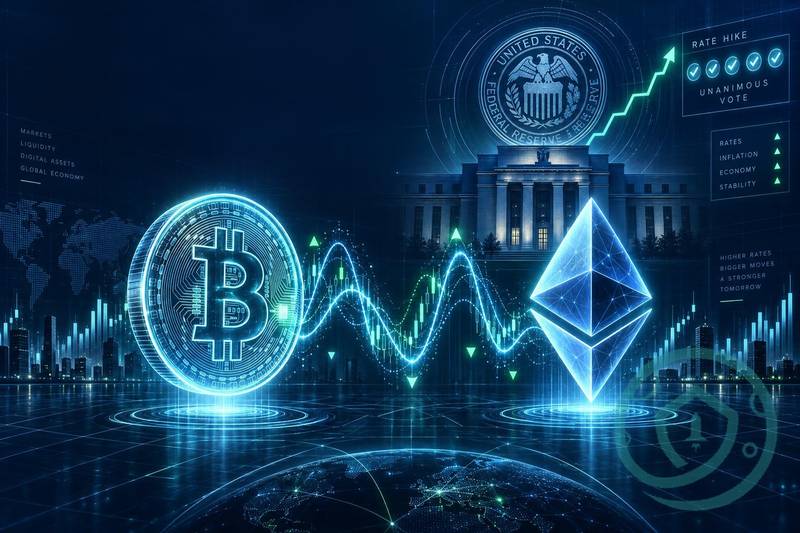
The Federal Reserve raised its benchmark interest rate by a quarter point to a target range of 3.75%–4.00% on September 16, 2026, in a unanimous 12-0 vote, as the FOMC cited elevated inflation and the need for a timelier return to its 2% objective, sending Bitcoin and ether into volatile territory.
Key Points
- The FOMC raised the federal-funds rate by 25 basis points to 3.75%–4.00% by a unanimous 12-0 vote.
- Bitcoin was trading near $76,137 around the time of the decision, with ether at $2,423.84.
- The committee's September projections revised the median 2026 PCE inflation forecast to 3.7%, with the median funds-rate path lifted to 4.1% through 2027.
Bitcoin and ether react to the unanimous quarter-point Fed rate hike
The FOMC's September 16 policy statement marked the committee's unanimous endorsement of a 25-basis-point increase, pushing the federal-funds target range to 3.75%–4.00%. The statement noted that inflation remains elevated and framed the hike as supporting a timelier return to the 2% objective, language that offered little comfort to risk-sensitive asset markets. For related coverage, see Bitcoin Recovery Unlikely to Draw AI Miners Back: CoinShares.
Fed raises target range 3.75%–4.00% The FOMC approved a quarter-point increase by a unanimous 12-0 vote on Sept. 16, 2026.
Bitcoin was priced near $76,137 in the available market-data snapshot, reflecting a 0.39% 24-hour change and a market cap exceeding $1.5 trillion. Ether was at $2,423.84, up approximately 0.85% over the same window. Whether those moves were directly caused by the rate decision or preceded it could not be independently verified at publication time.
Bitcoin market snapshot $76,137 Bitcoin was $76,137 in the supplied market-data snapshot, with a 0.39% 24-hour change; this is context, not evidence of a post-decision move.
The Crypto Fear & Greed Index sat at 50, registering as Neutral heading into and after the announcement, suggesting the market had partially priced in the hike without committing to a directional conviction. Traders had been watching the Fed alongside Bank of England and Bank of Japan decisions in the same week, compressing volatility windows across macro-sensitive assets.
Why rate decisions move crypto
Tighter monetary policy raises the opportunity cost of holding non-yielding assets like Bitcoin and ether. When the Fed lifts rates, dollar-denominated risk assets face increased competition from Treasuries and money-market instruments, a dynamic that has historically correlated with short-term crypto drawdowns even when longer-term on-chain fundamentals remain intact.
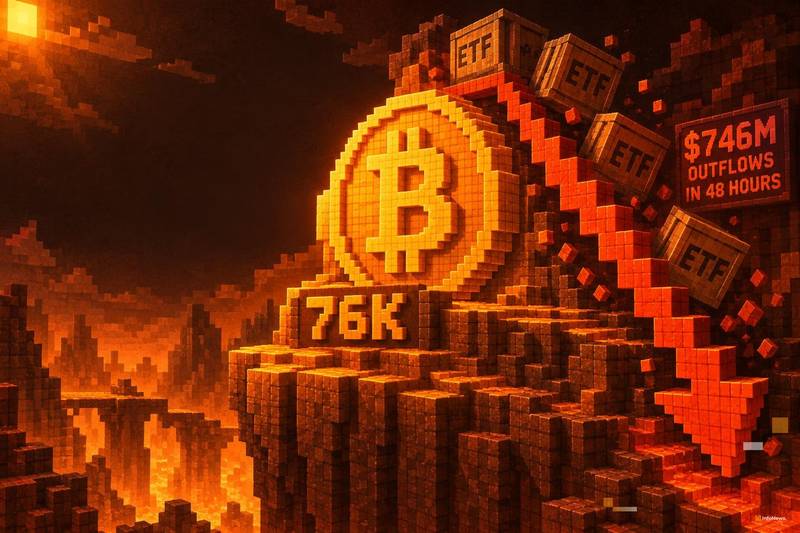
Prior to the decision, Bitcoin ETF outflows had erased a Monday rebound, reflecting institutional caution ahead of the FOMC meeting. That positioning shift was visible in both spot selling and futures funding rates in the days before September 16.
Why Warsh's inflation focus matters for crypto markets
The September 2026 projections showed a median PCE inflation forecast of 3.7% for 2026 and 2.3% for 2027, with core PCE at 3.4% and 2.5% respectively. The median appropriate federal-funds rate was marked at 4.1% for both 2026 and 2027, a meaningful upgrade from June's projections of 3.8% and 3.6%, signaling that the committee sees the tightening cycle extending further than previously anticipated.
Those projection revisions affect the liquidity backdrop underpinning decentralized finance protocols, AI-adjacent compute token markets, and speculative positioning in large-cap assets. A higher-for-longer rate path drains dollar liquidity from the global financial system, reducing appetite for tokenized assets that carry no yield by default. Analysts had flagged ahead of the meeting that a hawkish Fed posture could hurt Warsh's near-term credibility while paradoxically supporting Bitcoin as a macro hedge.
Near-term signals crypto traders will watch
The next directional trigger will likely come from August and September PCE data releases, which feed directly into the Fed's preferred inflation gauge. With the median 2026 core PCE projection at 3.4%, any print above that threshold increases the probability that the FOMC holds rates elevated into 2027 or adds another 25-basis-point increment.
AI-infrastructure tokens and compute-market protocols are exposed to the same rate sensitivity as broader crypto, given that their valuations depend on speculative demand for GPU-backed on-chain services and inference network capacity. A sustained high-rate environment compresses the risk premium available to early-stage tokenized compute projects, effectively raising the bar for new capital formation in decentralized AI infrastructure. That dynamic was already visible in the brief return of Bitcoin ETF inflows on September 14, which preceded the hike without extending into a sustained trend.
The committee's unanimous vote removes internal dissent as a near-term variable; the next meaningful policy signal will come from the November FOMC meeting and any intervening Fed communications. Crypto volatility around those dates is likely to remain elevated given the median funds-rate projection of 4.1% through 2027.
Disclaimer: This article is for informational purposes only and does not constitute financial or investment advice. Cryptocurrency and digital asset markets carry significant risk. Always do your own research before making decisions.
Read original article on aicryptocore.com