Bitcoin Falls to $81K as Ethereum and Solana Extend Crypto Selloff
BTC traded around $81,000-$82,000, extending the breakdown below the $83,000 area that had previously acted as support. Ethereum slipped below $2,500, while Solana moved toward $110, leaving
A
AnonymousCryptoCompass newsroom
October 8, 2026
2 min read
NEWS
Hero article visual / chart / editorial image
CryptoCompass editorial visual for markets coverage.
BTC traded around $81,000-$82,000, extending the breakdown below the $83,000 area that had previously acted as support. Ethereum slipped below $2,500, while Solana moved toward $110, leaving both major altcoins under heavier pressure than Bitcoin.
The latest leg lower follows the earlier BTC selloff, when rising oil prices, Treasury yields and a stronger dollar began weighing on crypto simultaneously.
Ethereum and Solana Extend the Decline
The weakness is no longer confined to Bitcoin.
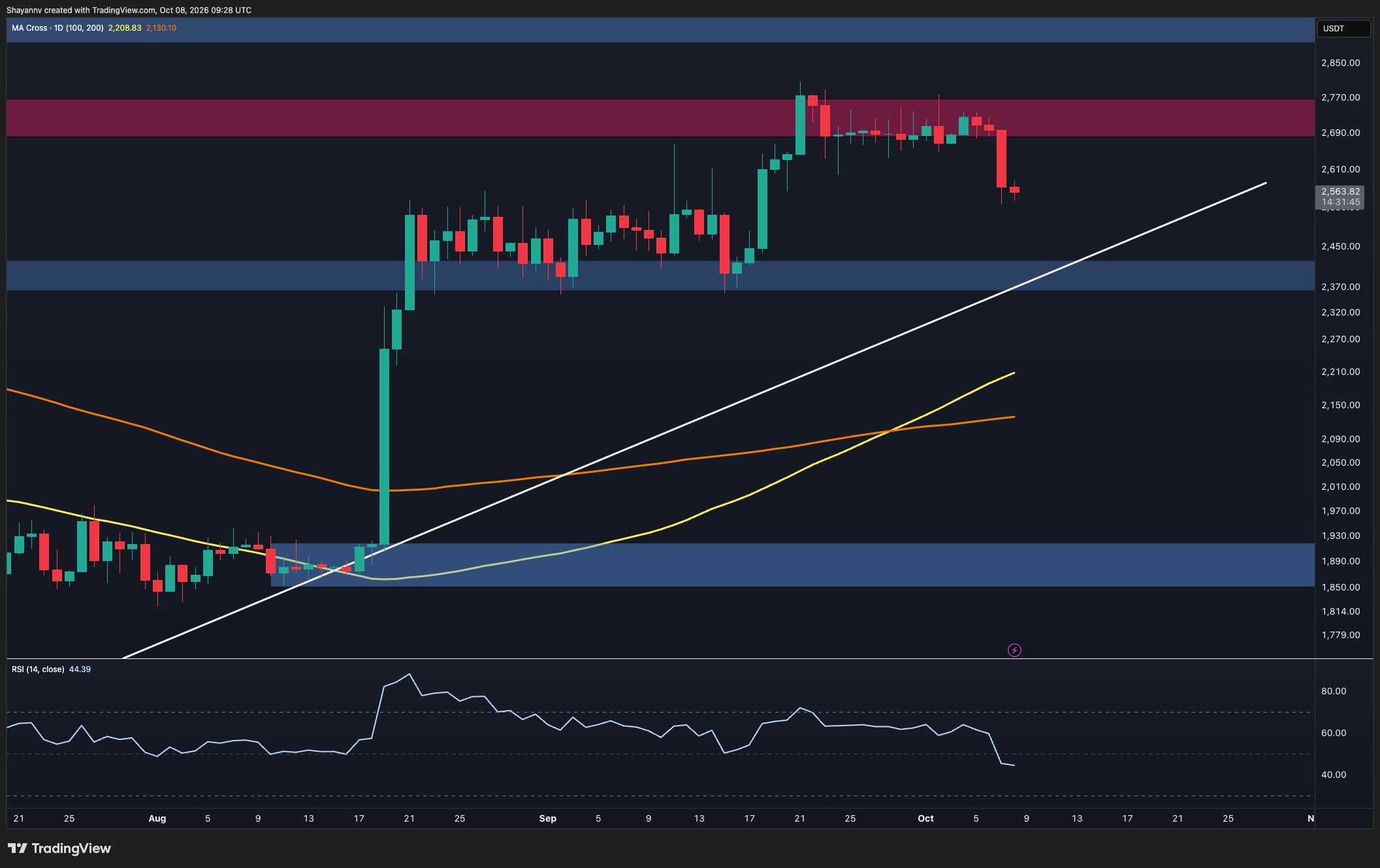
Ethereum's move below $2,500 puts the asset back around an important psychological and technical area after several unsuccessful attempts to establish a stronger recovery.
Recent positioning has also left ETH vulnerable to sharp moves. Our ETH outlook previously highlighted how much of Ethereum's upside case depends on sustained institutional demand and improving market liquidity.
Solana has fallen even faster during parts of the latest decline, illustrating a familiar pattern during risk-off periods: higher-beta altcoins generally suffer larger percentage losses than Bitcoin.
<iframe src=”https://widgets.coincodex.com/w/9eea7bc4-490b-4149-a5ef-3c3b7bf2414e?site=coinpaper&mode=light” width=”100%” height=”628” frameborder=”0” referrerpolicy=”no-referrer-when-downgrade” style=”border:0;background:transparent;border-radius:0px;”></iframe>Oil and Treasury Yields Add More Pressure
Crypto is also facing an increasingly difficult macro backdrop.
Brent crude surged above $105 per barrel on Thursday as attacks on shipping routes and U.S. production disruptions revived concerns about energy supply. At the same time, global bond yields climbed as investors considered the inflationary impact of another oil shock.
That combination matters for Bitcoin and other speculative assets.
Higher Treasury yields increase returns available from relatively low-risk government debt, while rising energy prices can keep inflation elevated and reduce the likelihood of easier monetary policy.
The relationship has worked in the opposite direction before. Bitcoin's earlier oil-driven rally coincided with declining crude prices and improving expectations for financial conditions.
Ethereum’s prolonged consolidation beneath resistance has pushed the asset lower, sending it toward $2.42K. The breakdown has weakened short-term structure, while the broader recovery now dep
Joseph Chee, chief executive of Solana Company, today drew attention by suggesting cryptocurrencies could enter another supercycle if China restarts crypto trading. Unconfirmed reports online
Coinbase has stated that U.S. traders can now access 80% of global crypto derivatives liquidity through its platform, a claim that, if accurate, would represent a meaningful shift in how Amer