U.S. federal prosecutors in New York have cited the Bitcoin Fog money-laundering case as supporting authority in the ongoing criminal trial of Roman Storm, a developer of the Ethereum-based p
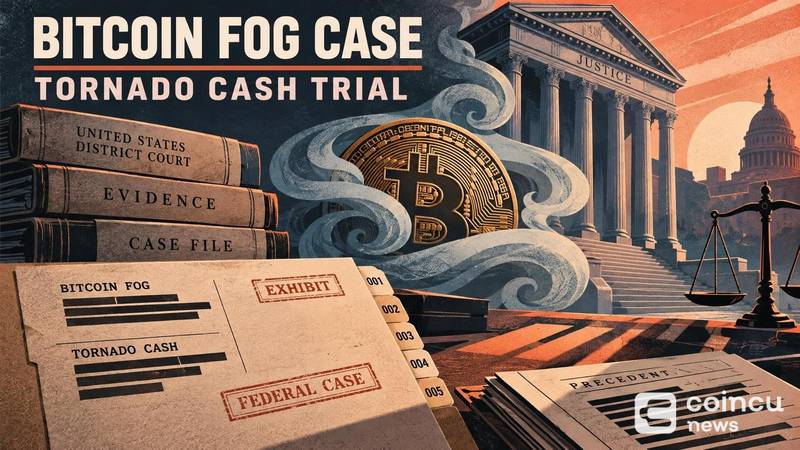
U.S. federal prosecutors in New York have cited the Bitcoin Fog money-laundering case as supporting authority in the ongoing criminal trial of Roman Storm, a developer of the Ethereum-based privacy protocol Tornado Cash, in a legal maneuver that signals the government's effort to establish mixer operators as criminally liable for funds routed through their tools regardless of the underlying technology.
The prosecution's invocation of Bitcoin Fog, the Bitcoin mixing service whose operator was convicted on money-laundering and unlicensed money-transmission charges, reflects an argument that the legal principles applied to that case should govern Storm's, according to filings documented by the Department of Justice. By drawing this parallel, prosecutors are attempting to establish that operating a tool designed to obscure the origin of cryptocurrency transactions constitutes a criminal act even when the defendant claims the technology itself is neutral. For related coverage, see El Salvador Bitcoin Holdings Reach 7,798 BTC, $643M+.
The Bitcoin Fog Precedent Prosecutors Are Advancing
Bitcoin Fog operated as a centralized Bitcoin mixer; its operator, Roman Sterlingov, was convicted after prosecutors demonstrated he knowingly processed funds from darknet markets. The case established that running a mixing service with awareness of illicit proceeds satisfies the intent element required for money-laundering liability, even without direct participation in the underlying crimes generating those funds. For related coverage, see BaFin Rejects Bitcoin Group SE MiCA Application.
Prosecutors in the Storm case appear to be extending that framework to Tornado Cash, arguing that Storm, as a developer and operator, had sufficient knowledge that the protocol processed proceeds from hacks and sanctions-designated entities to satisfy criminal intent. The citation is a legal argument, not a final ruling on Storm's culpability; courts are not bound to apply Bitcoin Fog's outcome to different facts, and Storm's defense has contested the analogy on multiple grounds. For related coverage, see Aptos Foundation to Permanently Pledge 210M APT.
How Storm's Case Differs and Why the Distinction Matters
A central tension in the Roman Storm trial concerns whether a smart contract protocol, which executes autonomously on-chain once deployed, can be equated to a centralized service whose operator made active routing decisions. Tornado Cash, unlike Bitcoin Fog, operates through immutable smart contracts, a technical distinction that Storm's defense has argued removes him from direct operational control over individual transactions. The prosecution's citation of Bitcoin Fog directly challenges that framing, asserting that deployment and promotion of a tool with known illicit use constitutes sufficient involvement.
The charges against Storm in the Southern District of New York include conspiracy to commit money laundering, conspiracy to operate an unlicensed money-transmitting business, and conspiracy to violate the International Emergency Economic Powers Act, the last charge tied to alleged processing of funds for Lazarus Group, the North Korea-linked hacking collective. Each count carries significant sentencing exposure, and the outcome will likely shape how the U.S. government pursues future cases against privacy-protocol developers.
What the New York Trial Procedural Context Means for This Citation
A prosecutor's citation of a prior case is a legal argument presented to the court, not a determination of guilt or a binding precedent. The court in the Southern District of New York will evaluate whether Bitcoin Fog's legal conclusions apply to Storm's specific conduct, charges, and the technical architecture of Tornado Cash. If the court accepts the analogy, it would support the prosecution's theory of liability; if it finds the cases factually distinguishable, the Bitcoin Fog citation loses its persuasive weight.
Observers following the case should watch for the court's rulings on motions in limine and jury instructions, which will determine what legal standards the jury applies when evaluating Storm's intent and knowledge. Those procedural decisions, rather than the citation itself, will define the legal terrain for the trial's outcome.
Implications for Privacy-Protocol Developers and Compliance
The prosecution's cross-case legal comparison, linking a centralized Bitcoin mixer to a decentralized Ethereum protocol, has drawn attention from developers and legal practitioners across the sector. If courts accept the argument that mixer-adjacent liability standards extend to smart contract authors, it would impose a significant compliance burden on any developer whose protocol can be used to obscure transaction origin, even if the developer has no ability to block individual transactions after deployment.
The Bitcoin Fog conviction and the Storm prosecution together represent a deliberate prosecutorial strategy: establish liability for centralized service operators first, then extend the framework to decentralized protocol developers. The Southern District of New York's handling of Storm's trial will serve as the clearest indicator yet of how far that extension reaches under current U.S. law. Regulatory watchers and privacy-tool builders should monitor the court's rulings closely in the weeks ahead.
FAQ: Roman Storm, Bitcoin Fog, and the Tornado Cash Trial
What is the Bitcoin Fog case?
Bitcoin Fog was a long-running Bitcoin mixing service. Its operator, Roman Sterlingov, was convicted on money-laundering and unlicensed money-transmission charges after prosecutors showed he knowingly processed cryptocurrency proceeds from darknet markets through the service.
Who is Roman Storm and why is he on trial?
Roman Storm is a developer of Tornado Cash, an Ethereum-based smart contract protocol designed to provide transaction privacy by pooling and redistributing deposits. U.S. prosecutors in New York charged him with conspiracy counts related to money laundering, unlicensed money transmission, and sanctions violations, alleging the protocol processed funds for entities including the North Korea-linked Lazarus Group.
What does citing a prior case mean for a criminal trial?
When prosecutors cite a prior case, they are presenting it as legal authority or persuasive precedent to support their theory of liability. It is an argument, not a verdict. The court decides whether the cited case's legal conclusions apply to the defendant's specific facts and charges.
Does the Bitcoin Fog citation decide the outcome of Storm's trial?
No. A citation is one element of the prosecution's legal argument. The jury evaluates guilt based on the evidence presented at trial, and the judge determines which legal standards govern. The Bitcoin Fog reference is contested; Storm's defense disputes that a centralized mixer's precedent applies to an autonomous smart contract protocol.
Additional source references: source document 1.
Disclaimer: This article is for informational purposes only and does not constitute financial or investment advice. Cryptocurrency and digital asset markets carry significant risk. Always do your own research before making decisions.
The post Bitcoin Fog Case Cited in Roman Storm Tornado Cash Trial was initially published on Coincu.