Though the U.S. leads the Bitcoin (BTC) mining race, it is China that leads in manufacturing mining hardware. According to a May study by the French researchers Pierre Pouliquen, Hadrien Barr
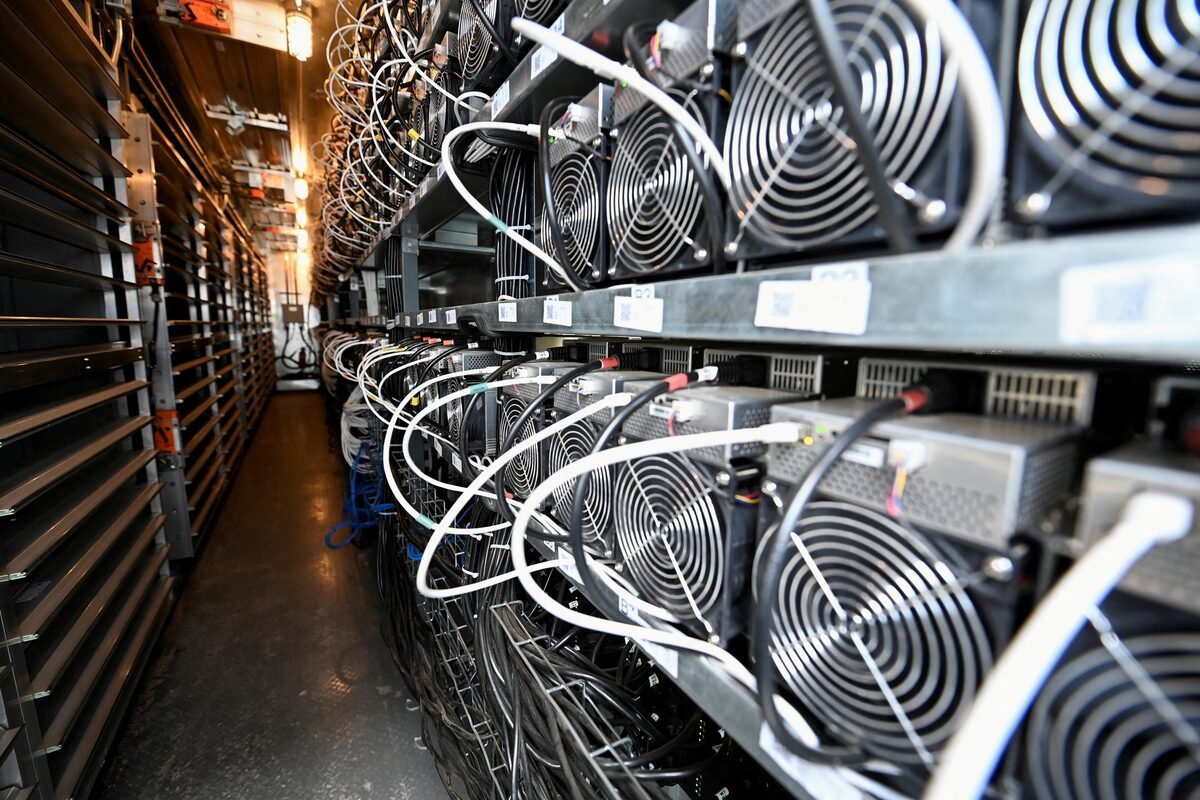
Though the U.S. leads the Bitcoin (BTC) mining race, it is China that leads in manufacturing mining hardware.
According to a May study by the French researchers Pierre Pouliquen, Hadrien Barral, David Naccache, Thibaut Heckmann, and Antoine Houssais, the global Application-Specific Integrated Circuit (ASIC) market is overwhelmingly dominated by a small number of manufacturers, primarily Bitmain, MicroBT, and Canaan.
All of these companies are based in China and supply more than 99% of deployed mining devices.
Related: What is Bitcoin mining? Explained
GoMining CBDO concerned about unfavorable foundry allocation, not Chinese dominance
TheStreet Roundtable asked two Bitcoin miners what they think of China's manufacturing dominance, how the Asian superpower can leverage it like Iran is leveraging the Strait of Hormuz, and whether the U.S. can isolate Chinese manufacturers through tariffs.
GoMining is a Bitcoin miner running data centres across North America, Africa, and Central Asia. GoMining's Chief Business Development Officer, Jeremy Dreier, said China can't leverage Bitcoin mining manufacturing like Iran is leveraging the Hormuz.
If China stopped shipping rigs tomorrow, not one machine already energized stops hashing and the network keeps producing a block every ten minutes, he said.
"No other critical infrastructure I can think of absorbs a total supply shock to its hardware supply chain that gracefully."
If China stopped shipping rigs, the mining ecosystem wouldn't lose hashrate; instead, it would lose the pace of the upgrade cycle, which is a competitiveness question measured in years, not a supply crisis measured in days, he argued.
"It is also worth separating manufacturing from control."
However, he emphasized that he would be concerned about Bitmain's Antminers potentially having any exploitable remote management capability which the Department of Homeland Security and Senate Intelligence Committee were examining last November. However, Bitmain denied any vulnerability.
Last year, Bitmain, MicroBT and Canaan all announced U.S. assembly lines and credible hardware from outside China exists now, he emphasized. Now, there are more suppliers, better prices, better delivery terms and less counterparty concentration, he added.
However, the mining ecosystem is facing a production constraint due to foundry allocation favored towards high-paying AI and HPC clients, Dreier revealed.
"So the real single point of dependency in Bitcoin's hardware supply chain is not in mainland China. It is at the foundry, and it is being bid for by buyers with deeper pockets."
Popular on TheStreet Roundtable:
VNISH sales head advises fleet life extension to address potential supply crisis
VNISH is a software firm serving ASIC Bitcoin miners. The company's global head of sales, Bradley Peak, told TheStreet Roundtablethat Iran's Hormuz blockage immediately affects oil supply, but China's ASIC restrictions, if any, would have a slower effect because machines like S21s and M60s remain productive for years after installation.
Its potential economic impact would emerge through fleet efficiency and replacement costs, and U.S. miners could then spend longer operating machines with higher J/TH, increasing electricity costs per unit of hashrate, he said.
China has earlier used export controls over strategic resources, including rare earths, during trade tensions with the U.S., and therefore, ASIC manufacturing concentration gives China medium-term economic leverage over U.S. mining CAPEX and efficiency, he argued.
If the U.S. attempts to isolate Chinese manufacturers of mining rigs, the supply would flow overseas, and U.S. miners would face higher prices for locally available machines, he warned.
Modern mining hardware depends on an international semiconductor supply chain, and final assembly in the U.S. still leaves dependence on chips and upstream suppliers, he added.
"Current alternative capacity remains far below the output required to replace suppliers responsible for more than 90% of the market."
Miners have an incentive to qualify several equipment vendors, maintain stock, and extend their machines' useful life through repairs and efficiency optimization, he advised.
"When replacement hardware becomes more expensive or harder to source, each additional month of profitable operation from an existing machine gains economic value."
Related: Explained: What is sustainable Bitcoin mining?