Bitcoin miners’ stocks are rising because the market no longer sees them only as BTC producers. It now values them as holders of electricity, land, data centers, and capacities useful to arti
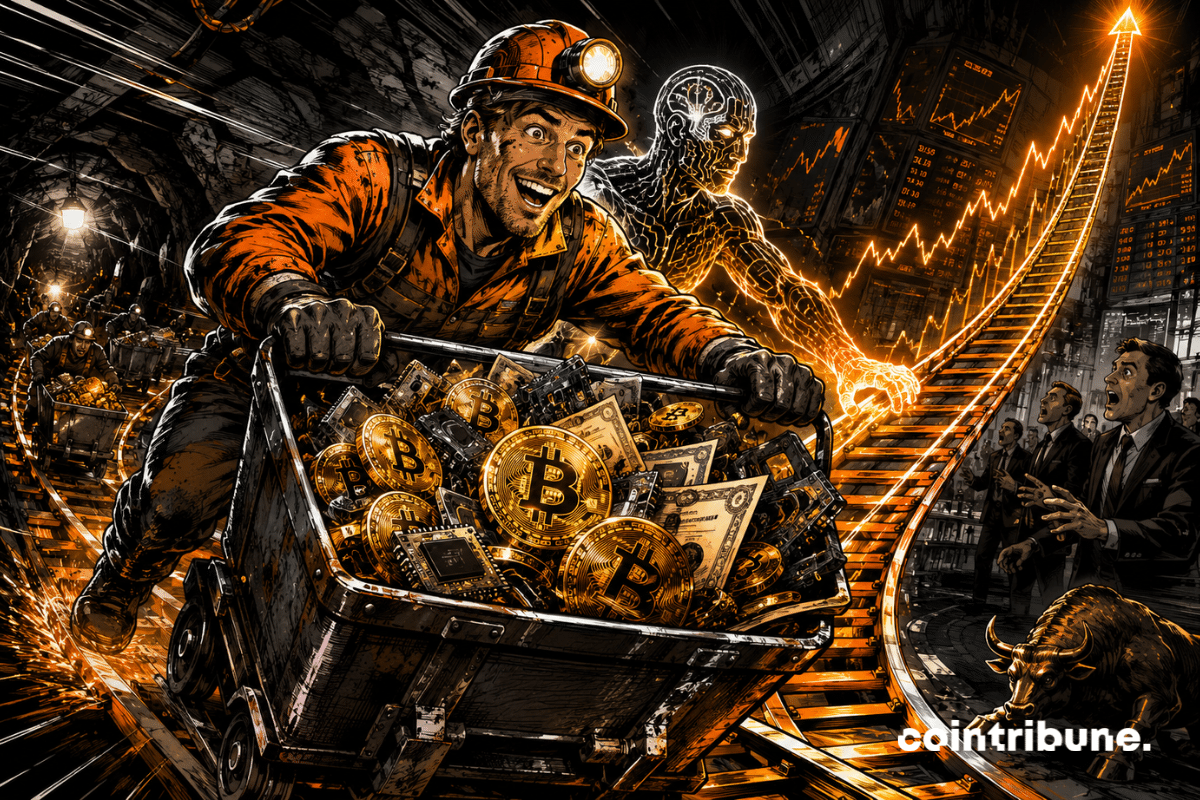
Bitcoin miners’ stocks are rising because the market no longer sees them only as BTC producers. It now values them as holders of electricity, land, data centers, and capacities useful to artificial intelligence. This change explains the recent interest around TeraWulf, Hut 8, IREN, or Riot Platforms, in a context where Wall Street remains driven by AI and semiconductors.
In brief
- Bitcoin miners benefit from the AI boom.
- Their access to energy becomes a strategic advantage.
- But the transformation into cloud actors remains costly and risky.
A rally that goes beyond simple mining
Bitcoin miners benefit from a new stock market narrative: AI needs energy, and they already have it. This view aligns with a trend already visible in the sector, where bitcoin miners establish themselves in AI thanks to their energy advantage. It’s no longer just about hash rate or block rewards. The market is starting to see these companies as infrastructure operators.
On Tuesday, several stocks in the sector rose sharply. TeraWulf surged after announcing a data center site in Kentucky, while Hut 8, IREN, and Riot Platforms closed up more than 5%. This movement was part of a session very favorable to technology stocks.
The momentum also comes from semiconductors. When chips rise, the entire ecosystem related to intensive computing mechanically attracts more capital. Bitcoin miners then find themselves at the intersection of two hot markets: crypto and AI.
Your 1st cryptos with CoinbaseThis link uses an affiliate program.Electricity becomes the new strategic asset
The real issue is not just bitcoin. It is available electricity. Large AI models consume a lot of energy. Companies that already own sites connected to the grid therefore gain new value.
Bernstein estimates that several listed miners control more than 27 gigawatts of planned electrical capacity. This figure changes the reading of the sector. In a market where data centers desperately seek megawatts, miners have a rare advantage.
This shift is almost ironic. Just yesterday, miners were criticized for their energy consumption. Today, this same capacity becomes a commercial argument. The machine that secured Bitcoin can also host high-performance computing, GPUs, and cloud services related to AI.
Miners sell themselves as AI partners
TeraWulf illustrates this transition well. The company has acquired energy-rich industrial sites in Kentucky and Maryland, strengthening its infrastructure portfolio. This type of announcement speaks directly to investors looking for the future winners of the data center boom.
IREN goes even further. The company has signed a major contract with Microsoft to provide AI cloud infrastructure with Nvidia chips. The deal shows that some miners no longer just want to sell Bitcoin. They want to sell computing capacity.
This strategy gives miners a partial exit from Bitcoin’s volatility. Mining remains profitable when BTC rises. But AI can offer more predictable revenues, especially with long contracts. This is exactly what markets like to hear in a phase of technological euphoria.
A real but still fragile opportunity
The shift to AI does not automatically turn all miners into cloud giants. Building an AI data center is expensive. It requires GPUs, cooling, strong clients, and flawless execution. Electricity alone is not enough.
The risk is also narrative. Part of the current rise rests on the idea that miners can become critical AI providers. If contracts delay, costs explode, or margins disappoint, the market can quickly turn around. Wall Street loves new stories. It also abandons them very quickly.
But the signal remains strong. Bitcoin miners are no longer confined to a single identity. They become hybrid players, at the intersection of crypto, energy, and artificial intelligence. Their future will depend less on simply mining BTC than on their ability to sell their megawatts at the right market, at the right time. This transformation remains promising, but it also comes with a heavier financial risk, because Bitcoin miners are going into debt at a record level fueled by the AI and HPC wave.