Bitcoin News Today: Quantum Risk to BTC Vs Solution in Progress Fundstrat's Tom Lee delivered a stark warning live on CNBC: quantum computers could break Bitcoin's encryption within two years
Bitcoin News Today: Quantum Risk to BTC Vs Solution in Progress
Fundstrat's Tom Lee delivered a stark warning live on CNBC: quantum computers could break Bitcoin's encryption within two years. This Bitcoin News Today update covers his exact claims, current price action, and where the blockchain's defenses actually stand.
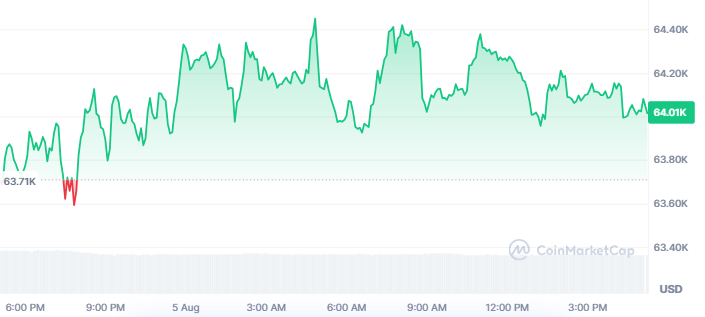
BTC price today, on the other hand, climbed above the $63K level. The coin is trading at $64,005.38, up 0.54% over the last 24-hours, based on CoinMarketCap data. Market cap sits at $1.28T, while 24-hour volume reads $22.99B, down 10.42% from the prior session.
Bitcoin News Today: What Tom Lee Said About the Quantum Threat
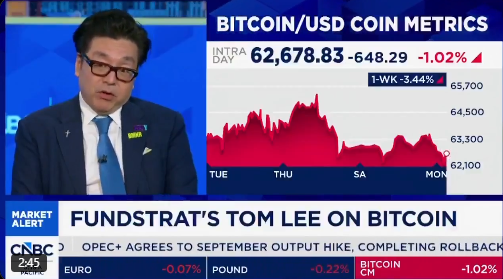
Lee told CNBC viewers that Bitcoin has not reached agreement on how to prevent a quantum attack. He added that the same risk does not threaten Ethereum or Solana in the same way, pointing to their faster upgrade cycles.
Source: X Official
He referenced Google's estimate that quantum machines could break current encryption standards by 2028. Roughly a third of circulating BTC sits in legacy wallets with exposed public keys, Lee noted, and those coins need migration to safer address types before that threshold arrives.
Lee has made similar points before, including in a June 2026 interview. $BTC network can become quantum-resistant, he said then, but migrating the existing stock of old wallets remains the harder problem compared to protocol-level fixes alone.
Bitcoin Network Security: Current Encryption Method and Risks
The chain currently relies on cryptographic signatures to secure transactions. The two main signature systems are ECDSA and Schnorr, both built on the secp256k1 elliptic curve. Under normal conditions, these systems are considered highly secure.
The concern comes from Shor's algorithm, a quantum-powered computing algorithm sufficiently powerful to solve the math problem behind these signatures and derive a private key from an exposed public key.
This could put some Bitcoin wallets at risk.
Strengths versus risks, in short:
BTC can add quantum-resistant signatures through a soft fork, without forcing a hard fork on the network
New address types can launch while old ones stay usable during a transition window
Post-quantum signature schemes run larger in size, which can reduce effective block capacity
Governance moves slowly by design, and reaching consensus on migration steps takes time
How Bitcoin Plans to Fix the Quantum Gap and Its Current Progress
BIP-360 proposes a new output type, Pay-to-Merkle-Root, that removes the quantum-vulnerable key-path spend found in current Taproot transactions. A companion proposal, BIP-361, outlines a phased plan to eventually restrict and later sunset spending from old, exposed address types.
Progress so far:
BIP-360 has merged into the blockchain Improvement Proposals repository as a draft, not yet activated on mainnet
Working implementations already run on specialized testnets, including BTQ's Bitcoin Quantum testnet
BIP-361 remains in draft form and continues to draw active debate among developers
NIST has already standardized several post-quantum signature algorithms for broader use
No cryptographically relevant quantum computer exists today. Leading machines in 2026 run on roughly 1,000 to 1,200 physical qubits, well short of the hundreds of thousands some researchers say a real attack would require.
Other Networks Preparation For Quantum Era: Ethereum Leads
Ethereum runs a more open research process on post-quantum upgrades, with dedicated teams tracking the transition path. $BTC blockchain's process stays deliberately more conservative, leaning on slower, consensus-driven review before any change ships.
NIST and major technology firms are targeting post-quantum migration windows between 2029 and 2035.
Some analysts, echoing commentary that reportedly influenced Jim Cramer's decision to sell BTC holdings, argue for urgency on a 3 to 4 year horizon, while others place practical risk a decade or more away.
What Comes Next for $BTC Security and the Broader Crypto Market
The binding constraint here is coordination, not raw cryptography. Bitcoin holds the technical tools needed to adapt, provided developers, exchanges, and custodians agree on a migration path before hardware closes the current gap.
Wider crypto markets carry a version of this same exposure, since most major chains rely on comparable elliptic-curve signatures under the hood. The Bitcoin quantum threat sits years away by most hardware timelines, but the work to prepare wallets, exchanges, and legacy holders needs to start well before that clock runs out.
Disclaimer:This article is for informational purposes only and does not constitute financial or investment advice. Crypto markets carry significant risk. Always do your own research before making any investment decisions.