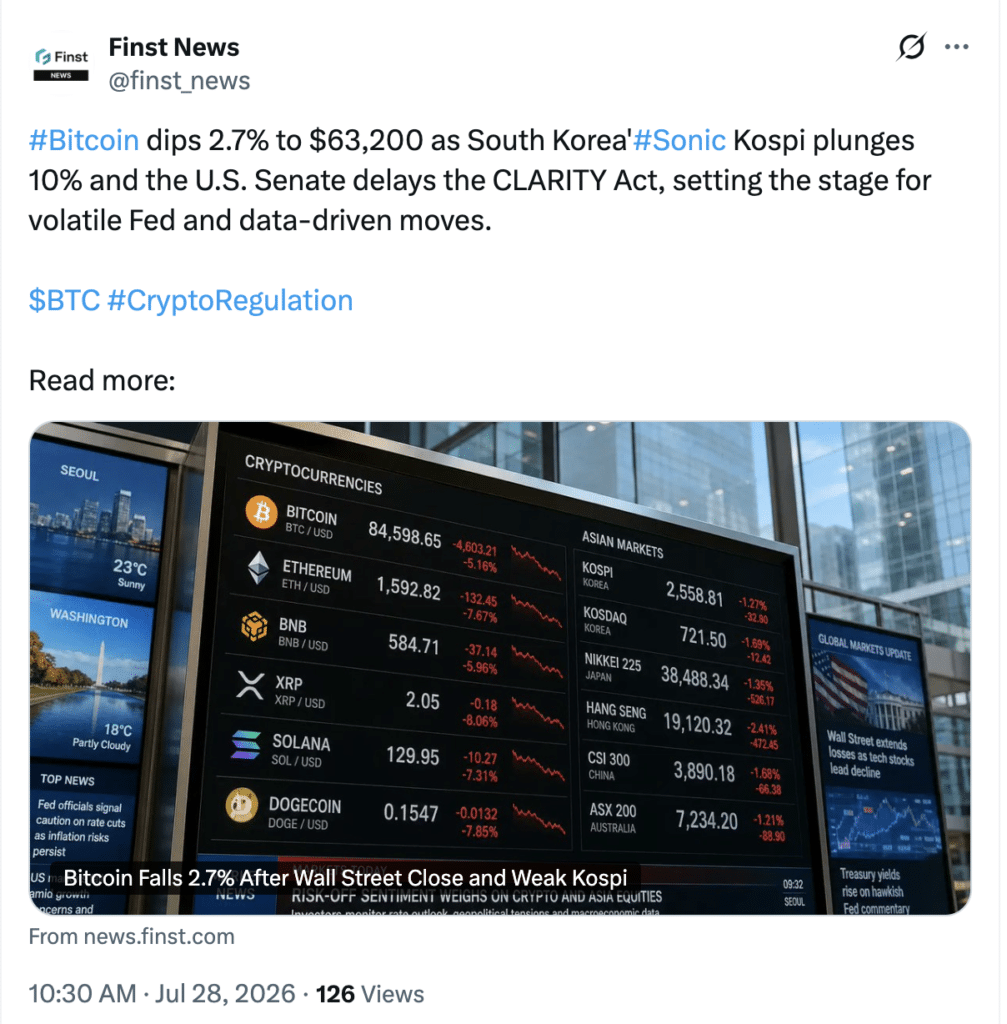
Bitcoin price drops made news as Bitcoin lost about 2.7% on the day after the close of trading in the U.S. market, as well as a historic 10% fall by the KOSPI stock index of South Korea. Thes
Bitcoin price drops made news as Bitcoin lost about 2.7% on the day after the close of trading in the U.S. market, as well as a historic 10% fall by the KOSPI stock index of South Korea. These developments have come amid concerns in the markets around the world due to the imminent interest rate decision from the Federal Reserve Bank of America and the crucial economic indicators in the U.S. market. Besides, the CLARITY Act was further delayed in the U.S. Senate.
Key Takeaways
- Bitcoin price drops about 2.7% as investors reduce exposure to risk assets.
- South Korea’s KOSPI plunged 10%, reflecting broader weakness in global equity markets.
- The U.S. Senate delayed the CLARITY Act, extending regulatory uncertainty for the crypto industry.
- Investors are awaiting the Federal Reserve’s interest rate decision and key U.S. economic data.
Bitcoin Price Drops as Markets Shift to Risk-Off Positioning
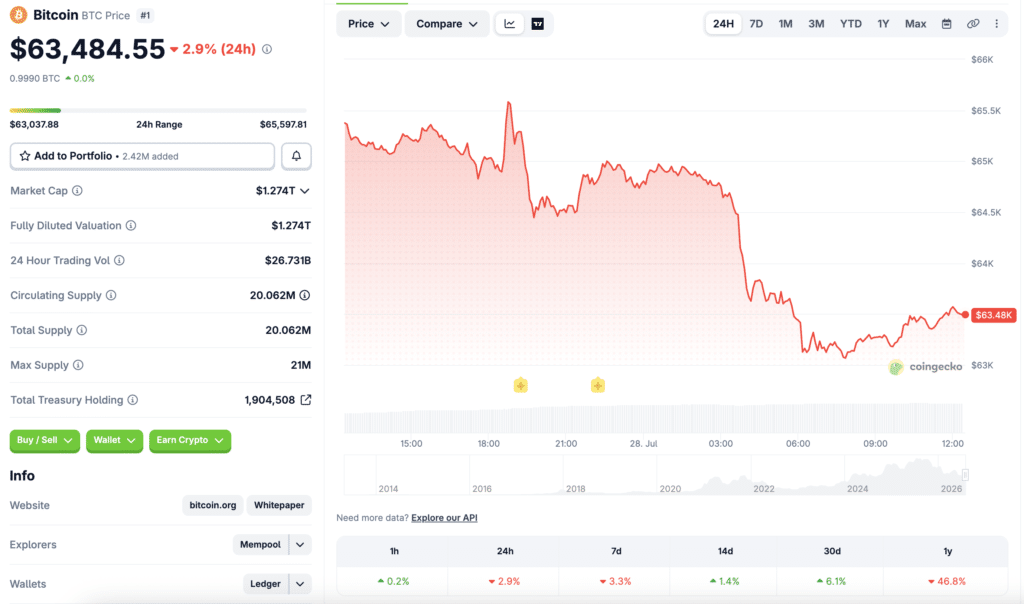
Bitcoin price drops turned out to be the key news in the markets after the Bitcoin fell by nearly 2.7% and traded at $63,492.56 during the current trading period. The price drop happened just after the closure of American stock exchanges and came at the same time when one of the largest single day falls was recorded in the South Korean stock exchange index KOSPI (fell by 10%). Moreover, other major cryptocurrencies such as Ethereum and others experienced drops too due to the risk off market sentiment.
Why Is Bitcoin Price Dropping Today?
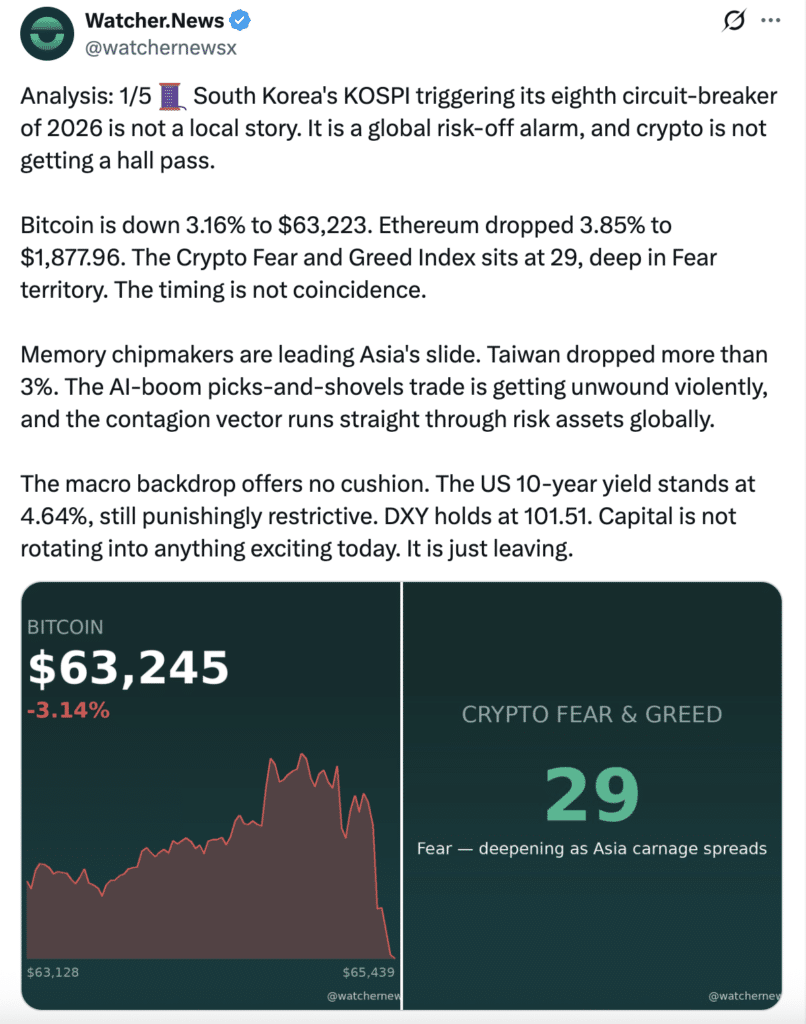
Today’s question from many people would be “why is Bitcoin price dropping today?” However, there is more to it than just crypto-related news. Increasing worries about the global economy, uncertainty of Fed interest rates, and significant fall in Asian stocks forced investors to minimize risk assets on their portfolios. Traditionally, Bitcoin tends to act similar to a tech growth asset in times of volatility. As stock markets deteriorate and investors search for more secure trades, Bitcoin starts to sell off alongside with stocks.
MetricValue
Bitcoin Price (BTC)$63,492.56
24-Hour Change-3.00%
24-Hour Trading Volume$27.44 Billion
Market Capitalization$1.27 Trillion
Circulating Supply20,062,275 BTC
Maximum Supply21,000,000 BTC
24-Hour HighApprox. $65,576
24-Hour LowApprox. $63,054
The latest market data reflects increased volatility as Bitcoin price drops alongside broader financial markets. While short-term sentiment remains cautious, Bitcoin continues to hold a market capitalization above $1.27 trillion, indicating that investors are closely watching upcoming economic events for the next major market catalyst.
Bitcoin Price Drops as Korea’s KOSPI Plunges 10% Before Fed Decision 5
KOSPI Crash in Korean History Becomes Major Factor for Cryptocurrencies Volatility
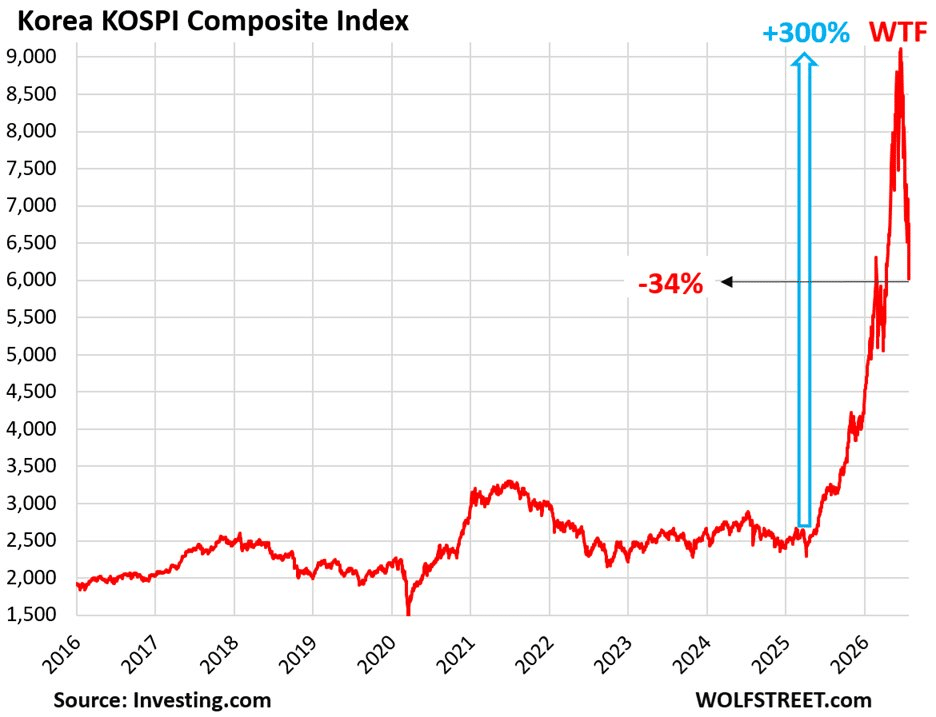
Almost immediately, the KOSPI crash became an important factor that triggered market volatility. The index of South Korea lost 10%, which is one of its worst falls during the recent years due to sales of stocks from semiconductor and technology sectors.
South Korea is among the most liquid cryptocurrency trading regions in the world. As a consequence, investor uncertainty tends to spill over to digital currencies. In particular, Bitcoin price drops were intensified by further falls in the prices of Ethereum, Solana, XRP, and other cryptocurrencies.
Bitcoin Price Drops as Korea’s KOSPI Plunges 10% Before Fed Decision 6
Bitcoin Falls After U.S. Market Close While Investors Await the Fed
Another important reason Bitcoin price drops captured market attention was its timing. Bitcoin falls after U.S. market close highlighted growing anxiety before Wednesday’s Federal Reserve policy announcement and Thursday’s major U.S. economic releases, including GDP and Core PCE inflation data.
Financial markets typically experience higher volatility before significant macroeconomic events, and cryptocurrency markets are no exception. Traders increasingly preferred reducing leverage instead of taking aggressive positions ahead of announcements that could reshape expectations for future monetary policy.
Bitcoin Price Drops as Korea’s KOSPI Plunges 10% Before Fed Decision 7
CLARITY Act Delay Creates Further Uncertainty in the Market
Recent events in Washington also affected market sentiment. U.S. Senators have delayed discussions on the CLARITY Act of crypto legislation in favor of discussing sanctions against Russia. It will probably be discussed the following week when Congress goes on an August recess.
Although the postponement does not affect current regulations, investors were expecting that this legislation would shed light on regulation of the crypto industry. However, the postponement created yet another level of uncertainty, which was clearly seen from Bitcoin price drops.
How the Crypto Market Today Reflects Broader Macroeconomic Trends
The crypto market today continues to mirror movements across global financial markets instead of trading in isolation. Analysts have increasingly observed Bitcoin responding to changes in equity indexes, bond yields, and central bank policy expectations. This latest decline demonstrates that digital assets remain sensitive to macroeconomic developments, particularly when uncertainty surrounds inflation and interest rates.
As Bitcoin price drops, institutional investors often rebalance portfolios, reducing exposure to higher-risk assets until greater economic clarity emerges. That pattern has become more pronounced over the past several market cycles.
Bitcoin Price Drops as Korea’s KOSPI Plunges 10% Before Fed Decision 8
Comparison of the latest market selloff between Bitcoin and KOSPI
In the latest market selloff that occurred due to increasing economic uncertainty, both Bitcoin and KOSPI had been affected in a negative manner. The following comparison provides a brief overview of their performances and causes for the selloff.
MarketLatest PerformancePrimary DriverInvestor ImpactBitcoinDown about 2.7%Risk-off sentiment, Fed uncertainty, delayed CLARITY ActIncreased crypto market volatilityKOSPIDown 10%Heavy selling in technology and semiconductor stocksSharp decline in investor confidenceEthereumTraded lowerBroad cryptocurrency weaknessFollowed Bitcoin’s downward trendGlobal EquitiesMixed to negativeMacroeconomic uncertaintyDefensive positioning before key economic events
The comparison reveals that both equities and digital assets were impacted by similar macroeconomic worries rather than separate issues within each industry. The cause may have been a bit different, but the sentiment of the investors was the driving factor.
Bitcoin Price Prediction After Market Sell-Off
Market participants are already debating the Bitcoin price prediction after market sell-off. Much will depend on the Federal Reserve’s policy guidance and upcoming U.S. economic data. A softer inflation outlook or dovish commentary could improve risk appetite and support a recovery across digital assets.
Conversely, stronger-than-expected inflation or a more hawkish central bank stance could extend volatility. Since Bitcoin price drops often accompany periods of heightened uncertainty, traders will closely monitor both macroeconomic indicators and market liquidity before establishing new directional positions.
What Investors Should Watch Next
Several catalysts could determine whether Bitcoin price drops remain temporary or evolve into a broader correction. The Federal Reserve’s interest rate decision, GDP growth figures, and Core PCE inflation report are expected to influence both equity and cryptocurrency markets.
Investors will also watch developments surrounding the CLARITY Act and broader U.S. crypto regulation. Meanwhile, trading volume, exchange inflows, and institutional participation may provide additional clues about whether selling pressure is easing or whether caution continues to dominate market sentiment.
Conclusion
Bitcoin price drops were not just another ordinary downturn in the cryptocurrency market. The joint sell-off seen between Bitcoin and the South Korean index KOSPI revealed the increasing degree to which digital currencies had come to depend on macroeconomic factors. Crypto-related laws that lagged behind, interest rate projections by the Federal Reserve, and increased caution prior to the release of important economic data had created a hard situation for risk assets.
While some volatility can be expected going forward, one must pay attention to macroeconomic and regulatory trends and market fundamentals rather than just reacting to price drops on a daily basis. Keeping up with market data is crucial in the coming period of market direction.
Appendix: Glossary of Key Terms
Bitcoin (BTC): The world’s largest cryptocurrency by market capitalization.
KOSPI: South Korea’s main stock market index.
Federal Reserve (Fed): The U.S. central bank that sets monetary policy and interest rates.
CLARITY Act: A proposed U.S. bill aimed at creating clearer regulations for digital assets.
Risk-Off Sentiment: A market environment where investors move away from riskier assets.
Core PCE Inflation: The Federal Reserve’s preferred measure of inflation, excluding food and energy prices.
Frequently Asked Questions About Bitcoin Price Drops
Why did Bitcoin price drop today?
Bitcoin price drops followed a broad risk-off move across global markets. Investors reacted to South Korea’s KOSPI decline, uncertainty surrounding the Federal Reserve’s interest rate decision, and the delayed consideration of the CLARITY Act.
Why is the crypto market down today?
The broader cryptocurrency market weakened because investors reduced exposure to risk assets ahead of major U.S. economic data and central bank announcements. Most leading cryptocurrencies moved lower alongside Bitcoin.
Did the KOSPI crash affect Bitcoin?
Yes. Although Bitcoin and the KOSPI are different asset classes, both responded to the same macroeconomic concerns. The sharp decline in South Korean equities contributed to weaker investor sentiment across global financial markets.
What is the CLARITY Act?
The CLARITY Act is proposed U.S. legislation designed to provide clearer regulatory oversight for digital assets. Its delayed consideration has extended uncertainty surrounding future crypto regulation.
References
CoinMarketCap
Finst News-X Post
Coingecko
Wolfstreet
Read More:Bitcoin Price Drops as Korea’s KOSPI Plunges 10% Before Fed Decision">Bitcoin Price Drops as Korea’s KOSPI Plunges 10% Before Fed Decision