TLDR: Exchange reserves rose from about 2.67 million BTC to 2.68 million BTC but remain low versus January. Spot demand neared zero before turning negative, while perpetual futures demand sta
TLDR:
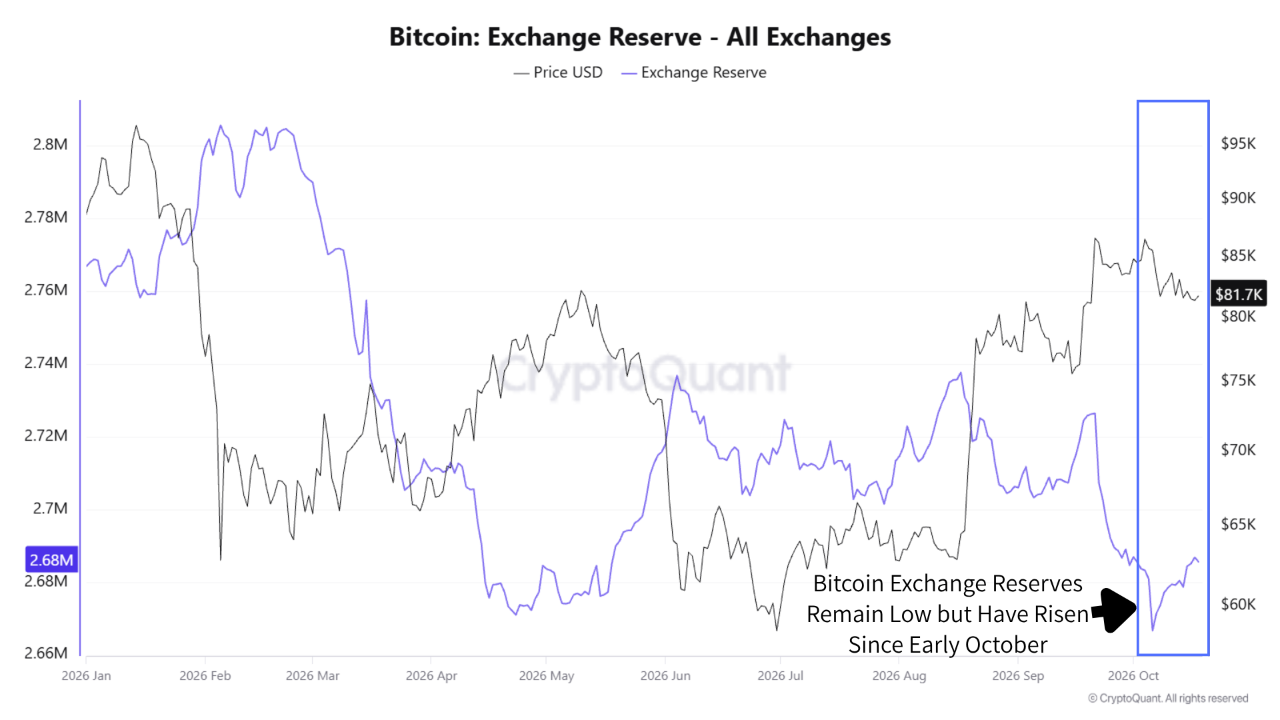
- Exchange reserves rose from about 2.67 million BTC to 2.68 million BTC but remain low versus January.
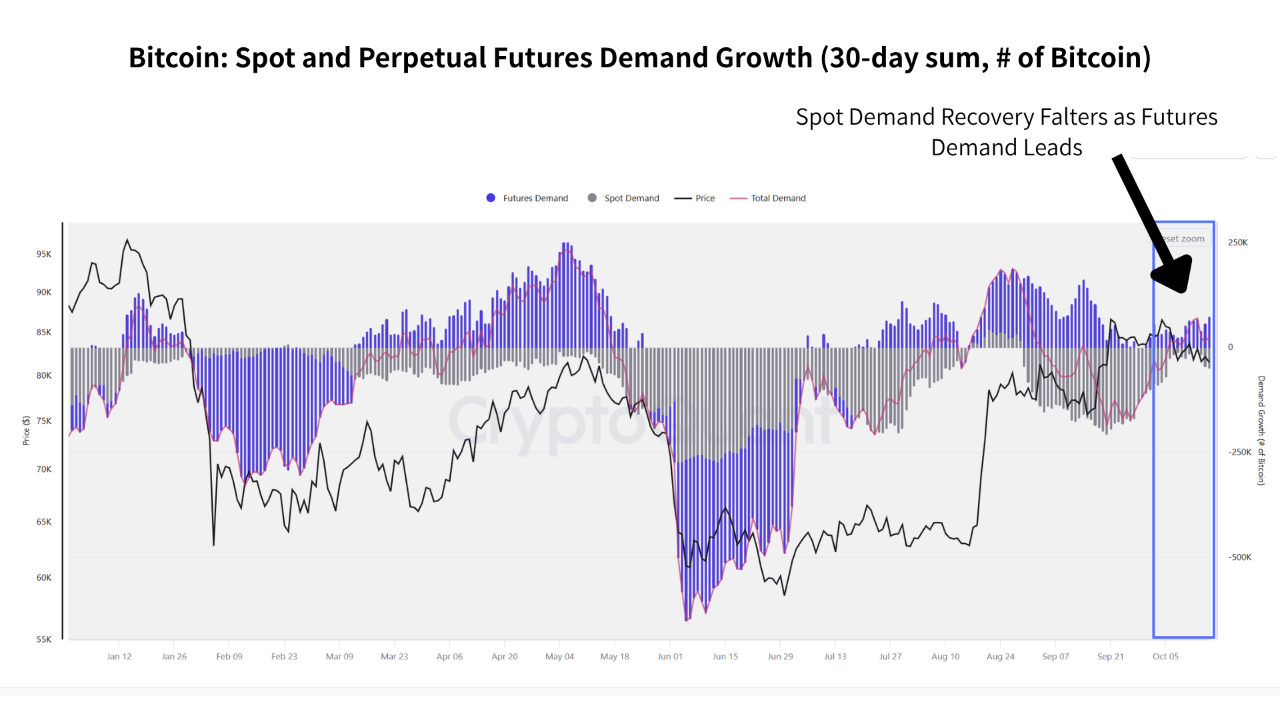
- Spot demand neared zero before turning negative, while perpetual futures demand stayed positive.
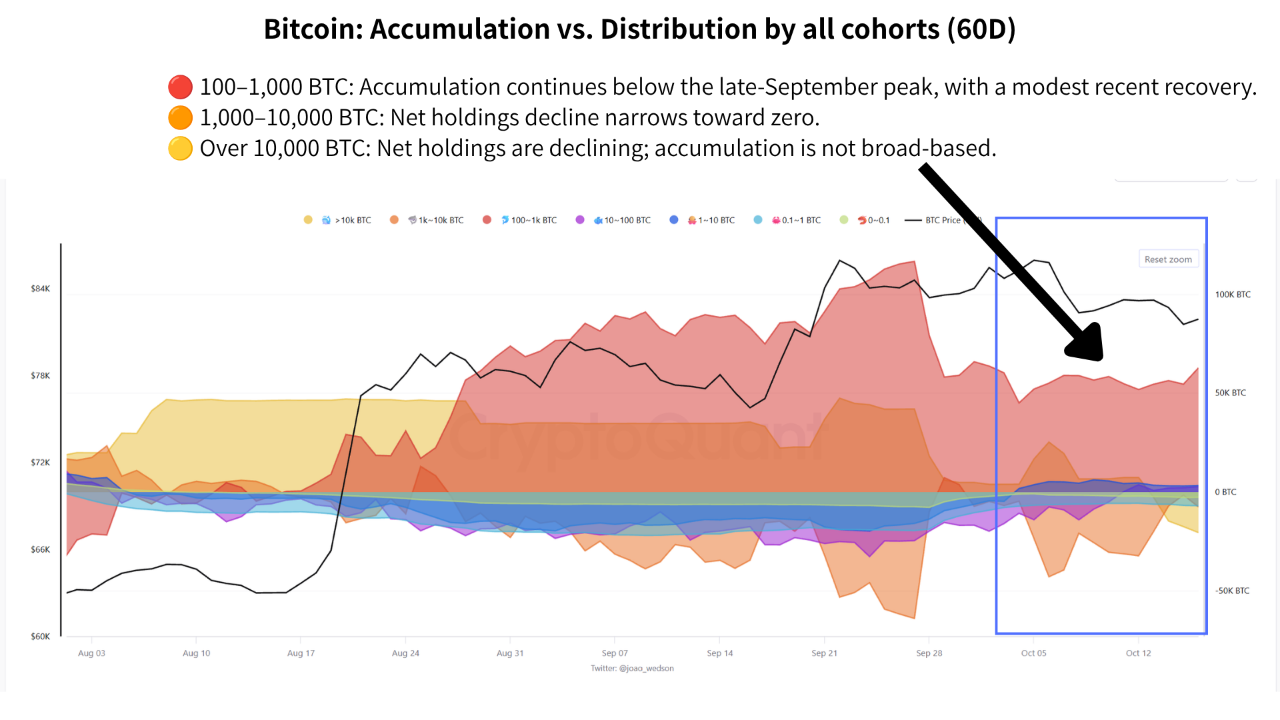
- Holders of 100–1,000 BTC remain net accumulators, while the over-10,000 BTC cohort is still negative.
- A durable recovery needs positive spot demand, buyers absorbing exchange inflows, and wider accumulation.
Bitcoin recovery remains uneven, according to updated CryptoQuant charts reviewed in a new XWIN Japan column. Exchange reserves, spot demand, and whale behavior show mixed signals as the U.S. midterms approach.
Low reserves, whale accumulation, and improving estimated demand still support a possible base. However, the latest data shows that buying strength is not yet consistent across the market. The column examines three charts that explain where support holds and where it weakens.
Exchange Reserves Edge Higher
Exchange reserves measure the amount of BTC held on trading platforms. They have risen from roughly 2.67 million BTC in early October to around 2.68 million BTC. Despite the increase, reserves remain low compared with January. Low reserves do not mean supply keeps shrinking.
Source: Cryptoquant
Transfers may reflect custody changes rather than selling. Therefore, rising reserves alone do not prove that holders are selling.
The increase is modest, and it comes from a low base. The supports from the earlier column remain, yet the Bitcoin recovery is uneven.
The earlier column, published six days ago, listed low reserves among the signs of base building. That earlier analysis centered on Bitcoin base building ahead of the U.S. midterms.
A durable Bitcoin recovery now requires buyers to absorb BTC that returns to exchanges. Reserves are rising, so that condition matters more.
Spot Demand Loses Momentum
The 30-day demand chart shows spot demand approaching zero before turning negative again. Spot demand reflects direct BTC purchases, while perpetual futures involve derivatives.
Meanwhile, positive perpetual futures demand supports total demand. Spot buying therefore remains weaker than futures activity.
Source: Cryptoquant
The earlier column cited improving estimated demand. This new breakdown differs from the Apparent Demand metric discussed previously. Their values are not directly comparable, so the readings should be viewed separately.
Sustained positive spot demand is one of three conditions for a durable Bitcoin recovery. Without it, futures demand carries the total figure. Positive spot readings would show buyers acting directly in the market.
Whale Cohorts Show Mixed Behavior
Holders of 100–1,000 BTC remain net accumulators over 60 days. Their buying sits below the late-September peak despite a modest rebound. The cohort has kept buying through the past two months.
Net holding declines among the 1,000–10,000 BTC cohort have narrowed toward zero. Meanwhile, the cohort above 10,000 BTC remains negative.
Source: Cryptoquant
Accumulation is therefore not broad-based across holder groups. A durable recovery also needs accumulation to spread more widely.
These rolling figures include pre-October activity and can reflect transfers between cohorts. Conditions that could support a base still exist. Expectations around the midterms and monetary policy must translate into actual buying.
The key is whether rallies gain a growing, lasting base of buyers. Until then, the Bitcoin recovery depends on whether buying broadens beyond a single holder group.
The post Bitcoin Recovery Stays Uneven as Spot Demand Weakens and Exchange Reserves Rise appeared first on Blockonomi.