Michael Saylor sees a Bitcoin gold rush before 2035, betting that declining issuance will meet growing demand through financial products, he said in a Binance interview. Strategy, the company
Michael Saylor sees a Bitcoin gold rush before 2035, betting that declining issuance will meet growing demand through financial products, he said in a Binance interview.
Strategy, the company he chairs, already sells preferred shares to investors seeking income. Those securities provide a practical example of the market Saylor expects to expand—and of the funding decisions required to turn a Bitcoin-heavy balance sheet into regular payments.
Key Takeaways
- Saylor expects new demand as Bitcoin issuance slows.
- STRC investors own preferred shares issued by Strategy.
- Bitcoin appreciation alone does not fund cash dividends.
- Stable-value products need reliable reserves and redemption.
What changes around 2035
Saylor chose 2035 because he expects roughly 99% of Bitcoin’s eventual supply to have been mined by then. The newly issued Bitcoin awarded to miners halves every 210,000 blocks, approximately every four years, gradually reducing the flow of new coins. The calendar dates depend on how quickly blocks are found.
“I think we’re in a gold rush between now and the year 2035.”
Existing Bitcoin would continue changing hands after that milestone. Funds, companies and individuals could still sell their holdings, so declining mining issuance would not determine how many coins reach the market. It would reduce one source of supply while leaving the decisions of existing owners just as relevant.
For that reduction to support higher prices, demand would need to remain strong enough to absorb coins offered for sale. Bitcoin’s documentation describes this supply-and-demand relationship. Saylor expects a growing financial market around Bitcoin to bring in buyers with needs beyond direct price exposure.
Why Saylor is targeting income investors
His argument covers ETFs, treasury companies, income securities and wider bank lending against Bitcoin. An ETF allows investors to hold price exposure through a brokerage account. A collateral loan could let an owner access cash without selling Bitcoin, although taking that loan would not itself require a new Bitcoin purchase.
Strategy takes another approach, issuing securities around a large Bitcoin reserve. Its balance sheet allows the company to offer investors different claims on the same business, each with its own rights and exposure.
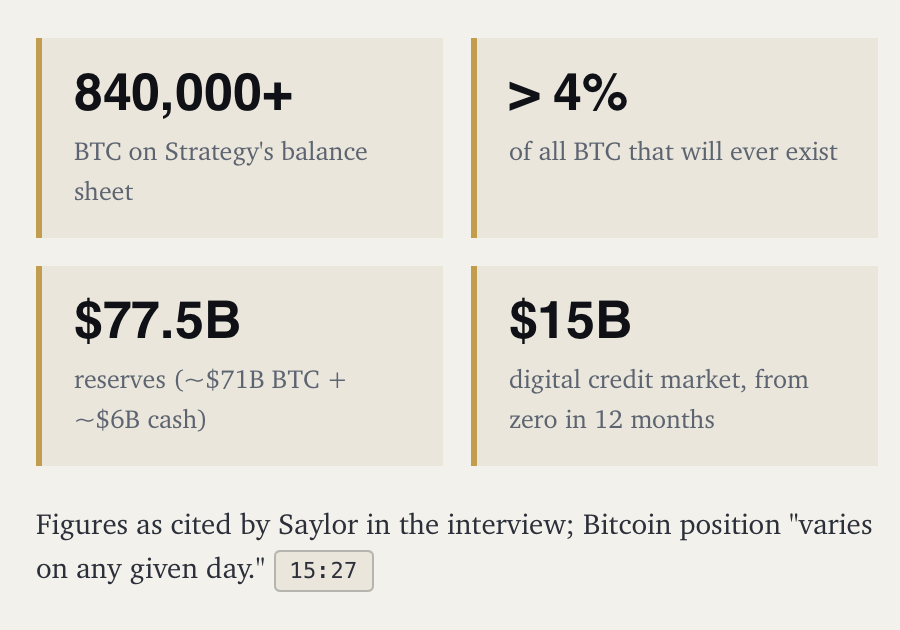
For someone seeking income, the size of that reserve matters alongside the company’s ability to make distributions. STRC, Strategy’s preferred stock, is Saylor’s attempt to reach investors who favour regular payments over direct exposure to Bitcoin’s price swings.
What STRC holders actually own
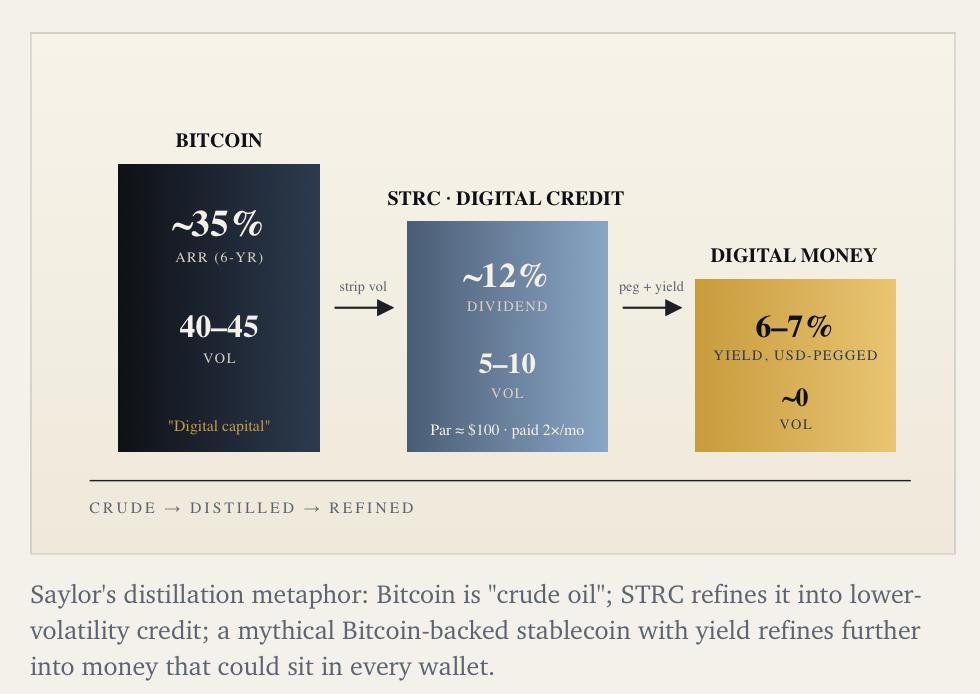
Saylor explains the intended experience through an aviation analogy: “Bitcoin is like a fighter jet and digital credit like STRC is like a passenger jet.” The comparison reflects his ambition to offer steadier income, but understanding the security requires looking at the rights behind it.
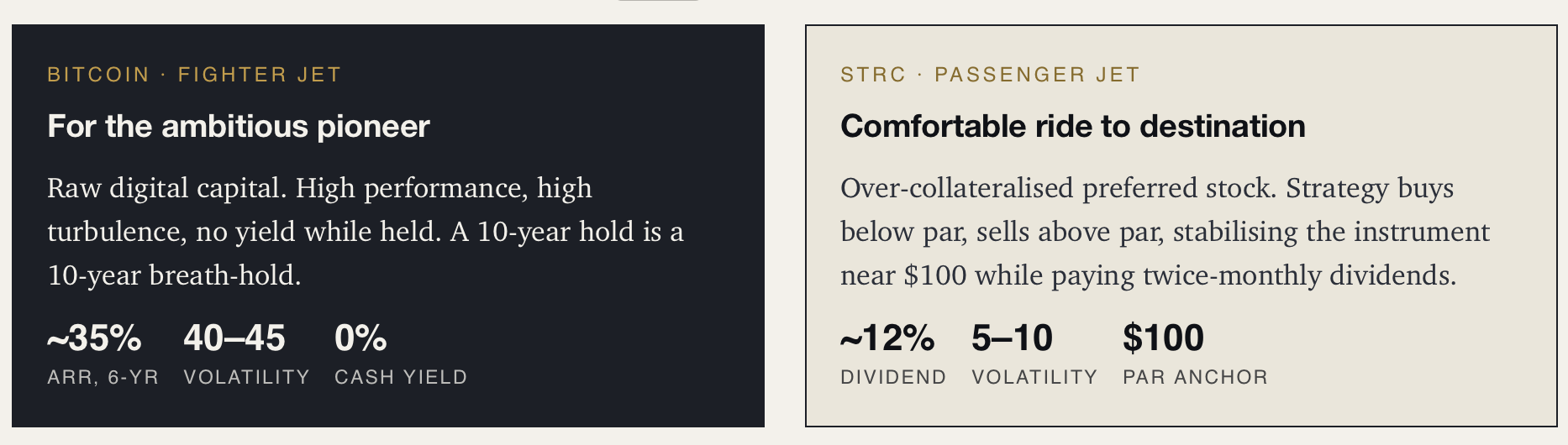
A STRC holder owns preferred equity in Strategy. The company’s disclosures state that its preferred securities are not collateralized by its Bitcoin holdings. Their preferred claim concerns remaining corporate assets under the applicable terms; it does not give holders ownership of particular coins or a secured claim on them. A large Bitcoin reserve and a secured investment are different things.
STRC also has no scheduled maturity at which the investment must be returned. An investor wishing to exit generally depends on selling at the available market price. Strategy aims to encourage trading around the $100 stated amount, but holders can receive less when they sell. While they remain invested, their income depends on the company’s dividend decisions and resources.
How Strategy funds the payments
Strategy raises capital by issuing securities, then decides how much to allocate to Bitcoin, cash reserves or other uses, including share repurchases. Saylor expects demand for its preferred stock and common shares to help finance further Bitcoin accumulation.
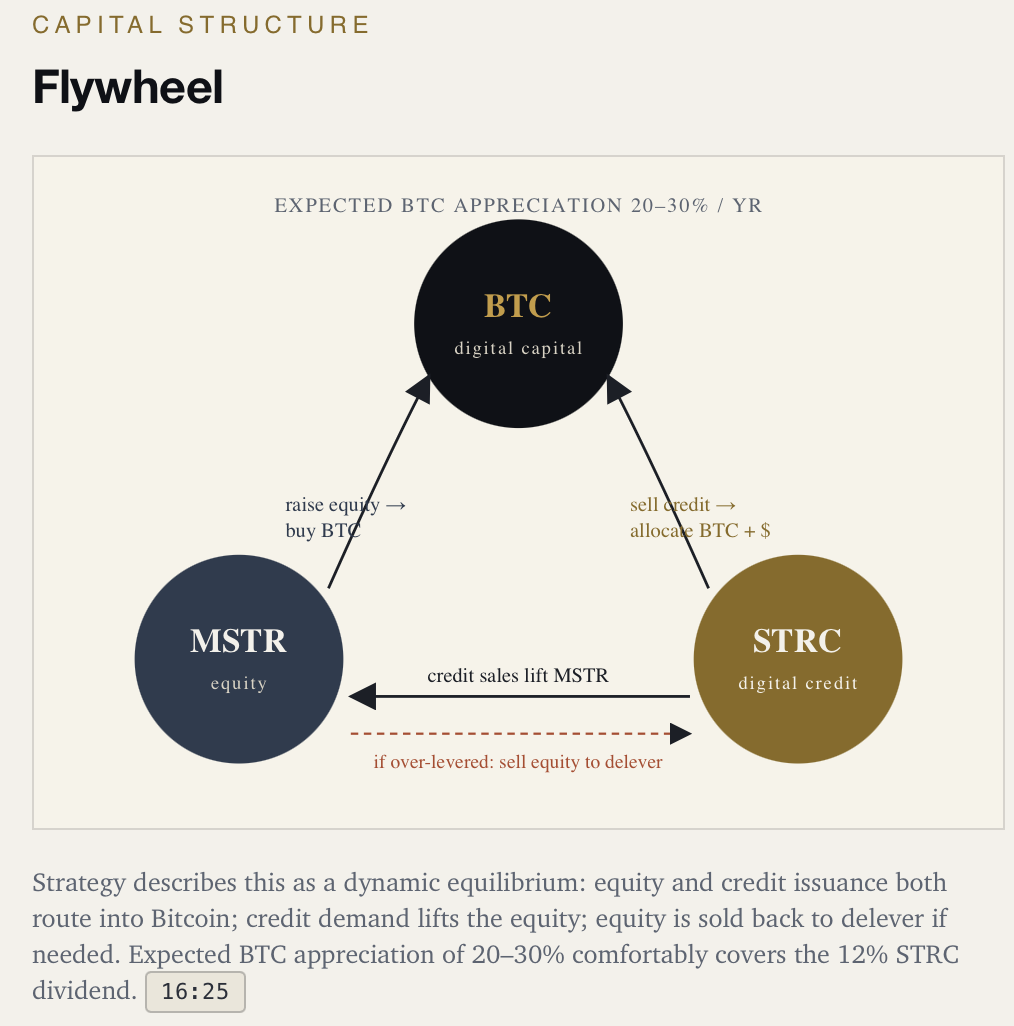
A rising Bitcoin price increases the value of Strategy’s holdings without creating cash for dividends. Its base prospectus explains that generating cash from those holdings depends on sales. It also identifies dividends among the potential uses of proceeds from securities offerings.
A hypothetical $1 billion preferred-stock issuance at a 12% annual dividend rate illustrates the requirement. If that rate persisted and the payments were declared, the issuer would need $120 million in cash over a year. Funding must be available when distributions come due, regardless of when Bitcoin appreciates.
Strategy’s September 28 filing reported a $5.02 billion USD Reserve intended to support preferred dividends and debt interest, separately from $1 billion in USD Cash. Between September 21 and September 27, it used $22.1 million of the reserve to pay preferred dividends.
During the same period, the company allocated common-share sale proceeds to both Bitcoin purchases and STRC repurchases. New capital can therefore serve several demands at once. Issuing common shares brings in cash while spreading existing shareholders’ ownership across more shares, a trade-off behind the expanding Bitcoin reserve.
What a 12% dividend tells an investor
Even when distributions are paid, changes in the share price affect the investor’s overall result. That matters when reading Saylor’s comparisons with other income products, because a high dividend rate can coexist with a loss on the shares themselves.
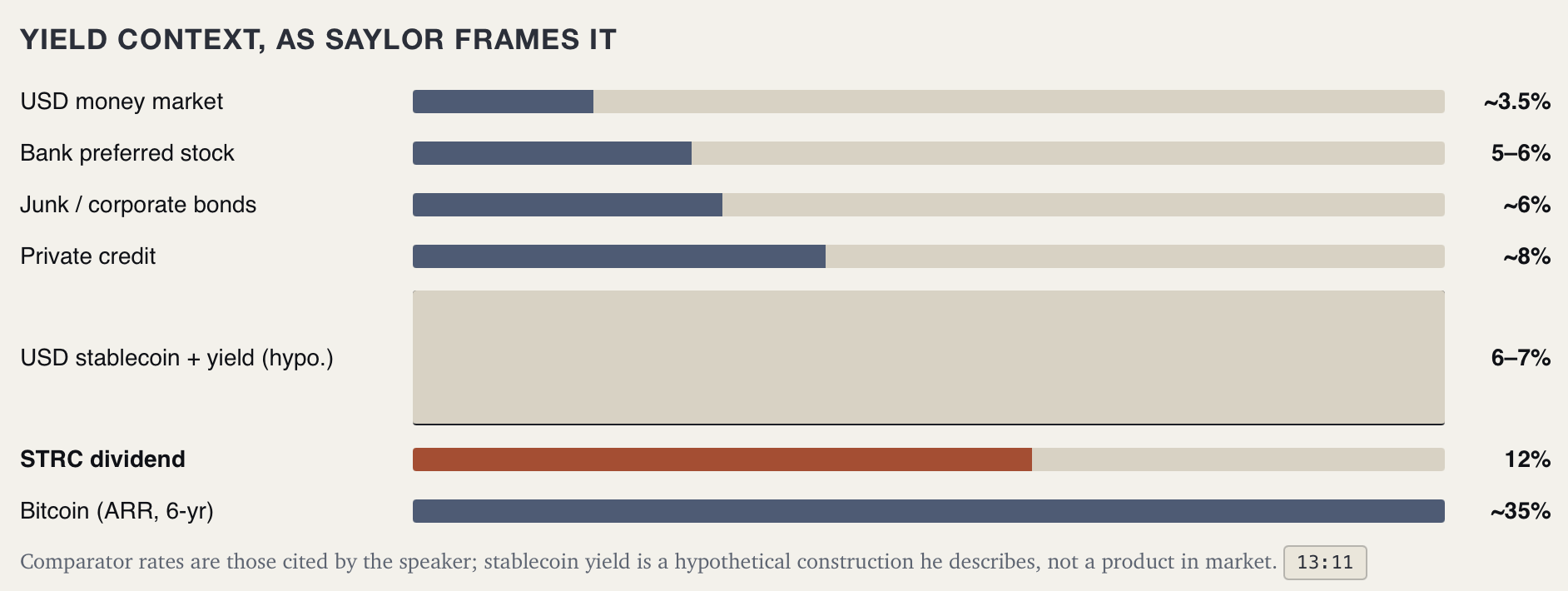
His cited Bitcoin return describes past appreciation over a particular period. The preferred-stock rate describes annual distributions relative to a stated amount. Those figures measure different outcomes. A money-market fund also holds different assets and follows different rules from a corporate preferred share, so a higher quoted rate alone does not establish a better investment.
For October 2026, Strategy lists STRC’s variable annualized dividend rate at 12% of its $100 stated amount, paid twice monthly. The income yield relative to an investor’s purchase price would differ if the shares were bought above or below $100. Future income can also change: the rate is reviewed monthly, and cash dividends are not guaranteed.
Strategy has proposed moving to daily dividends, with a shareholder meeting scheduled for October 28. If approved and adopted, dividends would accrue on each calendar day and be paid on the next business day. That would change how quickly investors receive distributions, rather than increase the annual rate by itself.
The proposed dollar token needs dependable withdrawals
Saylor wants income products to support another offering: a wallet-held token that aims to remain stable against the dollar while paying a yield. He described a hypothetical Bitcoin-linked product offering roughly 6–7%, suitable for users who want to spend or save without holding Bitcoin’s price exposure directly.
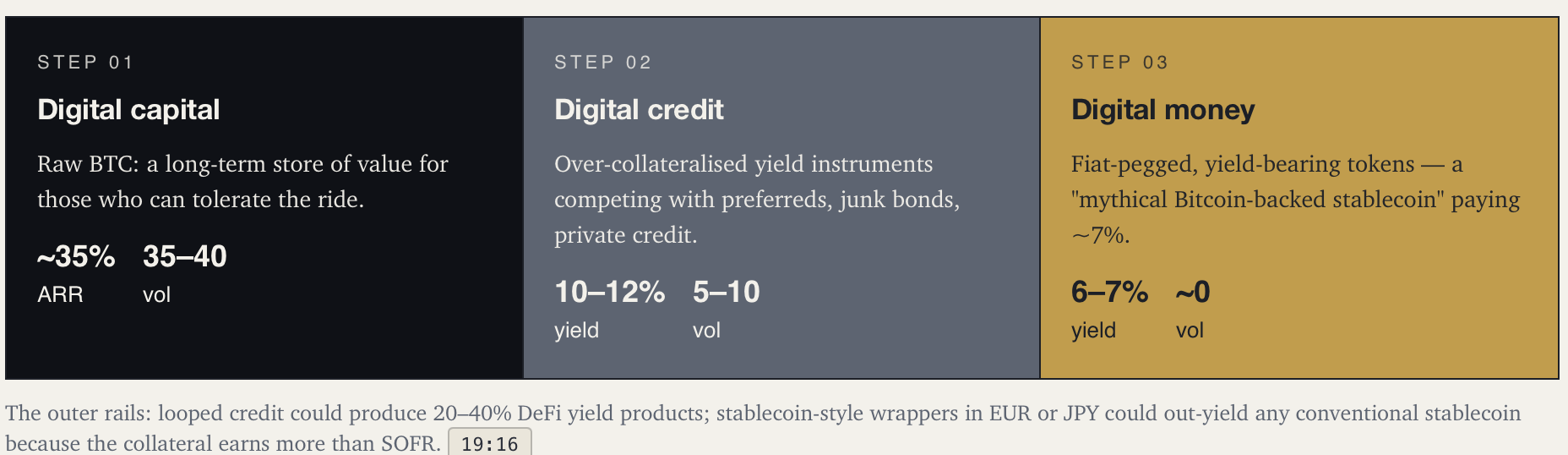
A product holding preferred shares would need readily available cash or other liquid assets to meet withdrawals without depending on an immediate sale of those shares. Their distributions arrive over time, while their market value and the availability of buyers can change. Users requesting dollars would need a redemption process that accounts for that mismatch.
The terms would also need to identify who owes users payment and who absorbs losses if reserve assets fall. Withdrawal delays would matter particularly to someone relying on the token for everyday spending. Reliable access to money would be as important to that user as the advertised yield.
A downturn would test the wider model
If Bitcoin falls while investors become less willing to buy Strategy’s securities, the company could face weaker asset values and harder financing at the same time. Cash reserves would provide time to respond, but their significance depends on how long they could cover dividends, interest and other cash needs.
Future filings can make that assessment more concrete by showing reserve coverage, the cost of new financing and how management allocates proceeds. Maintaining payments through difficult markets without exhausting cash buffers would offer stronger evidence for Saylor’s model than rising Bitcoin holdings alone.
By 2035, new Bitcoin issuance is expected to be smaller whether or not these products succeed. Saylor’s gold-rush argument depends on them attracting investors and serving their needs through the intervening market cycles. Sustained demand, manageable financing costs and dependable payments would show that the financial market he describes is becoming durable.
This article is for informational purposes only and does not constitute investment advice. Bitcoin and Bitcoin-linked securities carry risk, and dividend rates and product terms may change.
The post Bitcoin’s Gold Rush to 2035: Inside Saylor’s Income Bet appeared first on Coindoo.