Markets6 min read
One asset is 51% off this Black Friday
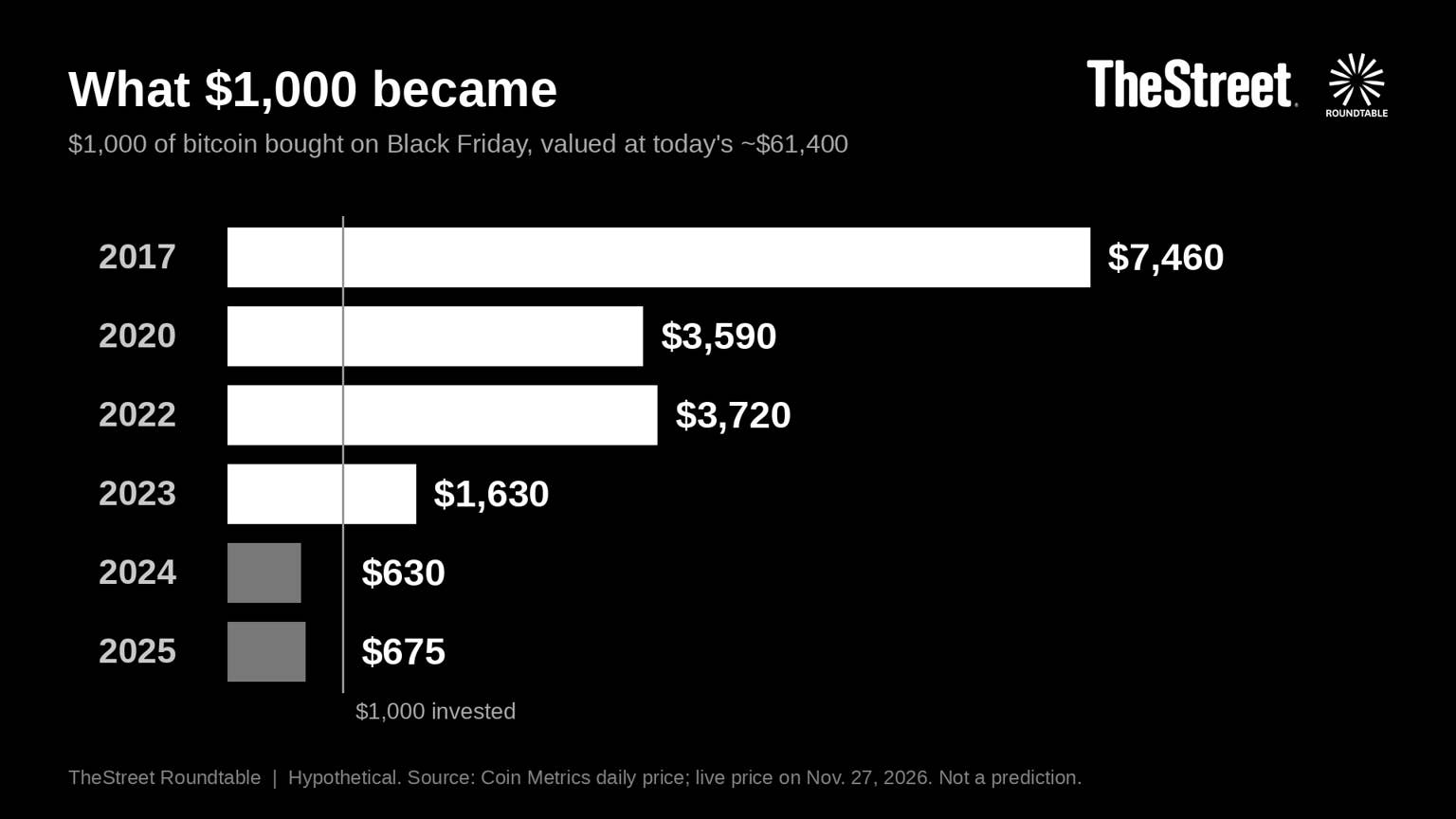
On Black Friday 2017, one bitcoin cost $8,232. Three weeks later it hit $19,641. A year after that it traded at $3,185. Check the price on every Black Friday since and you see a bubble, a bus
You can also read this news on BH NEWS: Bitcoin’s Potential Future Value: What Lies Ahead? Cryptocurrency giant Bitcoin, currently trading around $76,000, has long-term projections suggesting
You can also read this news on BH NEWS: Bitcoin’s Potential Future Value: What Lies Ahead?
Cryptocurrency giant Bitcoin, currently trading around $76,000, has long-term projections suggesting it could surge to $170,000 by 2030 and $230,000 by 2035. These forecasts by Ned Davis Research are grounded in evaluation strategies that highlight methods to appraise Bitcoin beyond its short-term market fluctuations.
John LaForge of Ned Davis Research lists seven key frameworks investors can use to assess Bitcoin: network adoption, gold comparisons, monetary supply growth, production costs, portfolio risk, adoption cycles, and the popular stock-to-flow model. Among these, network adoption is poised as the most pivotal, monitoring metrics unique to Bitcoin like the number of wallet owners, exposure through exchange-traded funds, active addresses with balances, and daily active users.
“Understanding Bitcoin’s value requires more than just observing its limited supply; it’s crucial to consider whether new investors and users are flocking to the network,” asserts LaForge.
Placement of demand at the heart of valuation underscores the necessity to look beyond limited supply as a lone metric. LaForge critiques the stock-to-flow model for emphasizing dwindling supplies without fully questioning if the demand will sustain elevated historical estimates.
In the short term, the cost of producing Bitcoin stands out. CoinShares’ latest mining report reveals that publicly listed miners faced pre-tax cash expenses averaging around $75,500 per Bitcoin in the second quarter. This figure closely parallels current market rates, indicating potential for market tensions.
Recent data reflects significant cash withdrawals from U.S. spot Bitcoin ETFs, marking the largest outflows since June. This, coupled with Bitcoin testing the $75,000 threshold, signals current market volatility. Future price objectives depend not only on fixed supply but critically on adoption and demand trends. These projections, while not absolutes, lend insight into the potential trajectory for Bitcoin, urging observers to consider concrete indicators that may support these expectations.
Continue Reading: Bitcoin’s Potential Future Value: What Lies Ahead?