The stock market wasn't the only thing taking a break on Thanksgiving. Bitcoin (BTC) also took one. The network went 98 minutes and 19 seconds without a new block on Nov. 26. Block timestamps
The stock market wasn't the only thing taking a break on Thanksgiving. Bitcoin (BTC) also took one.
The network went 98 minutes and 19 seconds without a new block on Nov. 26. Block timestamps show block 977,697 arriving at 11:49 a.m. ET. The next one didn't come until 1:28 p.m. ET.
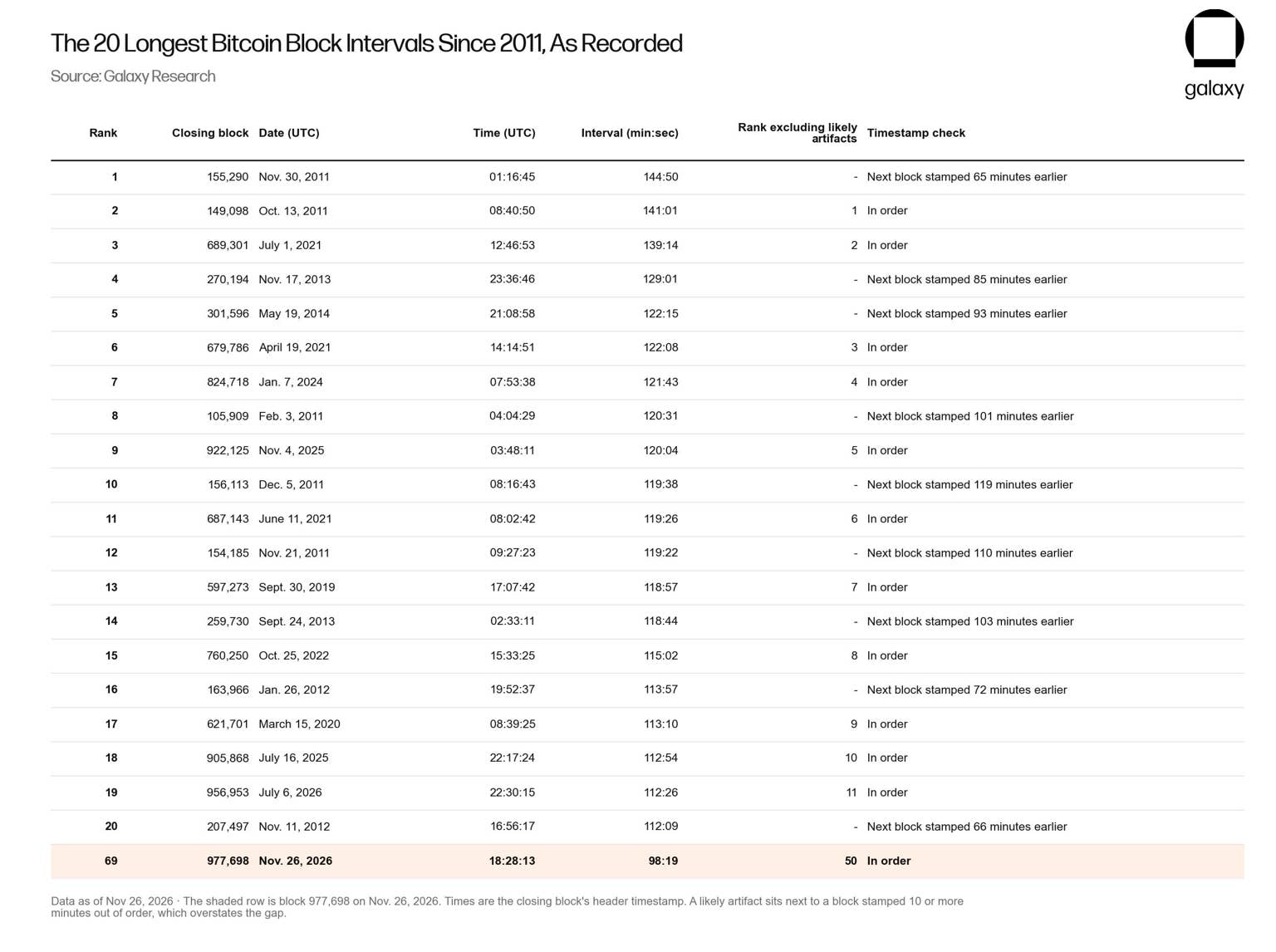
Alex Thorn, head of firmwide research at Galaxy (GLXY), flagged the gap on X. He said it was the “longest since July and the 69th longest since 2011.” It was also the third gap of more than 90 minutes this year.
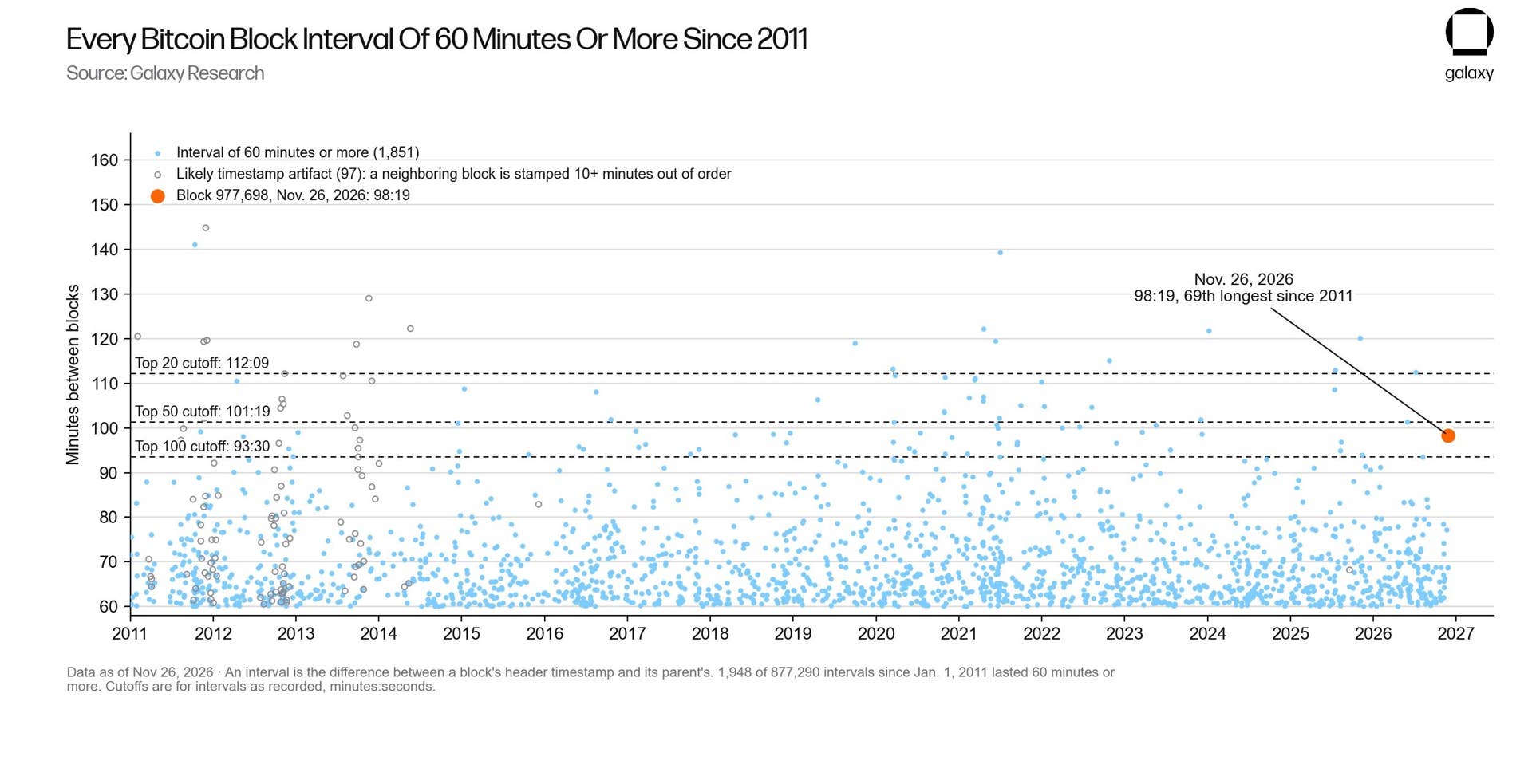 Thursday's 98-minute gap, in orange. Source: Galaxy Research
What stopped moving
Bitcoin records transactions in batches called “blocks.” A new block is meant to arrive about every 10 minutes. A transaction isn't confirmed until it lands in one. So for about an hour and a half on Thanksgiving, transfers sent after the last block sat waiting. That included payments and deposits to crypto exchanges, which usually credit customers only after the network confirms a transfer.
Popular on TheStreet Roundtable:
Why didn't paying more help
On Bitcoin, a fee works like a priority pass, not an accelerator. A higher fee moves a transaction up the line. But the line only moves when a miner finds a block.
Finding a block comes down to chance. Miners compete to solve a numerical puzzle by making enormous numbers of guesses. Each guess has the same tiny odds, and earlier misses don't improve them.
"A miner that has been hashing for an hour is no closer to a block than one that just started,” Thorn wrote.
Every 2,016 blocks, or roughly every two weeks, the network resets the puzzle's difficulty to keep the average near 10 minutes. Any single wait can still run short or long. Galaxy's data shows 63.2% of blocks over the past two years arrived faster than 10 minutes. Thorn estimated that a gap this long happens about once every 18,600 blocks.
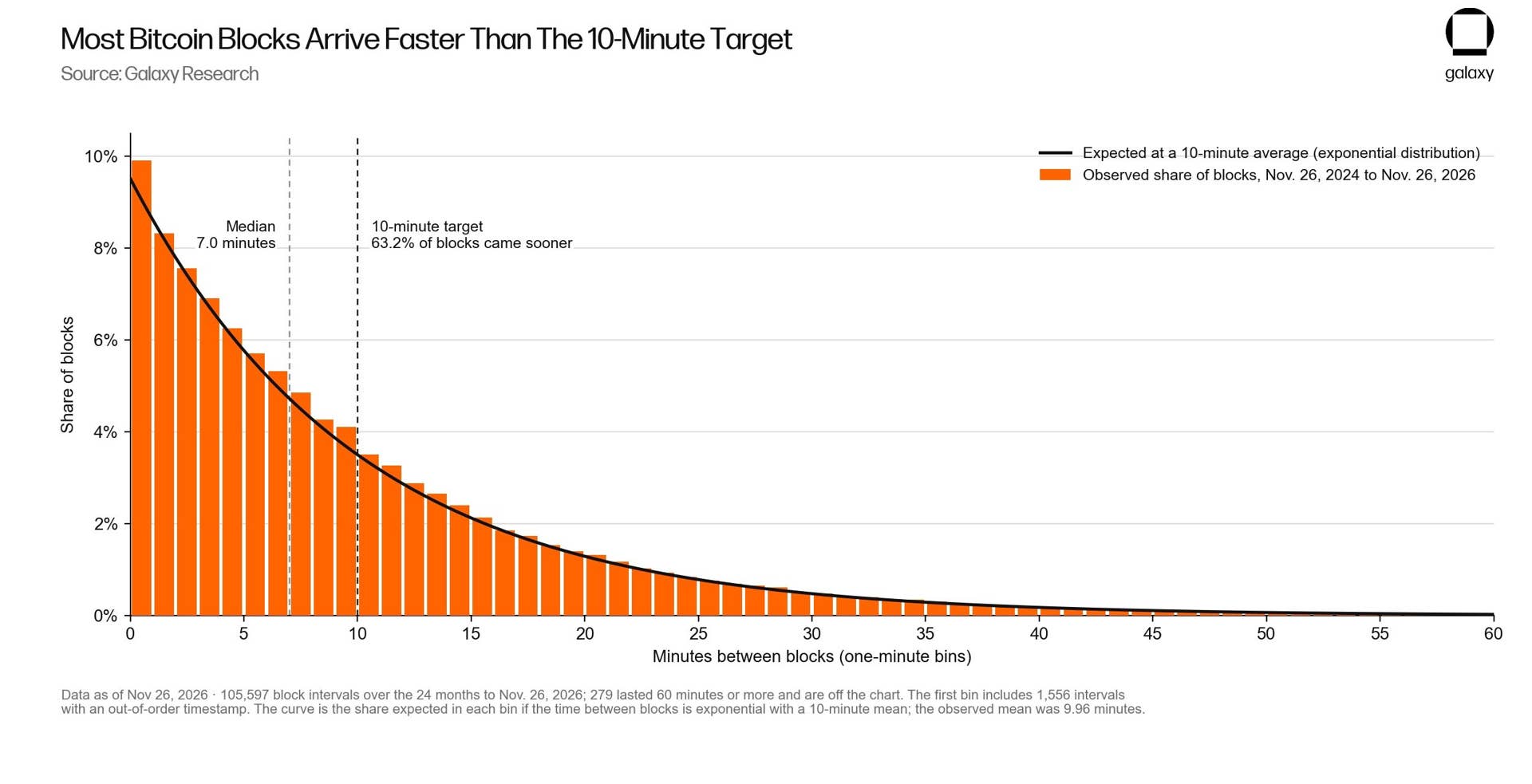
BTC blocks usually come before 10 minute. Source:
Galaxy Research
Related: Before the bell: Wall Street goes Black Friday shopping. Is Bitcoin on the list?
The longest gap of the year
July's gap was longer.
On July 6, miners went 112 minutes and 26 seconds before finding block 956,953. Galaxy ranks it the 19th longest on record, which makes Thursday's gap is the longest of since then.
The three longest BTC block intervals came this year. Source:
Galaxy Research
The backdrop then was different. The network's total computing power, known as "hashrate," was falling. It dropped about 8% in the first 10 days of July, and on July 11, the network cut difficulty by 5%.
But this time, hashrate rose. It climbed 7.8% in the week to Nov. 23, and blocks were arriving faster than the 10-minute target. On Friday, the network raised difficulty 7.61% to slow them back down.
Mining economics are still under strain. Hashrate is 8% below where it was a year ago, according to Glassnode data. The drop has come alongside falling prices and a record-low hash price, or the revenue miners earn per unit of computing power. But in the week before Thanksgiving, computing power was coming back online.
Two very different setups produced the same kind of long wait.
Related: Cathie Wood trims crypto stake ahead of birthday
Bitcoin's price fell back under $60,000 at the time of writing.