Someone just handed Bitcoin miners roughly $102,778 and delivered exactly zero coins to anyone. A transaction confirmed on Aug. 12 paid 1.60 BTC entirely in network fee, with nothing left ove
Someone just handed Bitcoin miners roughly $102,778 and delivered exactly zero coins to anyone. A transaction confirmed on Aug. 12 paid 1.60 BTC entirely in network fee, with nothing left over for a recipient, the result of an automated script that spiraled out of control.
On-chain records show the transaction carried a single input of 160,343,885 satoshis, the smallest units of Bitcoin, with 100 million to one coin.
Miners took every last satoshi as a fee, while the transaction's only output carried no value. In effect, the sender paid a six-figure toll to move nothing.
Related: Major gold holder with $20B in reserves clears first full audit
How a script ate an entire balance
The cause was a feature called Replace-by-Fee, or RBF. It lets a user resubmit a stuck, unconfirmed Bitcoin transaction with a higher fee to jump ahead in the queue of pending payments. It exists for a good reason: fee estimates go stale within minutes, and a payment can otherwise sit unconfirmed for hours.
But the sender's automated script had no sensible limit. Instead of stopping at a reasonable ceiling, it raised the fee once every second, and each new version ate deeper into the wallet's balance.
On-chain records show the escalation clearly: successive versions of the transaction jumped from a fee of a few hundred dollars, to more than $1,000, to over $9,000, before the final version swallowed the entire input at nearly $103,000.
Bitcoin's network accepted it anyway, because the protocol places no cap on what a sender can hand to miners. The wallet, which had received about 1.77 BTC over its life, was left empty.
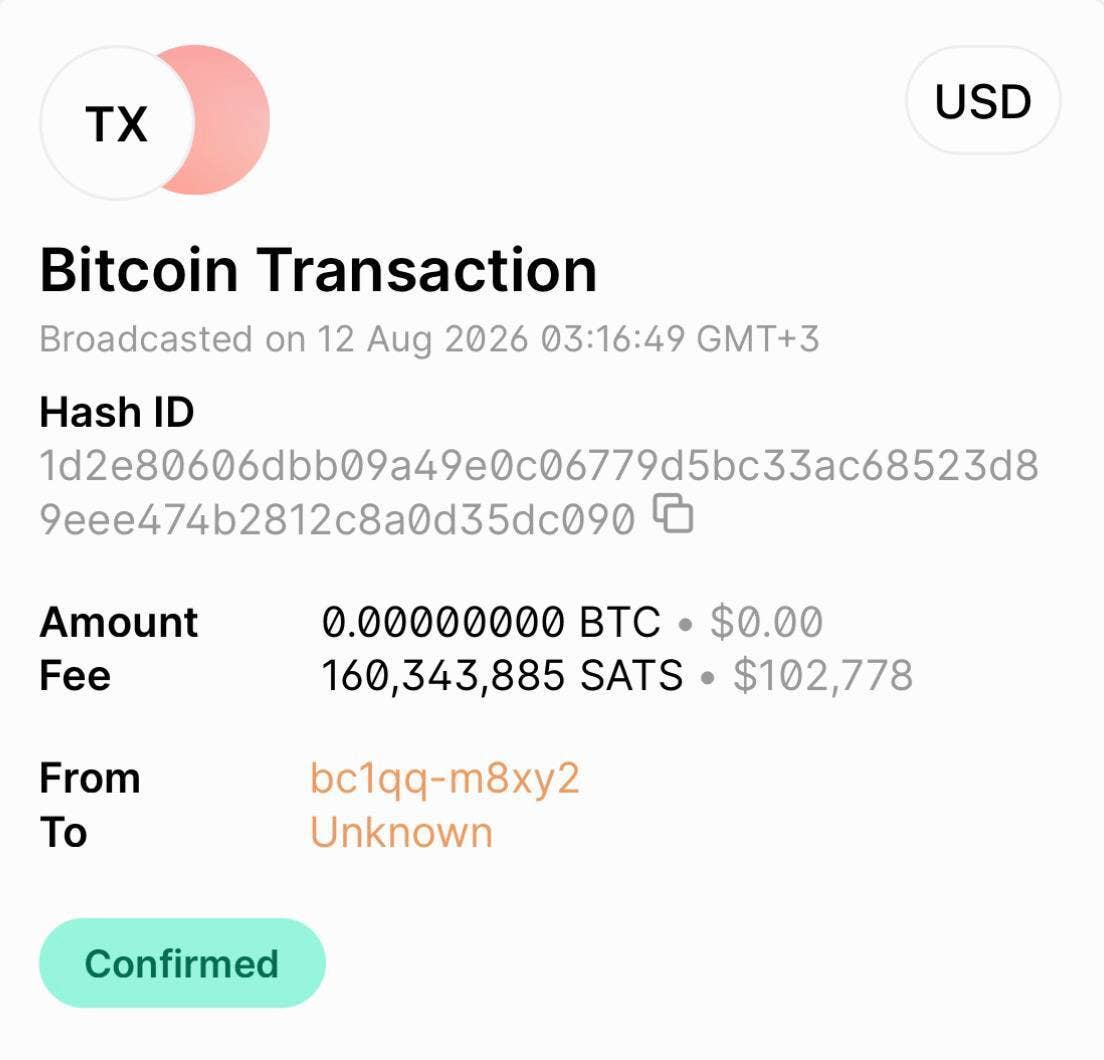
Image source: X
But the sender's automated script had no sensible limit. Instead of stopping at a reasonable ceiling, it raised the fee once every second, and each new version ate deeper into the wallet's balance.
On-chain records show the escalation clearly: successive versions of the transaction jumped from a fee of a few hundred dollars, to more than $1,000, to over $9,000, before the final version swallowed the entire input at nearly $103,000.
Bitcoin's network accepted it anyway, because the protocol places no cap on what a sender can hand to miners. The wallet, which had received about 1.77 BTC over its life, was left empty.
Popular on TheStreet Roundtable:
A windfall for the winning pool
The block was mined by SpiderPool, which pocketed the oversized fee. Total fees in that block came to about 1.82 BTC, meaning this single mistake accounted for 88% of them.
The timing is convenient for mining pools, one of which, a former industry leader, filed for bankruptcy in July.
The episode is a costly reminder of one of Bitcoin's hard rules: transactions are final, and the network will not stop a user from overpaying.
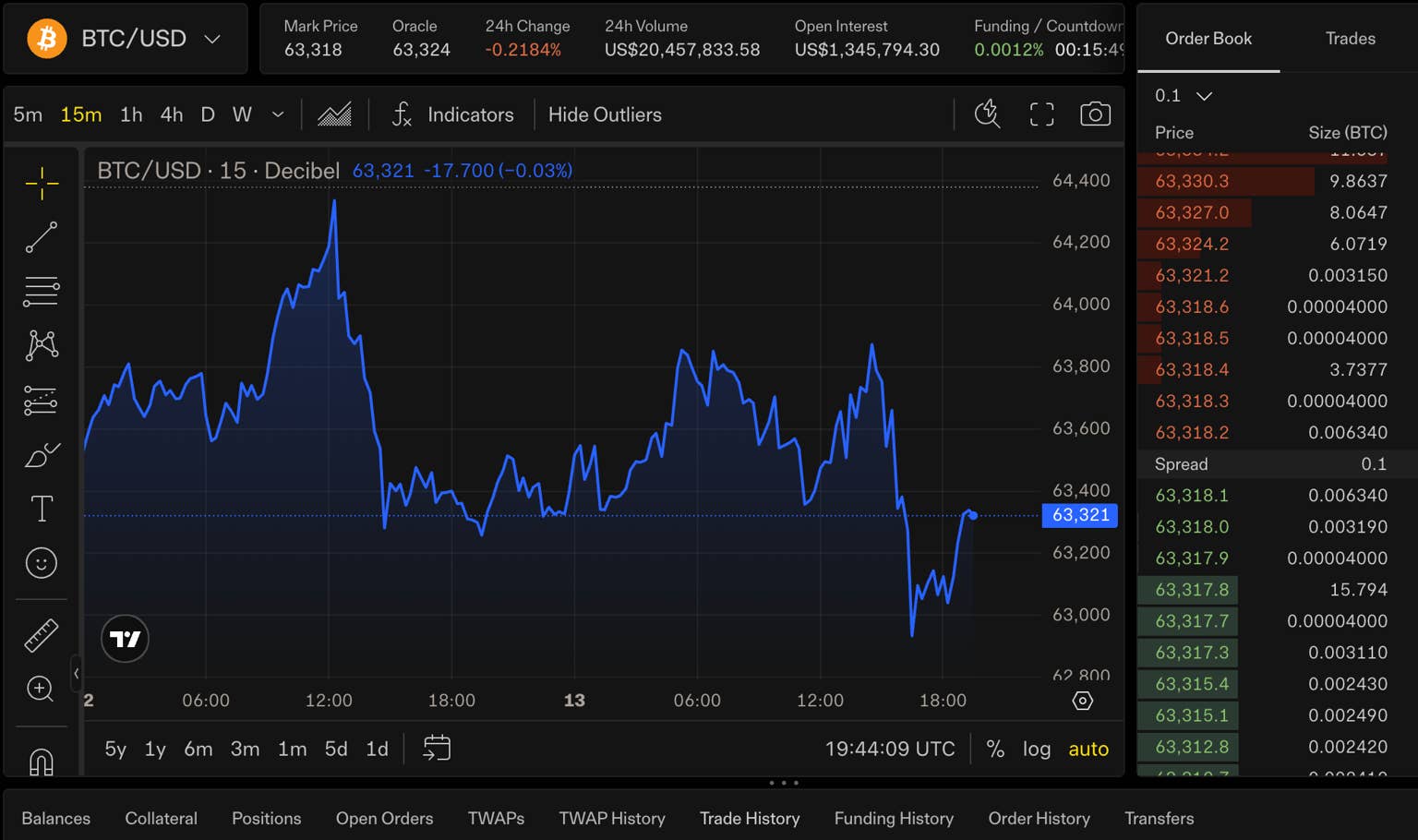
Bitcoin price at press time. Source:
DecibelBitcoin was trading around $63,320 on Aug. 13, roughly flat on the day, holding within the $62,000-to-$66,000 range it has occupied in recent weeks.
Related: Crypto bridge loses nearly all of 200,000 XRP in 97 minutes