Blockchain Upgrades August 2026: Which Network Goes First? Two of the industry's biggest protocol teams are converging on the same month. Solana and Ethereum are both pushing changes toward m
Blockchain Upgrades August 2026: Which Network Goes First?
Two of the industry's biggest protocol teams are converging on the same month. Solana and Ethereum are both pushing changes toward mainnet in the coming weeks, and the blockchain upgrades august 2026 calendar is turning into one of the busiest stretches of the year for validators.
What Is Changing In Blockchain Upgrades August 2026
The centerpiece is Solana's Agave v4.2 client, which Anza scheduled for mainnet feature activation on August 17, per the release schedule Anza published on June 30. The update halves slot times to 200 milliseconds, raises transaction size limits, and cuts rent costs, building on the eXpress Data Path networking layer that crossed supermajority validator adoption the same day. This is the most concrete item in this month's blockchain upgrades august 2026 news cycle, since Anza committed to a specific date rather than a quarter-long window.
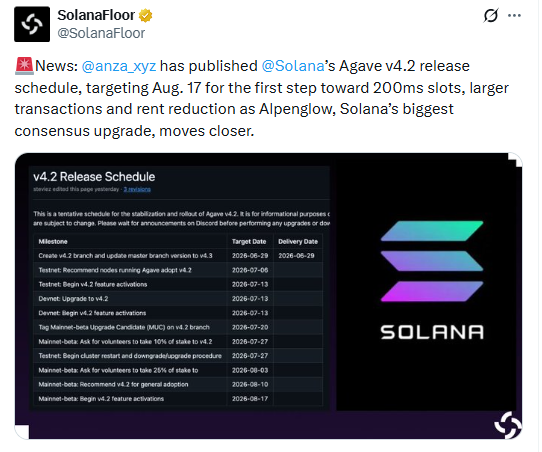 Source: X(formerly Twitter)
Confirmed Timeline And Status
Solana's broader Alpenglow consensus rewrite enters its riskiest phase alongside Agave v4.2. Solana's engineering changelog says the Alpenswitch, the move from Proof of History and TowerBFT to a new Votor and Rotor system, is expected on testnet in July and mainnet in August. Yahoo Finance's coverage describes the full switch happening in stages between August and October, subject to change if testnet issues surface. On Ethereum, Glamsterdam cleared its final devnet stage in June 2026. Some trackers cite an end of August mainnet target, while past Ethereum forks typically needed two to four months of public testnet seasoning after devnets finish, pointing to a wider September through December window instead.
Technical Changes Explained Simply
Glamsterdam's two headline changes are enshrined proposer builder separation, moving block construction rules into the protocol, and block level access lists, letting validators process unrelated transactions in parallel. Neither a mainnet block height nor a locked date has been announced by Ethereum core developers as of this writing.
What It Means For Fees And Speed
For everyday users, this round of blockchain upgrades august 2026 translates into faster confirmation and cheaper computation rather than new tokens. Solana's 200 millisecond slot times, once active, would roughly double raw block throughput. Ethereum's Glamsterdam targets a 200 million gas limit floor and could lower fees for transactions using block level access lists, though actual fees still depend on network demand rather than capacity alone.
Impact On Users, Developers And Validators
Regular holders do not need to take action for either of this month's blockchain upgrades august 2026. Solana validators must run Agave v4.2 or a compatible Firedancer build before August 17, and Ethereum validator operators should track Glamsterdam client releases as devnets move to public testnets like Holesky and Hoodi.
Expert Opinion
Analysts tracking this cycle of blockchain upgrades august 2026 note that Solana's calendar is unusually specific for a network historically associated with outages, while Ethereum's roadmap stays deliberately conservative about locking a mainnet date until proposer builder separation proves stable across clients. A firm date creates delivery pressure, while an open window risks losing developer attention if the fork slips again.
YMYL Disclaimer
This article is for informational purposes only and does not constitute financial or investment advice. Dates and technical details are drawn from official Anza, Solana, and Ethereum Foundation communications along with independent tracker reporting as of July 30, 2026, and remain subject to change as testnets progress.