This publication is sponsored and written by a third party. Coindoo does not endorse or assume responsibility for the content, accuracy, quality, advertising, products, or any other materials
This publication is sponsored and written by a third party. Coindoo does not endorse or assume responsibility for the content, accuracy, quality, advertising, products, or any other materials on this page.
Crypto markets no longer reward hype alone. Real infrastructure, genuine utility, and clear economic logic are what separate lasting projects from short-lived ones. As blockchain networks grow more sophisticated, the assets attracting attention are those solving actual problems, not just making promises.
BlockDAG, Tron, Chainlink, and Ethereum each represent a distinct corner of this maturing landscape. Studying how each one operates gives a much sharper picture of where digital finance is heading. Here is what makes each of these crypto projects worth understanding right now.
1. BlockDAG: A $0.05 Buyback Structure and Legacy Sale Timeline
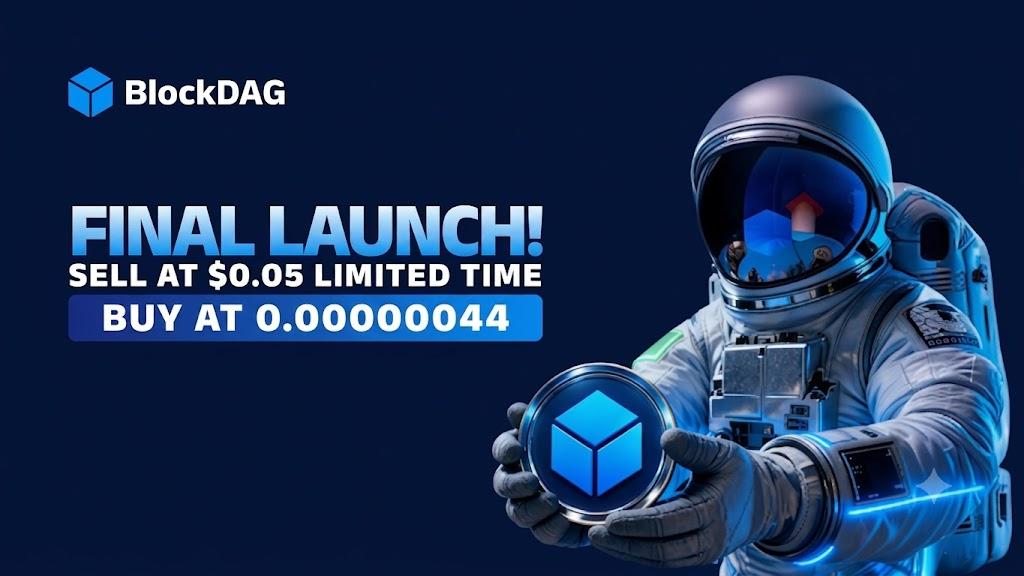
Very few moments in crypto arrive with this level of structural clarity. BlockDAG’s Legacy Sale is one of them. The entry price sits at $0.00000044 per BDAG, already a notable figure within the project’s current sale model. What makes this phase stand out is the buyback price of $0.05 per BDAG, which is listed in the program before new coins change hands. That is not a market price target or an analyst projection. It is a published program term under the project’s stated conditions, and it is one reason market participants are watching BlockDAG right now.
Existing holders have their own dedicated path through a separate Buyback Program priced at $0.00025 per BDAG, with daily submission limits keeping participation structured across the full community. The Direct Swap is live and operational, meaning the gap between deciding to participate and actually doing so is smaller than it has been previously.

The broader ecosystem is already moving. BlockDAG’s X1 app has crossed four million users and keeps growing, a sign of sustained community engagement that goes beyond typical presale activity. The BDAG Casino is live, deposits are flowing, and economic activity is running through the ecosystem. The Legacy Sale remains active, and the current structure is open through the project’s dashboard.
2. Tron: Steady and Reliable in the Payments Space
Tron is a blockchain network built around digital payments and content transfer. Its strongest use case is stablecoin transactions, particularly USDT running on the TRC-20 standard. Because users pay fees in TRX, the token sees consistent daily demand tied directly to real network activity.
Some platforms offer staking options that allow TRX holders to earn rewards by locking their tokens, though returns vary and risk is always present. Because of its high transaction volume and payment-focused design, Tron regularly appears in conversations about crypto networks suited for long-term utility. It is a utility-driven network where demand comes from actual usage rather than speculation.
3. Chainlink: Connecting Blockchains to the Real World
Chainlink is a decentralized oracle network that feeds real-world data into blockchain smart contracts. Price feeds, live events, and external API data all become usable on-chain through Chainlink’s infrastructure. This makes it a critical building block for decentralized finance platforms, insurance products, and tokenized assets that need reliable, tamper-resistant information.
Adoption across blockchain projects is wide, and Chainlink is expanding further with cross-chain tools like CCIP, which supports communication between different blockchain networks. As more financial products migrate on-chain, demand for dependable data infrastructure is expected to grow alongside them. Among crypto projects focused on infrastructure, Chainlink holds a distinct and well-established position with consistent developer interest.
4. Ethereum: Still the Foundation Most Developers Build On
Ethereum remains the most widely used blockchain for decentralized applications, DeFi protocols, NFTs, and Web3 projects. Its large developer ecosystem and strong security model have kept it at the center of the market even as competing networks have emerged.
Layer-2 scaling solutions are making Ethereum faster and cheaper to use, opening it up to everyday applications and large-scale systems that previously found gas costs prohibitive. Financial institutions are also exploring Ethereum for tokenized assets, settlement systems, and other experimental use cases. Ongoing network upgrades targeting efficiency, staking, and overall performance continue to reinforce its standing among major crypto infrastructure projects.
The Bigger Picture
Ethereum, Chainlink, and Tron each provide foundational layers that keep global crypto activity running: smart contracts, data infrastructure, and high-speed payments that serve millions of users daily. Their roles in the ecosystem are well established and consistently in demand.

BlockDAG brings something different to the table. A Legacy Sale entry price of $0.00000044, a $0.05 buyback listed under the project’s stated terms, 4 million X1 app users, and a live casino generating daily activity create a structure that market participants are continuing to review. Together, these elements place BlockDAG in current discussions around crypto projects combining structured program mechanics with active ecosystem development.
This publication is sponsored and written by a third party. Coindoo does not endorse or assume responsibility for the content, accuracy, quality, advertising, products, or any other materials on this page. Readers are encouraged to conduct their own research before engaging in any cryptocurrency-related actions. Coindoo will not be liable, directly or indirectly, for any damages or losses resulting from the use of or reliance on any content, goods, or services mentioned.
The post BlockDAG, Tron, Chainlink, and Ethereum Show Different Utility Paths Across the Crypto Market appeared first on Coindoo.