Ripple CEO Brad Garlinghouse has said the company nearly shut down after the U.S. Securities and Exchange Commission filed a lawsuit against it in late 2020, framing the legal action as an ex
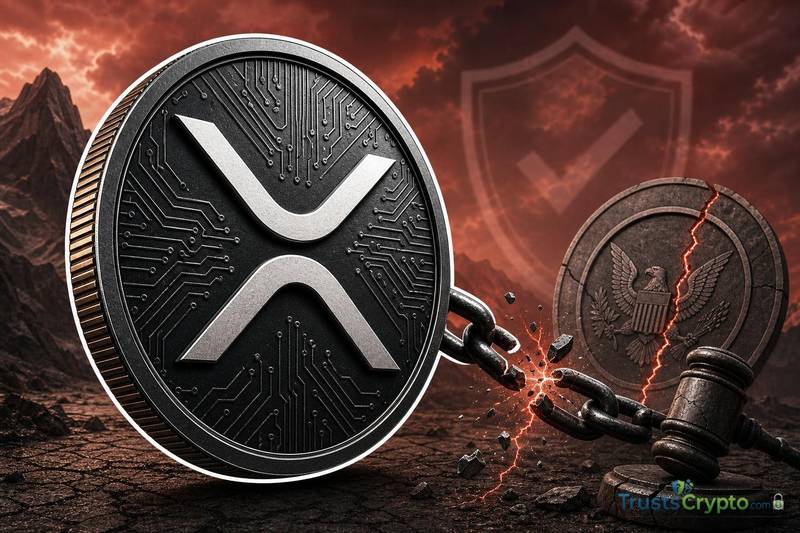
Ripple CEO Brad Garlinghouse has said the company nearly shut down after the U.S. Securities and Exchange Commission filed a lawsuit against it in late 2020, framing the legal action as an existential threat to the business.
The statement offers a rare admission of just how close the SEC's enforcement action came to ending one of the crypto industry's most prominent companies. Garlinghouse's characterization of the period as a near-shutdown scenario underscores the severity of federal securities enforcement on digital asset firms. For related coverage, see Polymarket Launches Combo Trading: What It Means for Users.
What Garlinghouse said about Ripple's survival
Garlinghouse described the SEC lawsuit as a direct threat to Ripple's ability to continue operating. Rather than treating the case as routine litigation, he framed it as a moment when the company's future was genuinely uncertain. For related coverage, see U.S. Spot Bitcoin ETFs Gain $90.44M as Ethereum ETFs Add $18.43M.
The core claim: Ripple was close to ceasing operations
The statement is significant because Ripple was, at the time of the lawsuit, one of the largest and most well-funded companies in the cryptocurrency sector. For its CEO to acknowledge that the company nearly shut down suggests the legal and financial pressure went far beyond public perception.
This is not a claim that Ripple actually ceased operations. The company continued to function throughout the multi-year legal battle. But Garlinghouse's remarks indicate the internal situation was far more precarious than outsiders may have understood.
Why the SEC's 2020 action created existential pressure
The SEC filed its complaint against Ripple Labs, Garlinghouse, and co-founder Chris Larsen in December 2020, alleging that the company raised over $1.3 billion through unregistered securities offerings by selling XRP tokens.
How the lawsuit changed Ripple's operating environment
The immediate aftermath of the SEC's action created cascading problems for Ripple. Major cryptocurrency exchanges delisted or suspended trading of XRP in the United States, cutting off a significant portion of the token's liquidity and market access.
For a company whose business model was closely tied to XRP and cross-border payment solutions built around it, the loss of exchange access and regulatory uncertainty threatened core revenue streams. Garlinghouse's "nearly shut down" characterization aligns with the scale of disruption the lawsuit caused.
How Ripple managed to keep operating
Despite the severity of the legal challenge, Ripple did not shut down. The company continued to operate, maintain its technology, and pursue business relationships, particularly outside the United States where the SEC's jurisdiction did not apply.
From near-collapse to continued operations
Ripple's ability to survive the lawsuit period involved shifting focus to international markets and maintaining sufficient financial reserves to fund a prolonged legal defense. The company has repeatedly noted that the majority of its business activity occurs outside the U.S.
The contrast between "nearly shut down" and continued operation is central to understanding Garlinghouse's remarks. The threat was real, but the outcome was survival, a distinction that matters for how the crypto industry interprets the impact of SEC enforcement.
Why this admission matters beyond Ripple
Garlinghouse's statement carries weight beyond Ripple's own story. It serves as a concrete example of how SEC enforcement actions can threaten the survival of even well-capitalized crypto companies, not just impose fines or compliance requirements.
The broader industry takeaway
For other crypto firms navigating regulatory uncertainty, the Ripple case illustrates that an SEC lawsuit is not simply a legal cost of doing business. It can threaten partnerships, exchange listings, banking relationships, and ultimately a company's ability to function.
Garlinghouse's engagement with regulators has continued beyond the lawsuit. He has been involved in discussions about crypto policy at the highest levels, including confirming a White House meeting on a market structure bill, signaling Ripple's shift from a defensive legal posture to active policy engagement.
The remark also arrives at a time when the broader regulatory landscape for digital assets continues to evolve. Initiatives like the OCC's approval of Circle's national trust bank plan suggest that the relationship between crypto firms and U.S. regulators is entering a new phase, one informed in part by the lessons of the Ripple case.
FAQ about Brad Garlinghouse, Ripple, and the SEC lawsuit
What did Brad Garlinghouse say?
Garlinghouse said that Ripple nearly shut down after the SEC filed its lawsuit against the company in 2020. He described the legal action as a serious threat to the company's continued existence.
When did the SEC sue Ripple?
The SEC filed its lawsuit against Ripple Labs, Brad Garlinghouse, and Chris Larsen in December 2020, alleging unregistered securities offerings through XRP sales.
Did Ripple shut down?
No. Despite Garlinghouse's statement that the company came close to shutting down, Ripple continued operating throughout the lawsuit. The company maintained its business, particularly in international markets, and funded a multi-year legal defense.
Additional source references: source document 1.
Disclaimer: This article is for informational purposes only and does not constitute financial or investment advice. Cryptocurrency and digital asset markets carry significant risk. Always do your own research before making any investment decisions.
Read original article on trustscrypto.com