Anyone wanting to buy XRP with PayPal gets a clear answer in Germany: it cannot be done directly in the PayPal account. PayPal itself does not sell cryptocurrencies in Germany, and that inclu
Anyone wanting to buy XRP with PayPal gets a clear answer in Germany: it cannot be done directly in the PayPal account. PayPal itself does not sell cryptocurrencies in Germany, and that includes XRP. The route runs via a crypto exchange or crypto broker that accepts PayPal as a payment method. You top up your account there via PayPal or pay for the purchase directly through PayPal, and the exchange delivers the coin.
This guide shows which providers offer this in Germany, where the fees lie, which supervisory authority stands behind the platforms and what happens with custody and tax after the purchase. A broader overview of all platforms can be found in our crypto exchange comparison.
Can you buy XRP directly on PayPal?
No, not with a German PayPal account. PayPal has offered the purchase, holding and sale of cryptocurrencies in its own account in the US since 2020 and later extended the service to the UK and Luxembourg. German customers still do not have this feature. In its comparison dated October 21, 2026, Handelsblatt notes that customers from Germany still have no way of buying cryptocurrencies directly via PayPal and that PayPal has not given a date for it.
Even in the US, XRP is not on the list of coins customers can hold in their PayPal account. According to reports, Bitcoin, Ethereum, Litecoin, Bitcoin Cash, Solana, Chainlink and the company's own stablecoin PYUSD are available there. A stablecoin is a token whose value is pegged to a currency such as the US dollar.
What "Pay with Crypto" means at PayPal
Another service causes confusion. In July 2025, PayPal announced "Pay with Crypto". It allows merchants in the US to accept payments in around 100 cryptocurrencies, including XRP, and receive the amount credited in dollars. The buyer pays from their own wallet, such as MetaMask or an exchange wallet. This is a payment route for merchants, not a purchase offer for retail customers. You cannot get XRP through it.
PayPal as a payment method: how the detour via a crypto exchange works
In Germany, the practical route always runs via a trading platform, where PayPal is a payment method like a credit card or a SEPA transfer. There are two variants, and they differ mainly in cost.
- Deposit into the trading account: You transfer euros via PayPal to your account at the exchange or broker. The balance is usually available immediately, and you then buy XRP at the regular trading price.
- Direct purchase with PayPal: You select XRP, enter an amount and confirm the purchase in the PayPal window. This is more convenient, but at some providers it costs considerably more in fees.
Before the first purchase, every regulated provider requires verification. You open an account with an email address, confirm your identity via video or photo ID and provide your tax identification number. The platforms are required to do this under anti-money-laundering law. If you find a provider that sells XRP via PayPal without any identity check at all, you are dealing with a service without European authorisation.
One important point: the PayPal account must be in your name, and the name must match the account at the exchange. The platforms reject payments from someone else's PayPal account.
Which crypto exchanges in Germany accept PayPal for buying XRP
Three providers appear in all the usual comparisons when it comes to XRP with PayPal. Information on other exchanges is contradictory. Before signing up, check in the deposit screen whether PayPal is actually offered for your country.
Bitpanda
The Vienna-based provider lists PayPal as an instant deposit option in euros and Swiss francs for users in selected countries, including Germany. After the deposit, you buy XRP in the app's trading section. Bitpanda is aimed at beginners and shows the price including the mark-up; the standard app does not have an order book like a classic exchange.
Coinbase
Coinbase enabled PayPal for customers in Germany and the UK in September 2023, as BTC-ECHO reported at the time. When buying, you select PayPal as the payment method and are redirected to the PayPal login. Your bank and card details stay with PayPal.
eToro
eToro accepts PayPal for deposits into the trading account. You then buy XRP like any other asset on the platform. With this broker there is a particular point to note, covered further below in the section on CFDs.
For Bitvavo and Kraken, some guides name PayPal as a payment option while others say the opposite. For Bitcoin, we have compiled the providers that accept PayPal payments in a separate comparison of Bitcoin and PayPal; on these platforms, the payment methods generally apply to all coins offered.
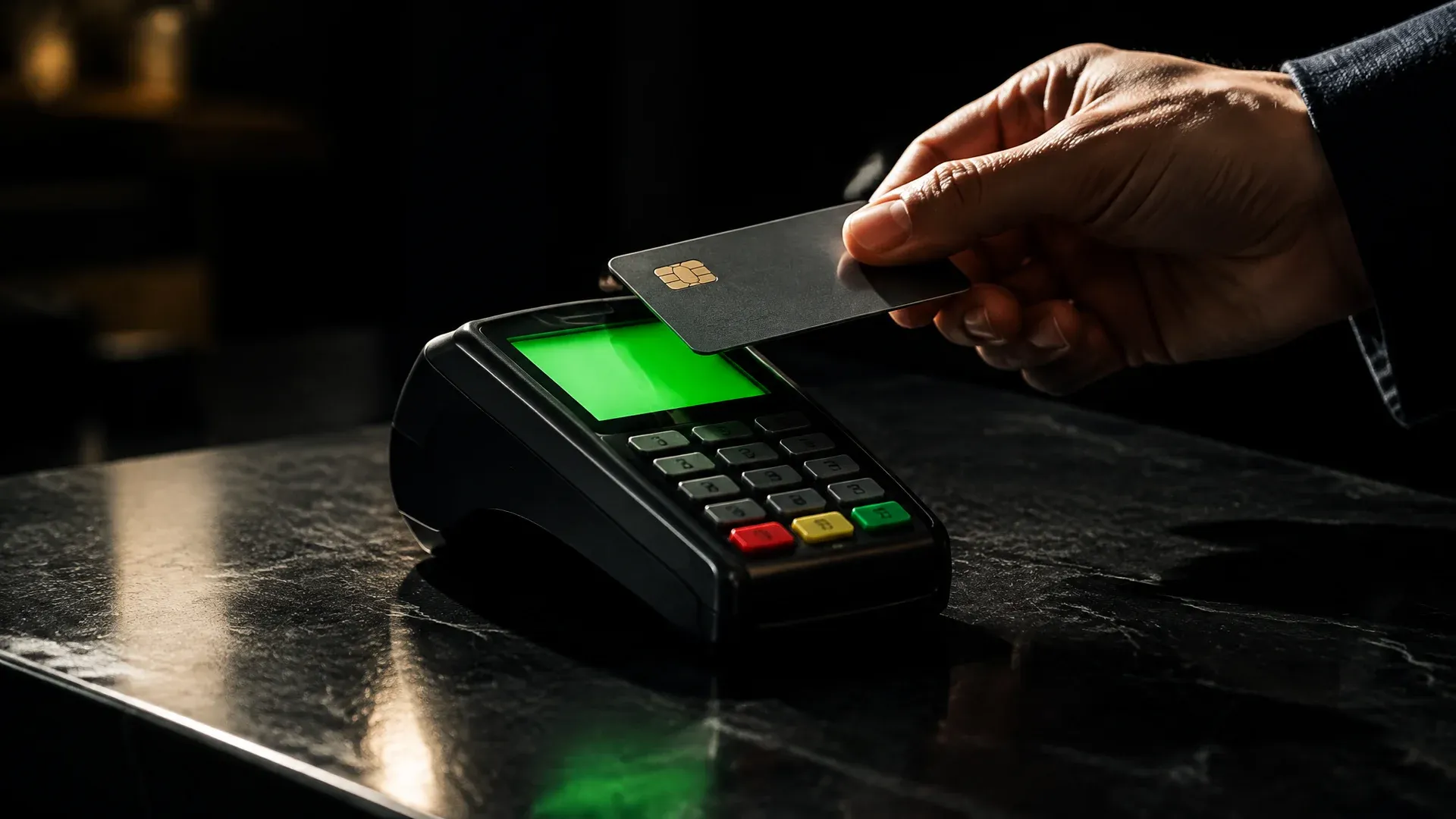
When buying XRP, PayPal is only the payment route; the coin is sold by the exchange or broker.
Fees for buying XRP with PayPal: where the costs arise
At every provider, the price of XRP is made up of two parts: the fee for the payment method and the trading fee including the spread. The spread is the gap between the buy and sell price that the provider keeps. For PayPal purchases, the first part is often the larger one.
Figures from comparison portals vary, so ranges are given here rather than single values:
- Coinbase: For a direct purchase with PayPal, test reports cite 3.49 to 3.99 percent. Some comparisons list a PayPal deposit into the account as free, with trading then at the normal trading fee.
- Bitpanda: For the PayPal deposit, figures range from free to 1.49 percent. A mark-up is added on purchase, which guides put at around 1 percent plus spread.
- eToro: According to comparisons, the crypto fee is around 1 percent per purchase and sale, while the PayPal deposit itself is free according to these figures. Watch out for a possible currency conversion if your account is not held in euros.
A worked example shows why the difference matters: if you buy €500 of XRP directly with PayPal at 3.99 percent, almost €20 goes on fees. If you instead top up your account via PayPal free of charge and buy at a 1 percent trading fee, it is around €5. If you buy regularly, a SEPA transfer usually saves even more, as it is generally free at the large exchanges.
For comparison with a classic exchange, it is worth looking at the order book modes. Coinbase Advanced or the pro views of other platforms work with maker and taker fees below 1 percent. For PayPal payments, however, these modes are often only available after a deposit, not for a direct purchase.
MiCA licence: the supervision behind Bitpanda, Coinbase and eToro
Since the end of 2024, the EU's Markets in Crypto-Assets Regulation (MiCA) has applied. It requires crypto service providers to be authorised by a European supervisory authority. With such a licence, they may offer their services in all EU countries. Our overview of MiCA licensing and its deadlines is available in German.
All three providers named above hold MiCA authorisation:
- Bitpanda received its licence from the German financial regulator BaFin in early 2025.
- Coinbase operates in the EU through Coinbase Luxembourg S.A.; the licence was issued by the Luxembourg regulator CSSF in June 2025.
- eToro obtained authorisation for its subsidiary eToro (Europe) Ltd from the Cypriot regulator CySEC in February 2025.
For you as a customer in Germany, this means the provider must hold client assets separately from its own, handle complaints and disclose its fees. There is still no deposit protection for crypto balances as there is for a current account. The public register of the European supervisory authority ESMA lists every authorised firm.
Real XRP or CFD: the difference at a crypto broker
At brokers such as eToro, you can buy two different products on XRP. Buying without leverage gets you real coins, which the broker holds for you. A CFD (contract for difference), by contrast, is a derivative contract: you bet on the price movement but do not own a single coin. CFDs usually work with leverage and can quickly lead to a total loss of the stake.
Check in the order screen whether leverage is set and whether the position is held as a real purchase. Only real XRP can later be transferred to a wallet of your own. Our overview of crypto brokers shows which providers deliver real coins and which only offer derivatives. ETPs on XRP traded on German exchanges are also securities, not coins. At neobrokers they are often bought via SEPA, and PayPal plays no role there.
Withdrawing XRP to your own wallet: destination tag and the 1 XRP reserve
After the purchase, your XRP sit at the exchange. That is convenient, but you are entrusting custody to the provider. If you want to hold the coins yourself, transfer them to a wallet of your own. A crypto wallet is software or a device that stores the private key to your balance.
You should know two peculiarities of the XRP Ledger before you withdraw:
- Reserve: Every account on the XRP Ledger must hold a base reserve of 1 XRP, plus 0.2 XRP for each additional object such as a trustline. A new address only becomes active once at least this reserve arrives. You cannot spend the reserve for as long as the account exists.
- Destination tag: Exchanges often use one pooled address for all customers and assign incoming payments via a number, the destination tag. If you send XRP to an exchange and forget the tag, the payment reaches the address but not your account. Recovering it then costs time and support requests.
For larger amounts, a hardware wallet is the safest solution, because the key never leaves the device. Which models support XRP is shown in our hardware wallet comparison. A detailed route from purchase to withdrawal is described in our September guide to buying XRP in Germany.
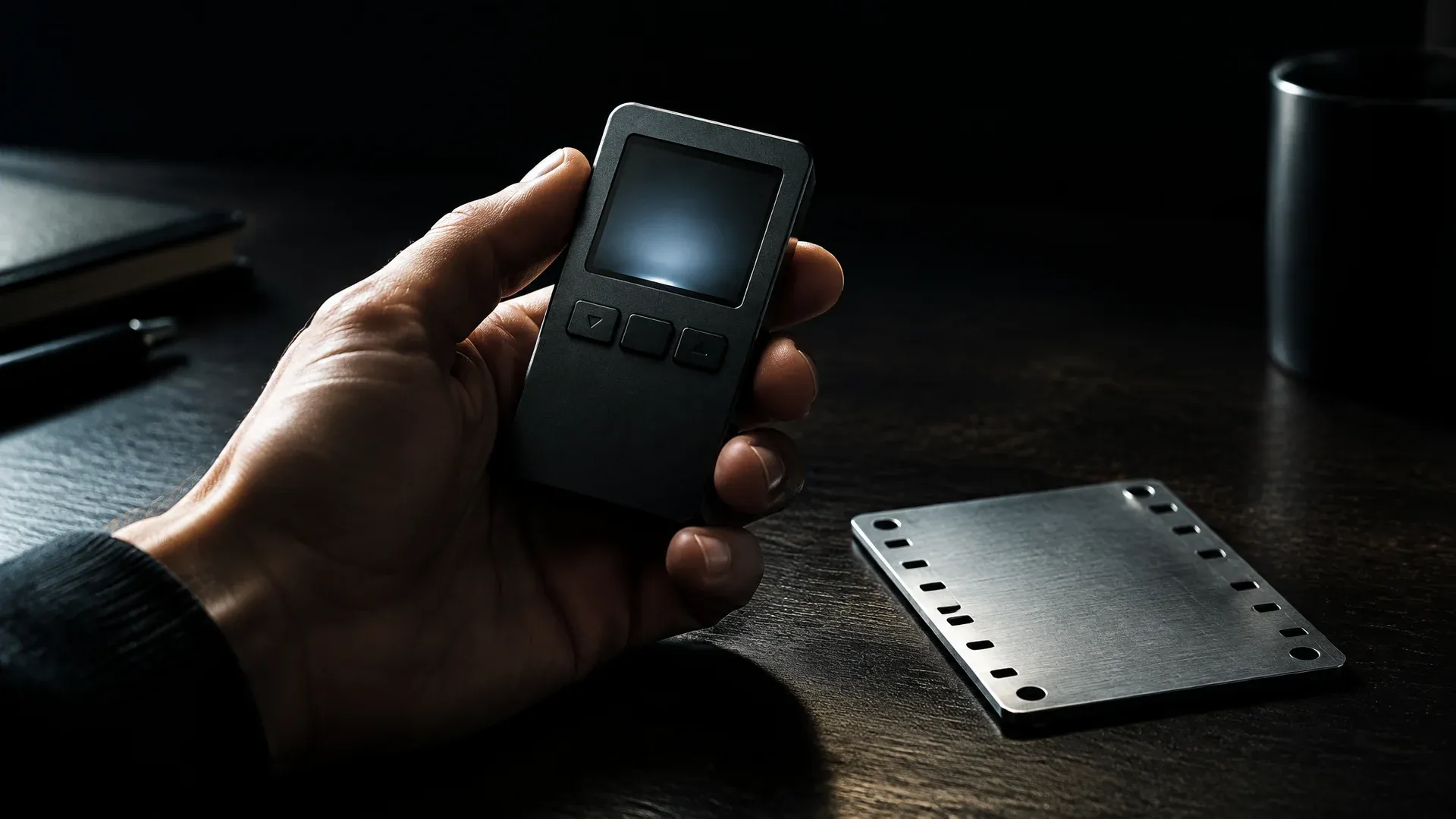
If you want to hold XRP yourself after buying with PayPal, withdraw the coins to your own wallet and back up the recovery words offline.
Crypto tax in Germany: holding period and exemption limit also apply to PayPal purchases
For the tax office, the payment method makes no difference. For tax purposes, XRP counts as a private disposal transaction under Section 23 of the German Income Tax Act. If you sell or swap XRP at a profit within one year of purchase, the gain is taxable. After a holding period of more than twelve months, it is tax-free.
Within the holding period, an exemption limit of €1,000 per year applies to all private disposal gains combined. An exemption limit works differently from an allowance: if the gain exceeds it by even one euro, the entire amount is taxable. Purchase fees, including PayPal fees, can be counted as acquisition costs and thus reduce the gain.
How does the tax office learn about crypto gains? The EU's DAC8 directive has applied since January 1, 2026. Since then, crypto service providers in the EU have recorded their customers' transactions and reported them to the tax authorities, with the first report for 2026 due in 2027. That is why platforms ask for your tax identification number when you sign up. Keep purchase records with date, quantity and price; a tax tool handles the matching automatically on a "first in, first out" basis.
XRP as an investment: when the PayPal route makes sense
PayPal is mainly worthwhile for a quick first purchase: the money is available immediately, and you do not have to store bank details with the exchange. For regular purchases, a SEPA transfer or a savings plan is usually cheaper. Whether XRP itself is suitable as an investment depends on your appetite for risk. The price fluctuates sharply, and its development is closely tied to Ripple Labs, the company behind the XRP Ledger, to its business with banks and to regulation in the US. Only buy with money you can afford to lose.
A point on security: sites advertising "XRP instantly with PayPal, no account needed" are often intermediaries outside EU supervision or scams. Only buy on platforms you can find in the ESMA register, and never authorise PayPal payments to private individuals who promise you XRP.
Buying XRP with PayPal: a direct purchase costs up to 3.99 percent
If you want to buy XRP with PayPal, three steps get you there most cheaply:
- Choose a provider with a MiCA licence: Make sure the platform offers PayPal for Germany and is authorised in the EU. Our comparison of regulated crypto exchanges shows a selection.
- Top up your account via PayPal instead of buying directly: At many providers, a deposit is cheaper than a direct purchase. Our crypto exchange comparison sets the platforms' fees side by side.
- Keep records for the tax office: The purchase date and price determine the holding period. Suitable programs can be found in the crypto tax tool comparison.
(As of November 9, 2026. This article is not investment advice. Prices and fee structures change; check the terms with the provider before you buy.)