Can you recover stolen crypto? Sometimes, but victims should not count on it. Most crypto transfers cannot be reversed once the blockchain confirms them. Still, stolen funds can be traced, fr
Can you recover stolen crypto? Sometimes, but victims should not count on it. Most crypto transfers cannot be reversed once the blockchain confirms them.
Still, stolen funds can be traced, frozen, seized and returned in some cases. The outcome depends on how the theft happened, where the money went and how fast the victim reported it.
The scale of the problem is large. Chainalysis reports that hackers stole more than $3.4 billion in crypto in 2025. It also estimates that crypto scams and fraud brought in about $17 billion.
This article looks at the numbers behind crypto theft and recovery. It covers losses, FBI reports, real recovery cases and the odds victims face.
Can Stolen Crypto Really Be Recovered?
Unlike a bank transfer, a crypto transfer has no central office that can cancel it. Bitcoin (BTC) and Ethereum (ETH) run on decentralized networks. No one can undo a payment just because it was fraud.
That does not mean every case is lost. Some victims get back part or all of their money. The table shows the main routes and what limits each one.
Recovery method
How it works
Main limit
Exchange freeze
An exchange restricts access to suspicious funds
Funds must be under its control
Blockchain investigation
Investigators trace funds to identifiable places
Tracing alone cannot retrieve assets
Law enforcement seizure
Authorities legally seize assets linked to crime
Needs investigation and legal action
Stablecoin freeze
Some token issuers restrict transfers from set addresses
Only works with supported tokens
Civil legal action
A court orders assets preserved or returned
Costly and hard to enforce
Voluntary repayment
The recipient returns the funds
Unlikely in deliberate fraud
The best chances come when stolen funds reach a regulated exchange or stay in a stablecoin that supports freezing. If an attacker moves Bitcoin between self-custody wallets, investigators can follow the trail but cannot reverse it.
Tracing and recovering are not the same thing. A visible transaction does not mean the money can be pulled back.
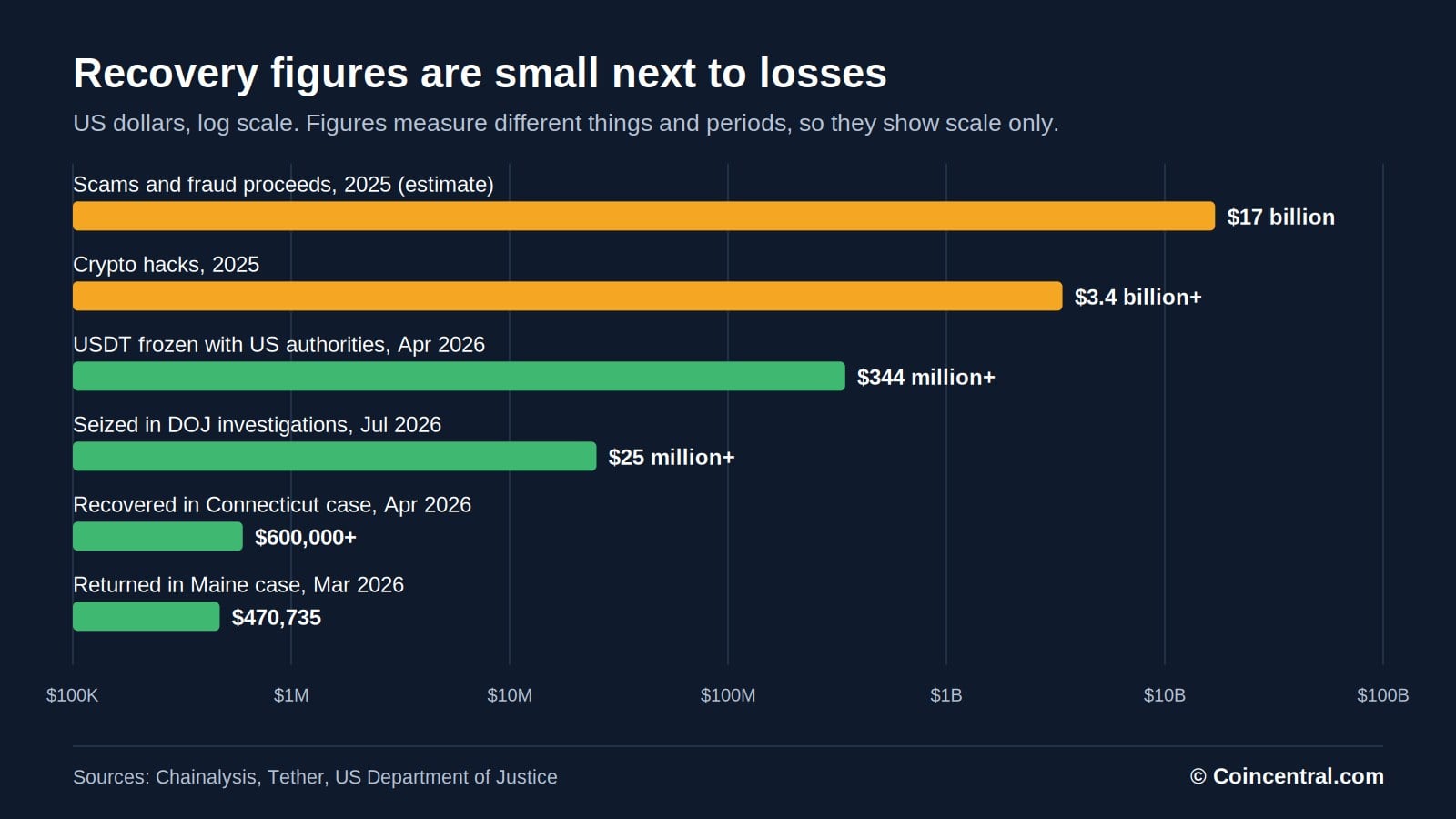
Chart 1: Recent freeze and recovery figures are small next to estimated 2025 losses. The numbers measure different things, so they show scale only.
How Much Crypto Is Stolen Each Year?
Chainalysis reports that more than $3.4 billion was stolen in crypto hacks in 2025. The figure uses data collected through early December.
One attack made up a large share. The February 2025 Bybit attack accounted for about $1.5 billion, or roughly 44% of the total.
Scams are counted separately. Chainalysis estimates that scams and fraud generated about $17 billion in illicit proceeds. Hack losses and scam proceeds measure different things, so they should not be added together.
Measure
Amount
Source
Crypto hack losses, 2025
More than $3.4 billion
Chainalysis
Bybit attack, February 2025
About $1.5 billion
Chainalysis
Personal wallet compromises, 2025
About $713 million
Chainalysis
Scam and fraud proceeds, 2025
About $17 billion (estimate)
Chainalysis
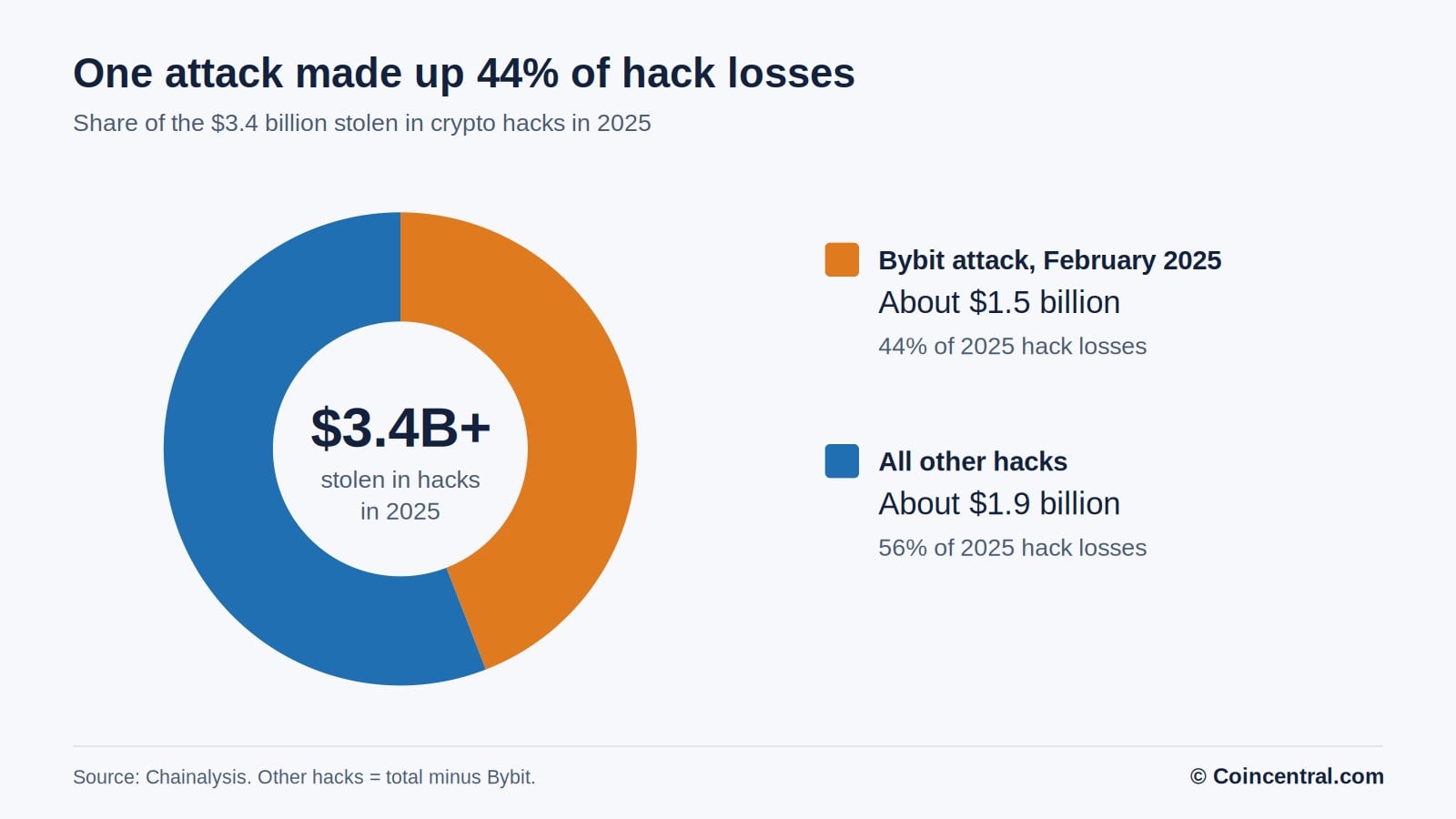
Chart 2: The Bybit attack made up about 44% of the $3.4 billion stolen in crypto hacks in 2025.
Everyday Investors Are Targets Too
Large platforms draw the headlines, but individual investors lose money as well. Chainalysis estimates that personal wallet compromises caused about $713 million in losses in 2025.
Those losses affected at least 80,000 unique victims across about 158,000 incidents. The gap suggests that some victims were hit more than once.
Simple division gives a rough picture. The losses work out to about $4,500 per incident and about $8,900 per victim. These are averages from estimates, so real losses vary widely.
Metric
Figure
Estimated losses
About $713 million
Unique victims
At least 80,000
Incidents
About 158,000
Average per incident (calculated)
About $4,500
Average per victim (calculated)
About $8,900
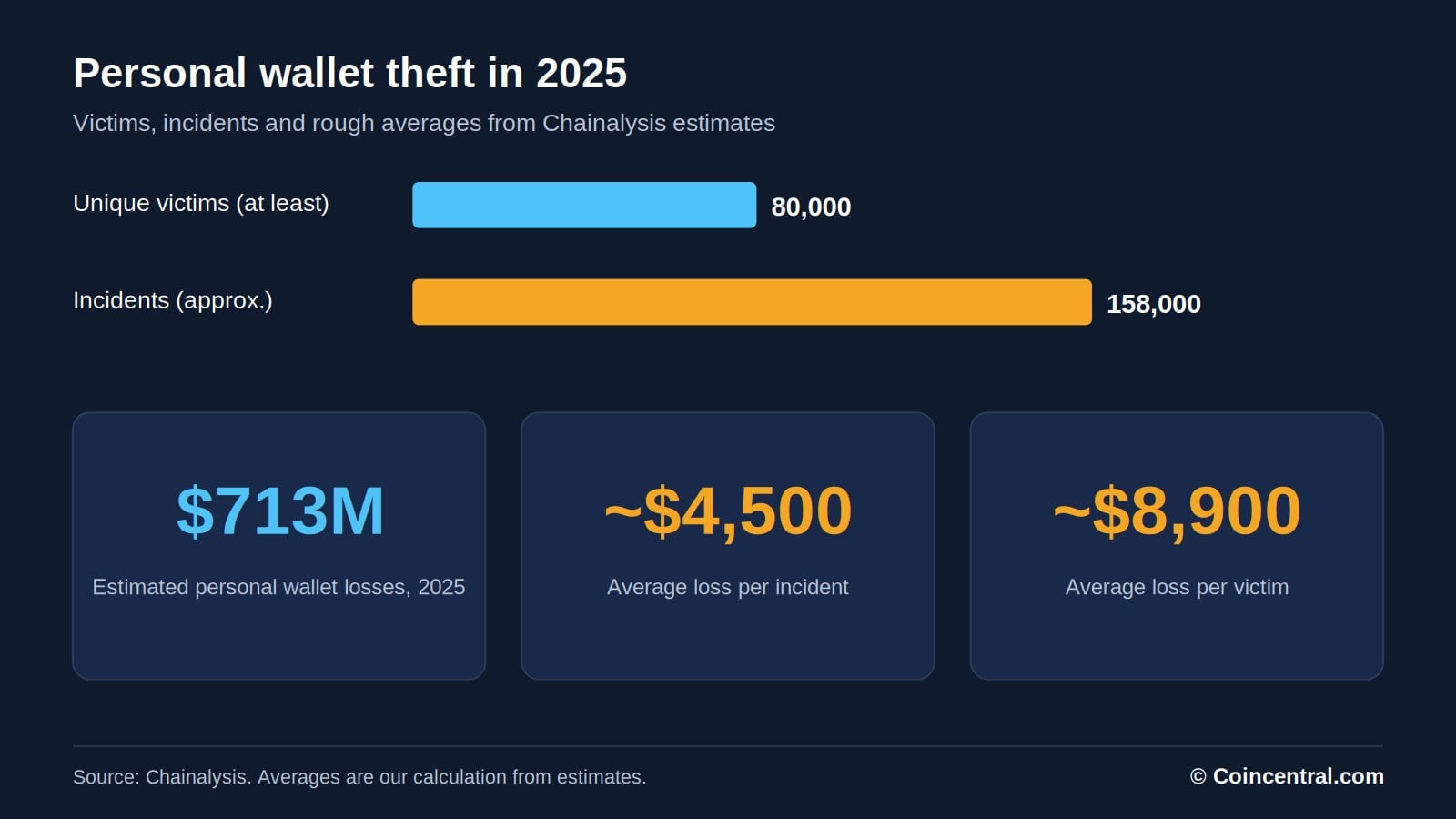
Chart 3: Personal wallet compromises in 2025, with average losses calculated from Chainalysis estimates.
What the FBI Data Shows
The FBI published its 2025 Internet Crime Report in April 2026. It recorded 181,565 complaints that involved crypto.
Reported losses tied to crypto complaints were more than $11 billion. Total reported internet crime losses were nearly $21 billion. That puts crypto at about half of all reported losses.
The report also pointed to large losses from crypto investment fraud.
FBI figures and blockchain estimates are different kinds of data. The FBI counts complaints and reported losses. Chainalysis estimates on-chain activity, so the two should not be compared directly.
FBI 2025 report
Figure
Complaints involving crypto
181,565
Reported crypto-related losses
More than $11 billion
All reported internet crime losses
Nearly $21 billion
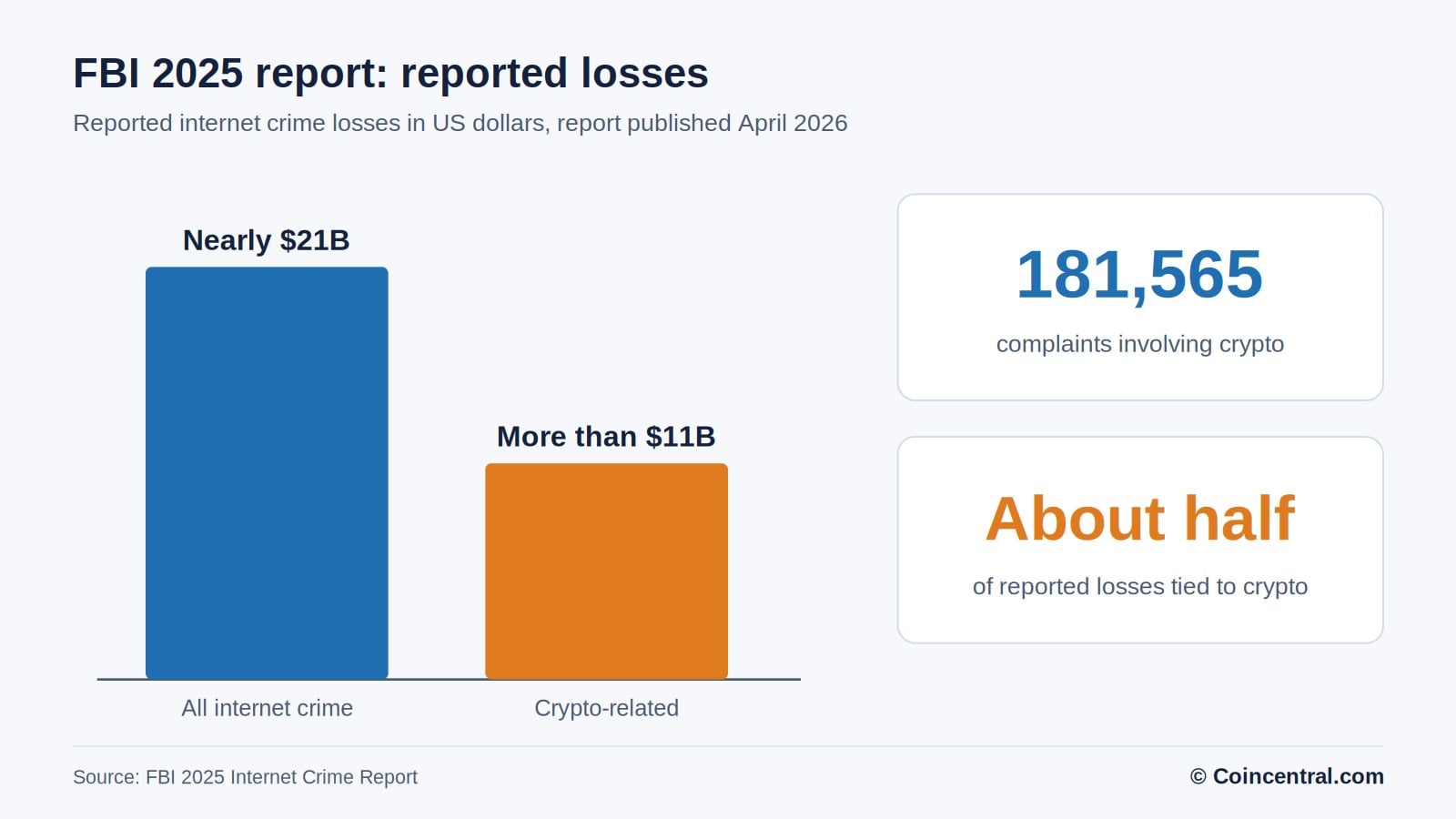
Chart 4: Crypto-related complaints made up about half of the losses reported to the FBI in 2025.
What to Do Right After a Theft
The first hours matter. Criminals often move stolen assets through many wallets, exchanges and networks to make tracing harder. A fast response cannot guarantee recovery, but it can limit further losses and protect evidence.
1. Secure What Is Left
Create a new wallet with a fresh recovery phrase, ideally on a trusted device. Move remaining assets there when it is safe. Never reuse the old phrase.
If an attacker has your private key or seed phrase, changing the app password does not remove their access. Revoking token approvals can help against harmful contracts, but it will not protect a wallet whose key is already stolen. MetaMask advises moving assets to a new wallet in this case.
If the theft involved an exchange account, contact the platform’s official security team right away. Give the transaction details and ask it to secure the account and check whether funds can be frozen. If the money went to another exchange, share that too.
Exchanges generally cannot reverse transfers that finished outside their control. They may also ask for a police report or a law enforcement request before sharing information.
3. Collect Evidence
The FBI asks victims to give detailed transaction information. Useful records include:
- Transaction hashes (IDs)
- Sending and receiving addresses
- Coin type, amount, date and time
- Exchange names and account details
- Screenshots, emails, messages and scam websites
- Bank payment records, if any
A transaction hash is a unique ID on the blockchain. Investigators use it to follow the movement of funds. Keep original messages, not only screenshots, and never give your recovery phrase to anyone claiming to investigate.
4. Report the Theft
Report the crime even if recovery looks unlikely. A report creates an official record and may link your case to others involving the same group.
In the US, file with the FBI Internet Crime Complaint Center. In England, Wales and Northern Ireland, use Report Fraud. In Scotland, contact Police Scotland. Elsewhere, contact the national police or cybercrime unit.
5. Call Your Bank
Some scams begin with bank transfers, card payments or purchases on a crypto platform. If so, contact your bank at once and ask whether the payment can be recalled or reviewed as fraud.
Buying crypto on a legitimate exchange and then sending it to a scammer does not automatically qualify for a refund.
6. Stop Talking to the Scammer
Scammers often demand more money when victims try to withdraw. Common claims include:
- Withdrawal taxes
- Account verification fees
- Anti-money-laundering deposits
- Blockchain unlocking charges
- Recovery or insurance fees
Do not pay any of them. Keep the conversations as evidence, but do not follow the scammer’s instructions.
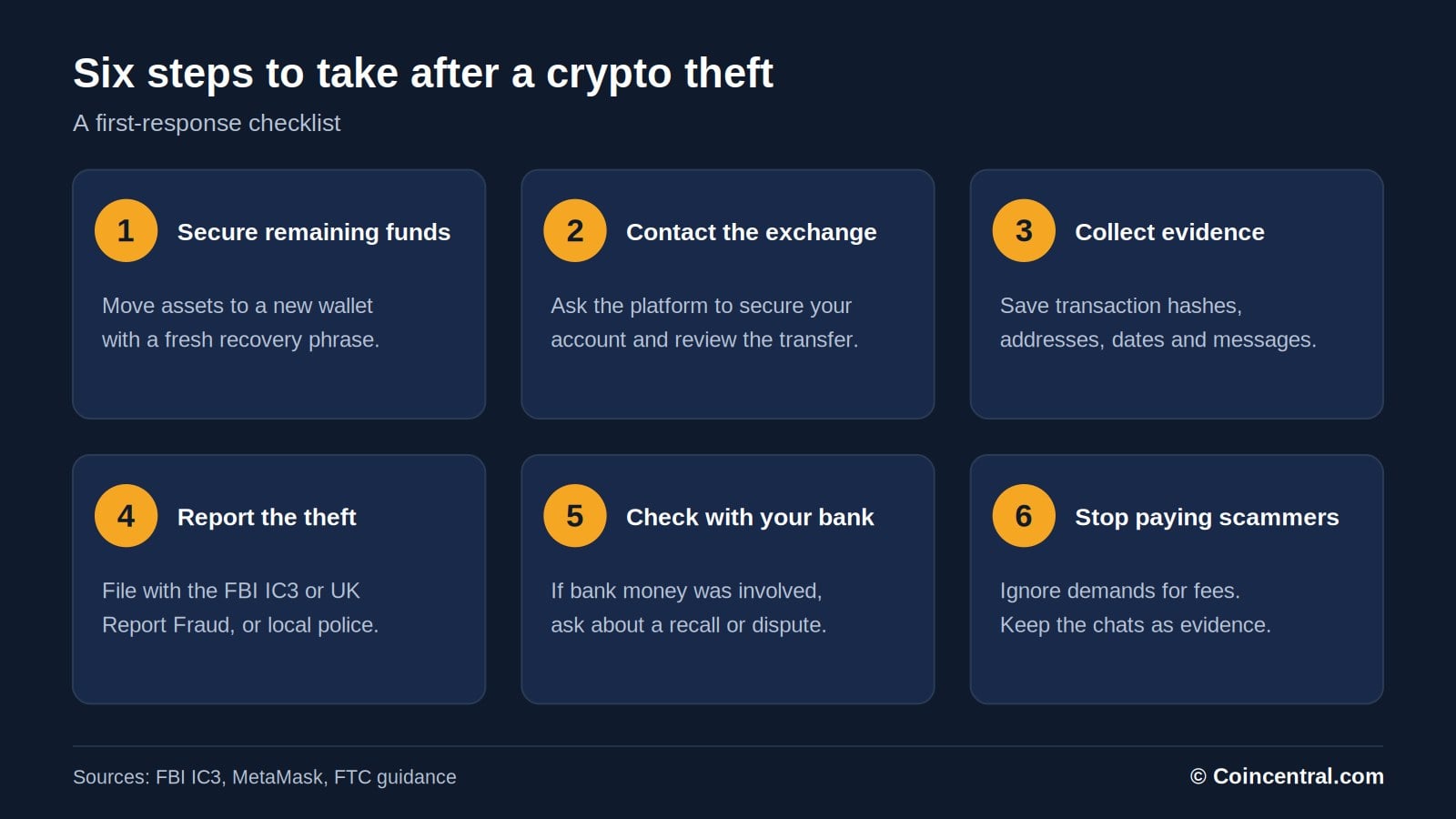
Chart 5: A six-step checklist for the first hours after a crypto theft.
How Tracing, Exchange Freezes and Stablecoin Freezes Work
Following the Money
Most major blockchains keep public records. Tools such as Etherscan for Ethereum and mempool.space for Bitcoin show addresses, amounts and later transfers. Professional firms such as Chainalysis use more advanced mapping and address labeling.
Take a made-up case of $50,000 in Bitcoin. The thief splits it across three addresses and deposits part at an exchange. Investigators can follow the public trail to that deposit, and police may then ask the exchange for account records through legal channels.
Criminals also use cross-chain bridges, decentralized exchanges and mixing services. These make tracing harder but do not always end it. Address labels can be uncertain, and an exchange deposit does not prove the funds are still there.
Exchange Freezes
Exchanges such as Coinbase and Binance hold customer assets and run compliance systems. If investigators spot stolen funds on a platform before the thief withdraws them, the exchange may be able to freeze the account.
A freeze is only the first step. Returning money requires a finding that the assets are linked to crime, plus a legal process. Victims should not expect an exchange to send funds back just because they supply a transaction hash.
Action
What it does
Freeze
Stops funds from moving
Legal recovery
Decides who is entitled to receive the assets
Stablecoin Freezes
Stablecoins such as Tether (USDT) and USD Coin (USDC) have issuers with special powers. Depending on the blockchain and token contract, these can include restricting transfers from certain addresses.
In April 2026, Tether said it supported US authorities in freezing more than $344 million in USDT across two addresses. It said it works with more than 340 law enforcement agencies in 65 countries. Circle, the issuer of USDC, also has terms that allow it to block addresses in set cases.
A freeze does not return money by itself, and issuers do not offer a general service to reverse fraud. Victims should use official support channels and law enforcement, not strangers who offer to contact an issuer.
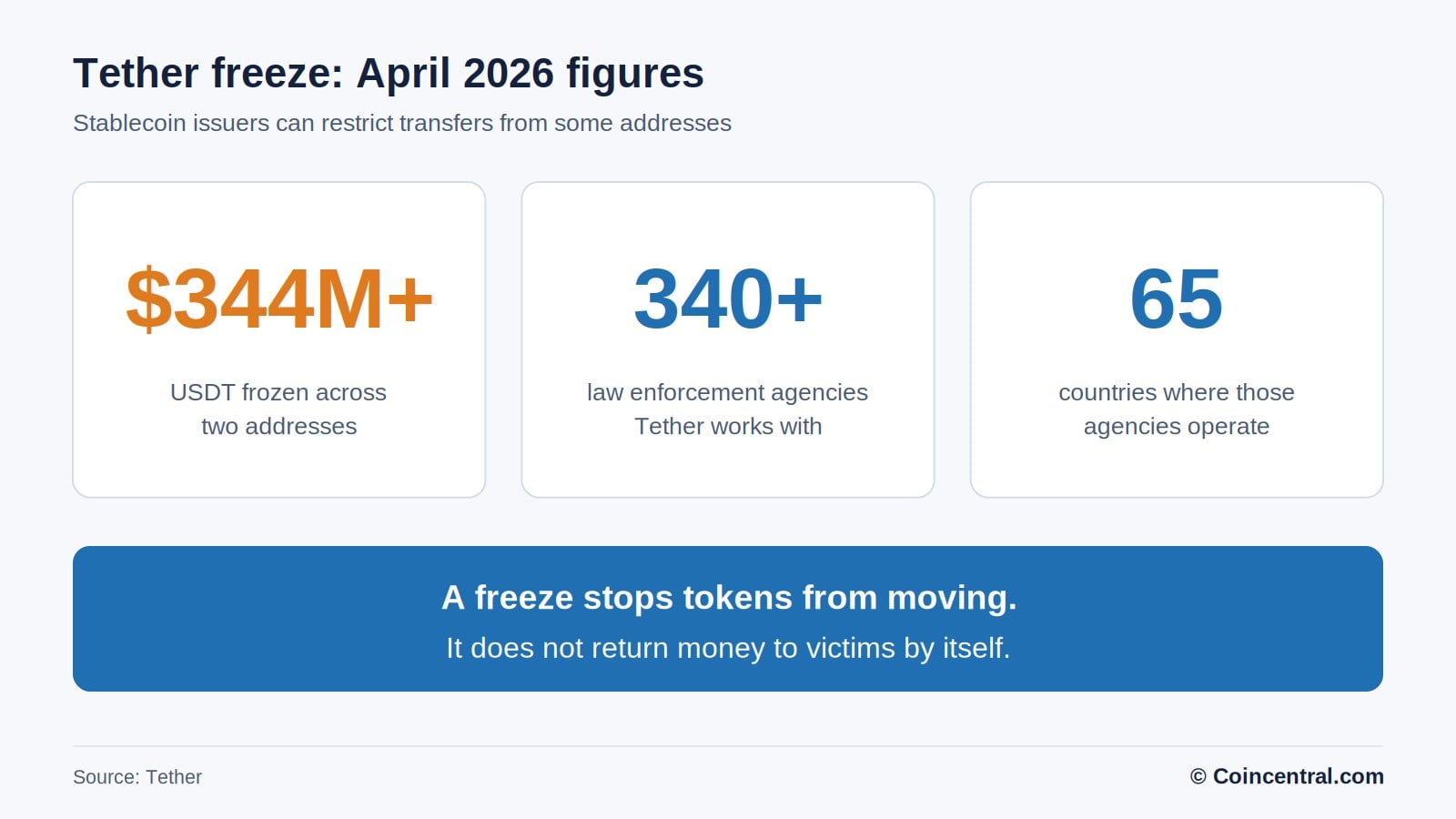
Chart 6: Tether reported freezing more than $344 million in USDT in April 2026, working with agencies in 65 countries.
Real Cases of Recovered Crypto
Many thefts remain unsolved, but government records show that recoveries do happen. Three recent US cases give a sense of the scale.
Case
Date
Amount
Status
Maine investment scam
March 2026
$470,735
Court allowed return to two victims
Connecticut fraud scheme
April 2026
More than $600,000
Recovered and forfeited
International investment fraud cases
July 2026
More than $25 million
Seized; victims not necessarily repaid
Maine: $470,735 Returned
The two victims had sent more than $800,000 to criminal wallets. Investigators traced part of it and seized about 470,773 USDT. After a civil forfeiture case, the court allowed about $470,735 to go back to them.
That is a real recovery, but it covers only part of the loss. It is at most about 59% of the amount sent.
Connecticut: More Than $600,000
In April 2026, federal prosecutors announced the recovery and forfeiture of more than $600,000 in crypto tied to a fraud scheme. One victim lost about $234,000 after getting a fake letter that posed as Ledger security staff.
Investigators traced the funds through several wallets and seized Tether linked to the fraud. The court then entered a forfeiture order.
July 2026: More Than $25 Million Seized
US authorities announced seizures of more than $25 million in cases of international investment fraud. The cases involved many victims and alleged laundering networks in several countries. A seizure does not mean victims have been repaid.
These cases show recovery is possible when investigators find assets and gain legal control of them. They do not show that the average victim has a high chance of getting money back.
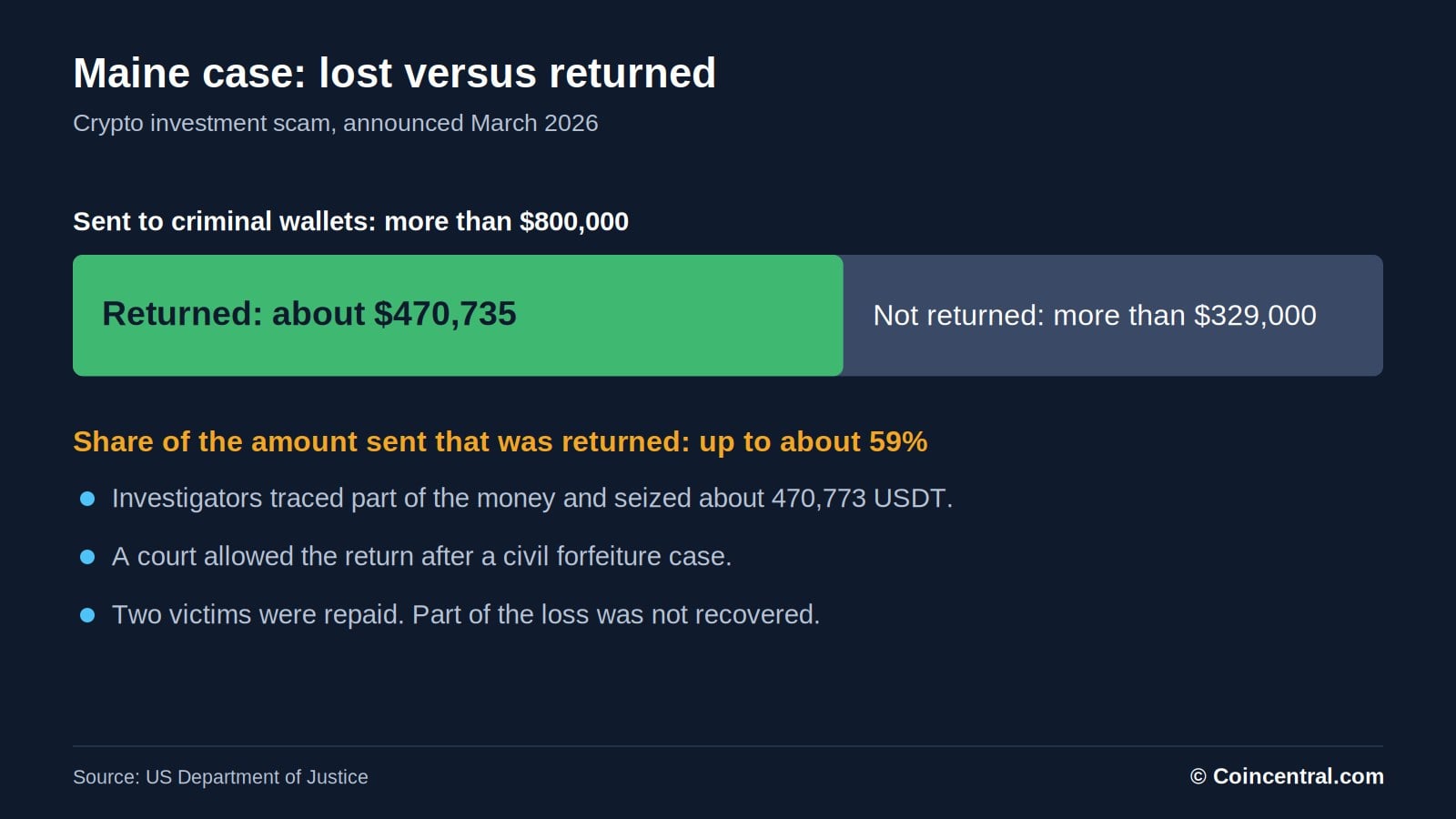
Chart 7: In the Maine case, about $470,735 was returned from more than $800,000 sent to criminals.
What Are the Odds of Getting Your Crypto Back?
No reliable universal recovery rate exists. Results depend on the type of fraud, the amount stolen and where the assets are. The table is a qualitative guide, not a set of probabilities.
Circumstances
Recovery outlook
Funds still held by a cooperative exchange
More promising
Eligible stablecoins found before further movement
Potentially recoverable
Fraudster identified with assets available to seize
Possible through legal action
Crypto moved through many wallets and services
Difficult
Bitcoin sent to an unknown self-custody wallet
Generally difficult without more evidence
Funds already spent or out of reach
Very limited
Speed matters, but it is not the only factor. Some cases take years before assets are recovered. Fast reports can still end in permanent loss if the funds move beyond the reach of intermediaries and investigators.
Size matters too. For smaller losses, private lawsuits or paid forensic work may cost more than the amount at stake.
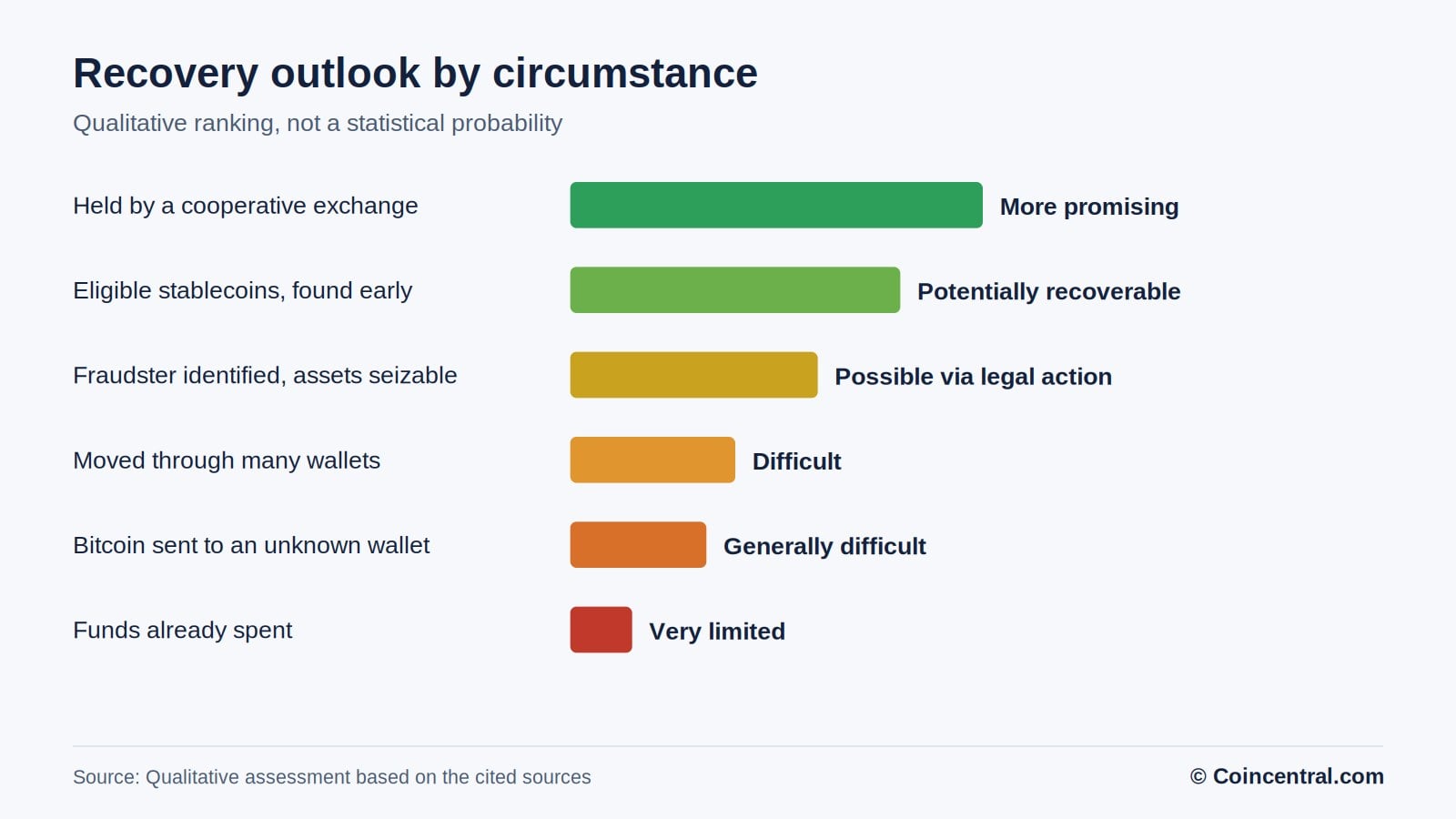
Chart 8: Recovery outlook depends on where the funds are. This is a qualitative guide, not a measured rate.
Recovery Scams and How to Protect Yourself
Be Careful With Recovery Companies
Some legitimate firms offer blockchain analysis and evidence preparation. But analyzing transactions is not the same as recovering assets. The FBI has warned that private recovery firms cannot issue crypto seizure orders on their own.
Fake recovery firms often contact people who have already lost money. They claim to have found the stolen coins and ask for a fee up front. Some pose as police or law firms, and others send official-looking reports with little useful detail.
Warning signs include:
- Guaranteed recovery
- Unexpected messages on social media
- Pressure to pay now
- Requests for your recovery phrase
The FBI has investigated firms accused of misleading scam victims. Before paying anyone, check credentials and ask for a clear explanation of the legal route to recovery. No private investigator can hack a blockchain and reverse a confirmed Bitcoin transaction.
Protecting Your Crypto
Prevention works better than recovery. Hardware wallets protect private keys from many online attacks, but they do not stop phishing or harmful transaction signing.
- Use unique passwords and phishing-resistant multifactor authentication
- Store recovery phrases offline and never share them
- Check wallet addresses and websites before sending funds
- Review smart contract approvals and remove ones you do not need
- Avoid unsolicited investment offers
- Keep devices, browsers and wallet software updated
Consider keeping long-term holdings in a wallet that rarely touches unfamiliar sites. Use separate wallets with smaller amounts for daily activity. That limits the damage if one wallet is compromised.
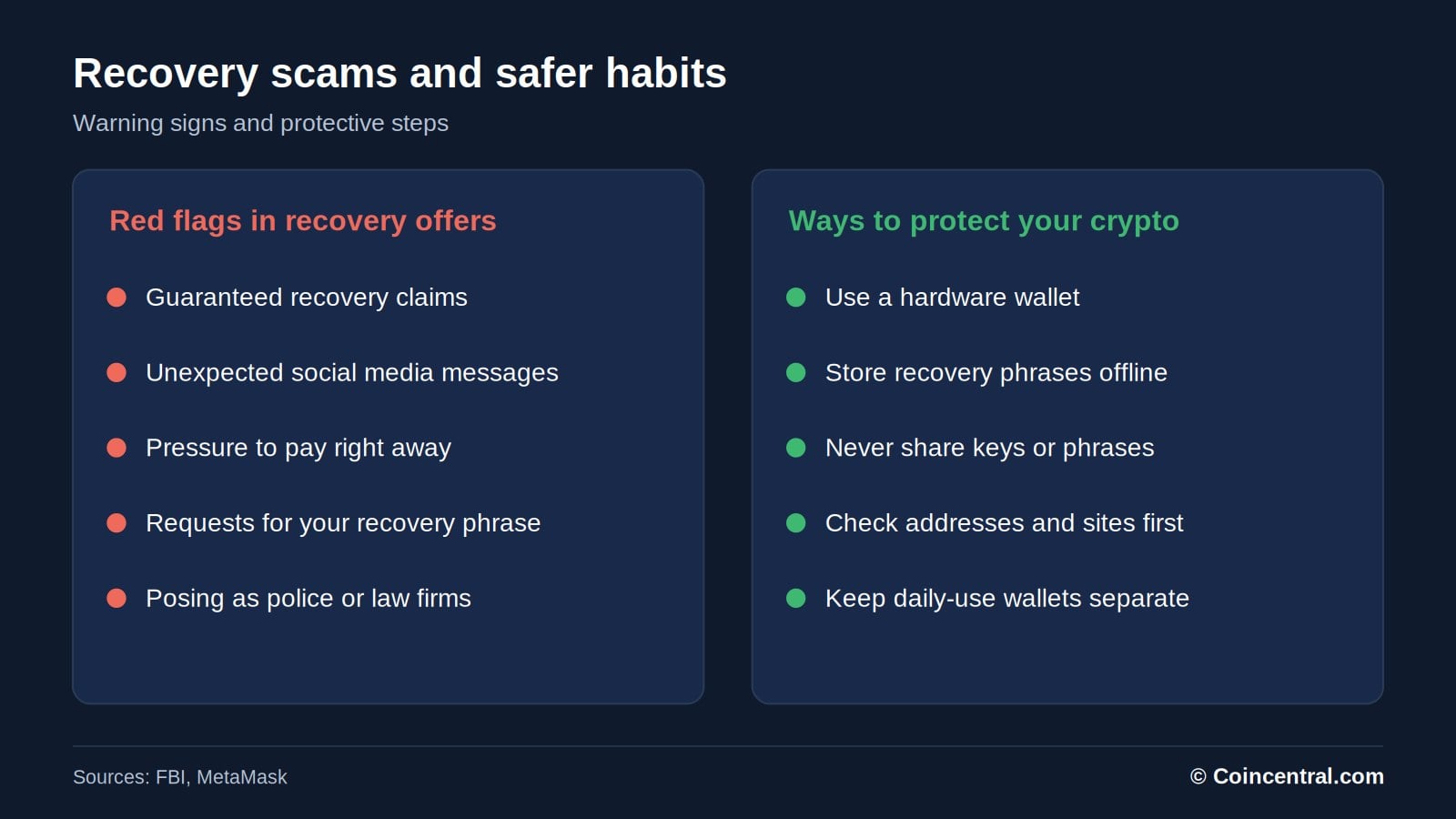
Chart 9: Warning signs of recovery scams and steps that lower the risk of theft.
Frequently Asked Questions
Can Police Recover Stolen Bitcoin?
Yes, sometimes. Police can trace, seize and return Bitcoin tied to crime. They cannot ordinarily reverse blockchain transactions, so recovery usually needs control of the assets or a legal return process.
Can Coinbase or Binance Recover Stolen Crypto?
They may investigate and restrict funds held on their platforms. Neither can guarantee recovery or reverse completed transfers on decentralized blockchains.
Can You Recover Crypto Sent to a Scammer?
Sometimes, especially if the funds reach an exchange or are seized. If an unknown scammer keeps sole control, recovery is much harder.
Can You Recover Crypto Without a Transaction ID?
Possibly. Wallet addresses, exchange statements and transaction histories can help investigators find the transfers. A hash makes tracing much easier.
How Long Does Recovery Take?
There is no standard time. An exchange may restrict an account quickly, while investigations and forfeiture cases can take months or years. Some never end in recovery.
Is Stolen Crypto Covered by Insurance?
Crypto generally lacks the deposit insurance that covers qualifying bank accounts. Some custodians carry commercial insurance, but coverage depends on the policy and the theft. Self-custodied crypto is not automatically insured.
Bottom Line
Stolen crypto can sometimes be recovered, but victims should not assume they will get it back. The best chances come when funds reach a regulated exchange, sit in a stablecoin that can be frozen or are seized by law enforcement.
Recent Department of Justice cases show that large recoveries are possible. Tracing is only the first step, and many victims are never repaid.
Anyone hit by theft should secure remaining assets, keep records, contact the platforms involved and report the crime. They should also avoid recovery services that promise results for an upfront fee.
For most investors, strong wallet security and careful checking of every transaction work better than hoping for recovery.
Sources
- Chainalysis (December 2025): 2025 Crypto Theft Reaches $3.4 Billion
- Chainalysis (January 2026): 2026 Crypto Crime Report: Scams
- FBI (April 2026): Cryptocurrency and AI Scams Bilk Americans of Billions
- FBI Internet Crime Complaint Center: Guidance for Cryptocurrency Scam Victims
- US Department of Justice (March 2026): DOJ to Return $470,735 to Cryptocurrency Scam Victims
- US Department of Justice (April 2026): More Than $600,000 Recovered in Cryptocurrency Fraud Case
- US Department of Justice (July 2026): Investigations Result in Seizure of More Than $25 Million
- Tether (April 2026): Tether Supports Freeze of More Than $344 Million in USDT
- Circle: USDC Terms and Conditions
- MetaMask: What to Do if Your Wallet Has Been Hacked
- Federal Trade Commission: What to Do if You Were Scammed
- FBI: Cryptocurrency Recovery Fraud Investigation
- UK Report Fraud: Reporting Cryptocurrency Investment Fraud
Disclaimer: This article is for information only and is not legal, financial or cybersecurity advice. Crypto recovery depends on the facts of each case, the laws that apply and whether recoverable assets exist.
The post Can You Recover Stolen Crypto? Key Statistics and Facts for 2026 appeared first on Blockonomi.