Cardano founder Charles Hoskinson (@IOHK_Charles) says he is personally developing a new programming language for @Cardano and its native token, $ADA. Few details have been released so far. H
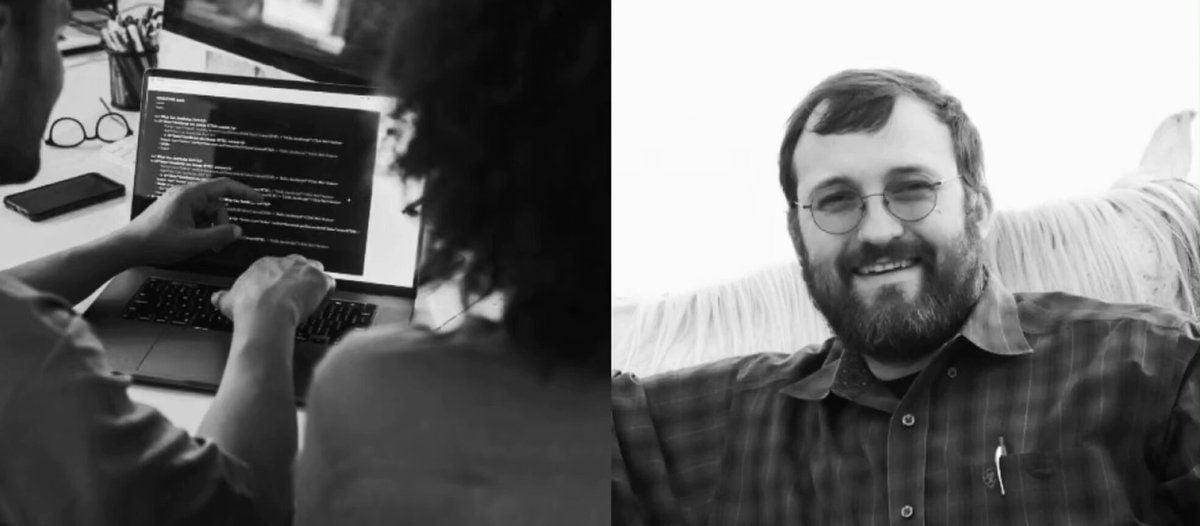
Cardano founder Charles Hoskinson (@IOHK_Charles) says he is personally developing a new programming language for @Cardano and its native token, $ADA. Few details have been released so far.
Hoskinson described the language as "the first of its kind, enabling intents and PCD via Groth16 proofs," and said that @rvcas is building it with him. He made the disclosure on Oct. 18.
Who is building it
The handle @rvcas belongs to Lucas Rosa. Rosa is an Input Output Global software engineer and co-creator of Cardano's smart contract language Aiken.His personal website lists his current role as tooling architect at Midnight.
Hoskinson's comment came in response to a community member who asked him to restate the case for Cardano as the most decentralized root of trust.
What intents, PCD and Groth16 mean
Three technical ideas sit at the center of the project. Transaction intents are user-signed, high-level messages that set out a desired outcome, and a user can attach conditions under which assets move only once the terms are met.Proof-carrying data (PCD) is a cryptographic method that attaches a small proof to a piece of information, certifying that the output follows predefined rules.
Groth16 is a zero-knowledge proof protocol introduced by cryptographer Jens Groth in 2016.It produces compact proofs that make verification on blockchain platforms faster and less resource-intensive.According to CoinDesk, as relayed by PANews, developers could use the language to build applications that coordinate transactions and verify complex conditions, with a small proof ultimately verified on the Cardano chain.
Intents are also being explored elsewhere. They are part of development work beyond Cardano, including Ethereum's Open Intents Framework.Hoskinson's proposal adds proof-carrying data and Groth16 proofs to that combination.
What is still unknown
Hoskinson has not released a name, code or a timeline for the language.It is also unclear how it would relate to Cardano's existing smart contract tools, since developers already write in Plutus and Aiken.Hoskinson has also not confirmed that the language would use ADA for fees.
For now, the announcement is a statement of intent rather than a product. Developers and $ADA holders will need technical specifications and a release schedule before judging how the language fits into Cardano's tooling.
Sources: