Introduction Few tokens have captured Crypto Twitter's attention as quickly as Cash Cat (CASHCAT). Within just a few weeks, the Robinhood Chain meme coin surged more than 6,700%, attracting m
Introduction
Few tokens have captured Crypto Twitter's attention as quickly as Cash Cat (CASHCAT).
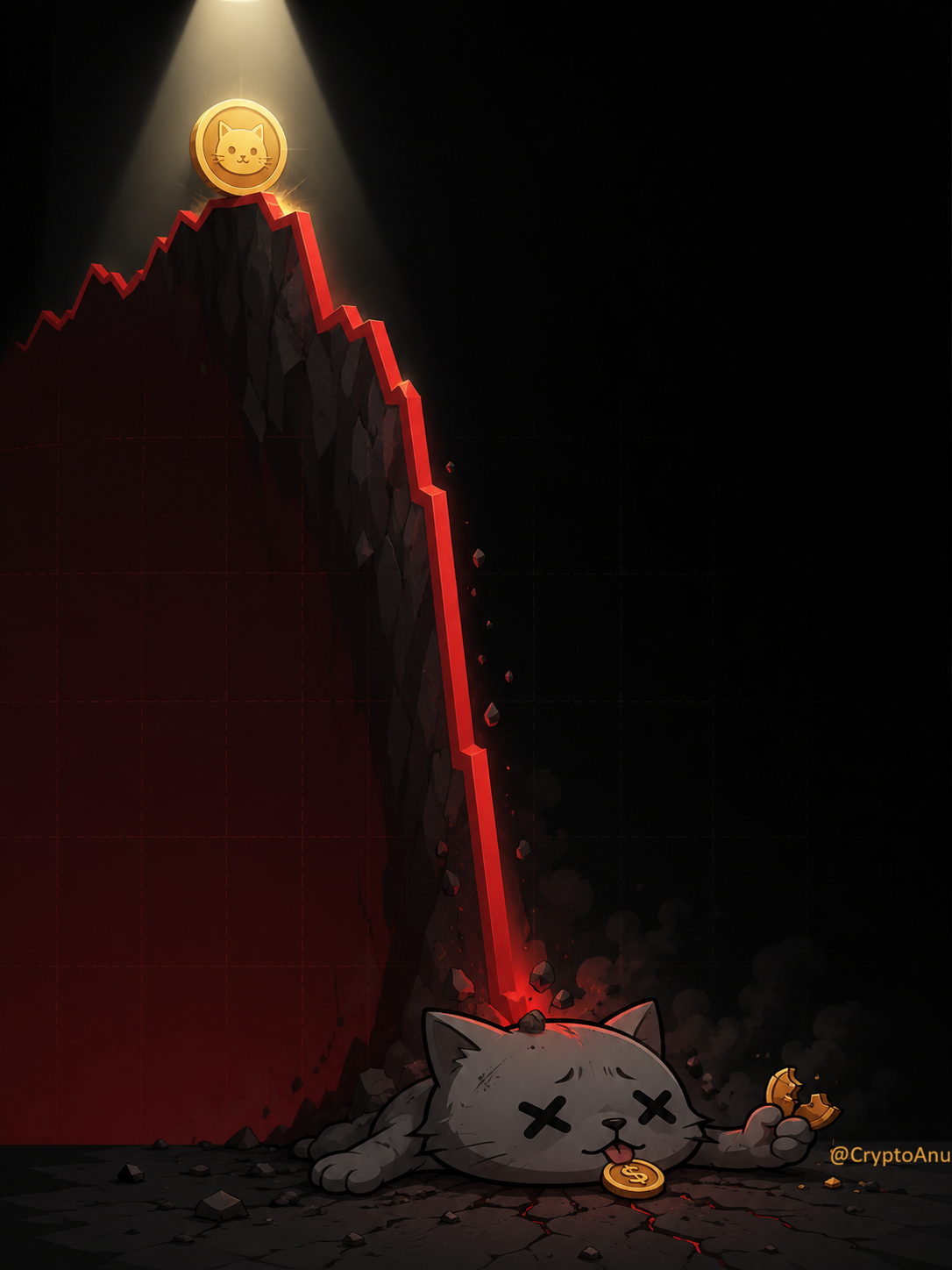
Within just a few weeks, the Robinhood Chain meme coin surged more than 6,700%, attracting massive trading volumes, thousands of new holders, and widespread speculation that it could become the flagship meme asset of Robinhood's emerging blockchain ecosystem.
Then everything changed.
The token lost nearly 70% of its value within a single week, including a dramatic 45% decline in just 24 hours.
Was this simply a healthy correction after a parabolic rally?
Or had the narrative already begun to collapse?
To answer that question, I used four separate CoinMarketCap Agent Hub research skills:
- altcoin_token_profile
- altcoin_deep_research
- altcoin_official_dynamics
- token_historical_ta
Rather than relying on social media opinions, these AI-powered tools examined CASHCAT's market structure, technical indicators, official communications, holder data, and ecosystem activity.
The results paint a fascinating picture of one of crypto's newest meme phenomena.
A Rally Fueled by Pure Momentum
The numbers alone explain why CASHCAT became impossible to ignore.
Within thirty days, the token appreciated by approximately 6,715%, reaching an all-time high near $0.225 before rapidly reversing.
Such explosive appreciation is extremely rare, even by meme coin standards.
At the same time, trading activity became extraordinary.
The research found approximately $112 million in daily trading volume compared to a market capitalization of roughly $54.5 million.
In other words, more than twice the token's entire market value changed hands within a single day.
Metrics like these are typical of highly speculative markets where traders constantly rotate positions rather than long-term investors gradually accumulating.
What Triggered the Collapse?
Interestingly, the AI research found no confirmed fundamental event responsible for either the enormous rally or the subsequent crash.
Instead, available market data suggests that large holders likely began taking profits after the parabolic advance.
This behavior is common during meme coin cycles.
Early participants accumulate during periods of low attention.
Retail investors enter after prices accelerate.
Liquidity increases dramatically.
Early holders begin exiting positions.
Price falls rapidly once buying pressure weakens.
Although this explanation cannot be confirmed with absolute certainty, the combination of whale activity, exceptional trading volume, and rapid price deterioration strongly supports that interpretation.
Official Communications Offer Few Answers
One of the most revealing parts of the research came from the Official Dynamics analysis.
Over the previous two weeks, CASHCAT's official communication channels remained active.
Posts focused primarily on:
- Meme content
- Community engagement
- References to MetaMask
- Treasury fee allocation discussions
However, the research found no verified product launches, major partnerships, technical upgrades, or roadmap announcements capable of explaining either the extraordinary rally or the violent correction.
This distinction matters.
Narratives can create explosive short-term price appreciation.
Sustainable value typically requires measurable ecosystem progress.
Technical Analysis Remains Cautious
From a technical perspective, the picture remains mixed.
On the positive side, the four-hour Relative Strength Index (RSI) dropped to approximately 20.8, placing the token firmly within oversold territory.
Historically, readings below 30 often suggest that selling pressure has become excessive.
However, oversold conditions should never be interpreted as automatic buy signals.
The broader technical structure remains weak.
According to the research:
- Price remains below both the 20-period and 50-period exponential moving averages.
- Trend confirmation is still absent.
- Daily chart history remains limited because the token has traded for only a short period.
The AI therefore concluded that technical evidence currently favors caution rather than conviction.
Holder Growth vs. Price Performance
One particularly interesting contradiction emerged from the research.
Despite the dramatic price decline, CASHCAT's holder count expanded significantly.
The token now has approximately 4,700 holders, representing nearly 1,000% growth over a very short period.
This demonstrates that awareness continues increasing even while speculative enthusiasm has cooled.
Growing communities can become valuable long-term assets.
However, community growth alone cannot guarantee sustainable price appreciation.
Robinhood Chain Is Bigger Than One Meme Coin
Perhaps the most important conclusion is that CASHCAT and Robinhood Chain should not be viewed as identical.
Individual meme coins may experience extraordinary volatility.
Blockchain ecosystems often continue growing regardless.
History provides several examples.
Ethereum survived countless meme cycles.
Solana experienced repeated speculative booms before evolving into one of crypto's largest ecosystems.
Base followed a similar path.
Robinhood Chain may ultimately become another successful blockchain infrastructure project—even if today's meme leaders change completely.
Conviction Remains Low
After combining all available information, the CoinMarketCap Agent Hub assigned CASHCAT a conviction score of zero.
This does not necessarily mean the project lacks future potential.
Instead, it reflects the absence of sufficient evidence supporting either a high-confidence bullish or bearish outlook.
Several important questions remain unanswered:
- Will Robinhood Chain continue attracting developers?
- Can CASHCAT evolve beyond speculation?
- Will official ecosystem catalysts emerge?
- Does current selling represent capitulation—or merely the beginning of a larger correction?
Until those questions receive clearer answers, caution remains appropriate.
Final Thoughts
CASHCAT perfectly illustrates both the opportunities and the dangers of meme coin investing.
Extraordinary gains are possible.
Extraordinary losses are equally possible.
The CoinMarketCap Agent Hub research suggests that current price action has been driven primarily by narrative, speculation, and market psychology, rather than measurable fundamental developments.
That does not necessarily make CASHCAT a failure.
It simply means the market is still searching for evidence that hype can evolve into something more durable.
Whether CASHCAT becomes Robinhood Chain's defining meme asset—or simply another short-lived chapter in crypto history—will depend on what comes next.
As always, data tells a far more useful story than emotion.