The Commodity Futures Trading Commission has begun a rulemaking process that could give cryptocurrency exchanges a federal route for offering leveraged, margined and financed crypto trading t
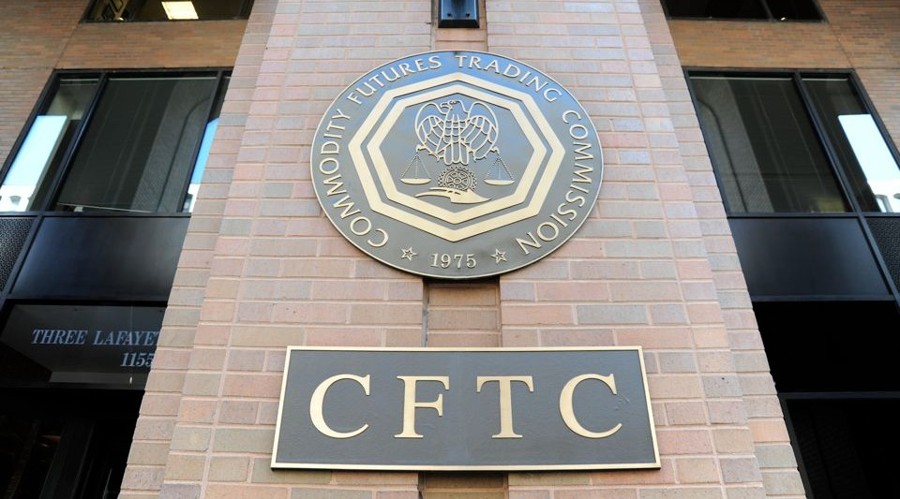
The Commodity Futures Trading Commission has begun a rulemaking process that could give cryptocurrency exchanges a federal route for offering leveraged, margined and financed crypto trading to retail customers, moving ahead under its existing authority after Congress failed to advance broader market-structure legislation. The agency on Monday issued an advance notice of proposed rulemaking covering Regulation Crypto Asset Transactions, or Regulation CTX, and Regulation Crypto Asset Markets, or Regulation CAM. The initiative would establish tailored rules for retail crypto commodity transactions already covered by Section 2(c)(2)(D) of the Commodity Exchange Act and could create a new subcategory of designated contract market registration specifically for crypto exchanges. The action advances a process that
reached the White House for regulatory review in September, two days after the Senate failed to advance the Digital Asset Market
Clarity Act.
What Would Regulation CTX and Regulation CAM Actually Change?
The framework targets retail transactions in crypto commodities offered on a leveraged, margined or financed basis rather than ordinary fully paid spot trading. Existing designated contract markets could potentially offer these crypto asset transactions under rules tailored to the product. Exchanges focused only on this category could instead seek registration as a new “crypto asset market,” or CAM, which would operate as a specialized subcategory of designated contract market.
CFTC Chairman Michael Selig described the structure as a federal option rather than a mandatory replacement for state licensing. Ordinary spot exchanges could continue operating principally under state money-transmission frameworks, while platforms seeking to provide leveraged retail trading could enter the CFTC regime. The distinction is important because the CFTC does not currently have congressional authority to require all spot crypto exchanges to register with the agency. The abandoned CLARITY Act would have gone substantially further by establishing a statutory federal market structure and expanding CFTC authority over digital commodity spot markets. The agency had already
outlined three possible routes for bringing leveraged crypto trading onto U.S. exchanges in August, including rules for existing registered markets and a purpose-built crypto registration category.
Investor Takeaway
The initiative does not create a federal license for every U.S. crypto exchange. Its immediate significance is narrower: it could provide a regulated U.S. home for leveraged retail crypto products that have historically been concentrated on offshore platforms.
What Protections Could Federal Crypto Exchanges Face?
The CFTC is seeking public input on how the new regime should address manipulation, customer protection, custody, market surveillance and other risks specific to crypto assets. Selig said prospective CAMs would remain subject to the core principles applicable to designated contract markets, with crypto-specific rules layered on top. Those could require exchanges to assess token distribution, ownership concentration, vesting schedules, programmatic issuance and buybacks when determining whether an asset is vulnerable to manipulation. The agency is also considering proof-of-reserves requirements for platforms holding customer assets in omnibus accounts. Another proposal would require futures commission merchants to intermediate retail crypto transactions, bringing customer funds under capital, segregation, disclosure and anti-money-laundering controls. The CFTC is separately examining how the Commodity Exchange Act's “actual delivery” exception should work for crypto. Selig said transferring an asset to a customer's external non-custodial wallet within 28 days could generally satisfy that exception under a future interpretation.
Investor Takeaway
The proposed structure could narrow the regulatory gap between offshore-style crypto leverage and traditional U.S. derivatives markets. The crucial details will be leverage limits, custody requirements, FCM involvement and which assets registered venues can list.
Why Is the CFTC Moving Without Congress?
The initiative follows the Senate's Sept. 15 failure to advance the CLARITY Act, which received 49 votes in favor and 50 against and fell short of the 60 votes required to proceed. FinanceFeeds previously reported that
the vote shifted attention toward what the SEC and CFTC could accomplish under existing law. The CFTC had been preparing for that outcome for months. Selig repeatedly said the agency could develop parts of a crypto market structure using authority it already possessed, while acknowledging that only Congress could impose a comprehensive registration regime for spot crypto markets. The SEC has followed a similar agency-led approach, including its
five-year innovation exemption for certain tokenized U.S. stocks. Together, the measures show regulators moving ahead with narrower frameworks while comprehensive legislation remains unresolved.
What Happens Before Exchanges Can Use the New Framework?
The CFTC has not yet adopted Regulation CTX or Regulation CAM. Monday's action is an advance notice of proposed rulemaking, an early stage intended to collect information before the agency decides how to write formal regulations. Comments will be accepted for 60 days after the notice is published in the Federal Register. The agency can then use those responses to develop proposed rules, which would normally undergo another public-comment process before any final requirements take effect.
Investor Takeaway
The announcement creates a regulatory pathway, not an immediately usable exchange license. For U.S. crypto platforms, the next material questions are what the formal proposal requires, how costly CAM registration becomes and whether the framework is competitive enough to pull leveraged trading back from offshore venues.