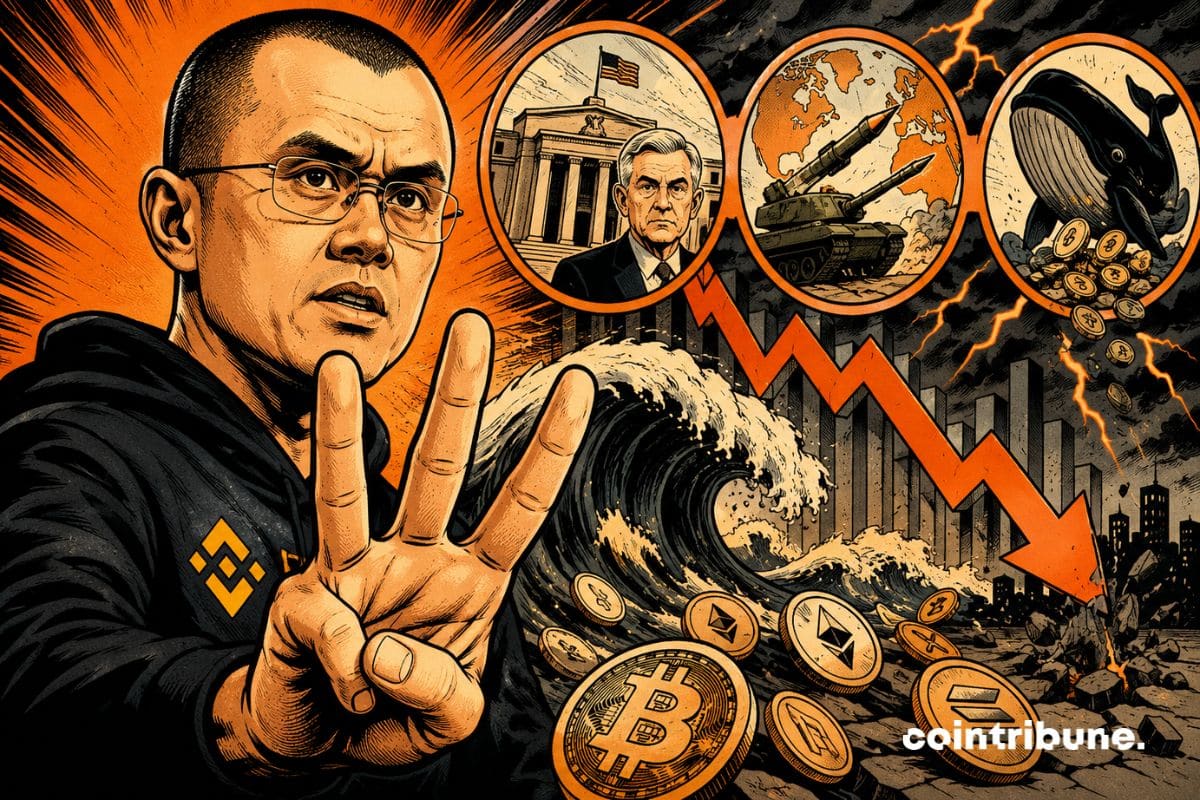
The crypto market is going through a new period of uncertainty and explanations are multiplying. For Changpeng Zhao (CZ), the former head of Binance, this correction is the result of a cockta
The crypto market is going through a new period of uncertainty and explanations are multiplying. For Changpeng Zhao (CZ), the former head of Binance, this correction is the result of a cocktail mixing geopolitical tensions, the rise of artificial intelligence (AI), and the natural Bitcoin cycle. A relevant analysis… but not without limitations.
In brief
- Changpeng Zhao attributes the crypto decline to geopolitics, the rise of AI, and the Bitcoin cycle.
- The Bitcoin four-year cycle remains relevant, but it is no longer enough to explain the market.
- Crypto now depends as much on the macroeconomic context as on Bitcoin’s performance.
CZ identifies three main causes for the decline in crypto
For Changpeng Zhao, the current correction of the crypto market cannot be reduced to a simple market downturn. In a recent interview, CZ puts forward three explanations which, according to him, strengthen each other.
- The first concerns geopolitical tensions. In a more unstable international context, investors favor assets considered safer and reduce their exposure to the most volatile markets, including crypto.
- The second factor is more original. Changpeng Zhao believes that artificial intelligence today attracts a significant share of speculative capital. For two years, AI-related companies have concentrated much of investors’ interest, to the detriment of crypto.
- Finally, the former Binance leader recalls that Bitcoin historically follows a four-year cycle, marked by a strong rise after each halving followed by sometimes sharp correction.
However, this reading deserves nuance. Indeed, Bitcoin ETFs, the rise of institutional investors, and an unprecedented macroeconomic environment make the market more complex than before. The cycle probably still exists, but it no longer explains everything alone.
Your 1st cryptos with BitpandaThis link uses an affiliate program.Does the Bitcoin rhythm still dominate the crypto market?
For more than a decade, Bitcoin has imposed its tempo on the entire crypto market. When it rose, altcoins followed. When it fell, the whole ecosystem plunged. This correlation remains strong, but it is no longer as mechanical as before. Today, the market is influenced by many external factors. Central bank decisions, flows to Bitcoin ETFs, geopolitical tensions, and the performance of the AI sector deeply change investors’ behaviors… As observed by Changpeng Zhao.
However, Bitcoin remains the main sentiment indicator, even if it is no longer the sole engine of crypto. Furthermore, institutional investors prioritize macroeconomic data over patterns observed during previous halvings. In other words, BTC retains a central role, but its influence is now embedded in a much broader environment. The real question is no longer whether the market follows Bitcoin, but to what extent it still can dictate the trend.
Changpeng Zhao’s analysis sheds interesting light on the current weakness of the crypto market, without answering all questions. Bitcoin remains an essential reference, but its influence evolves with the maturation of the sector. Are we witnessing the end of the famous four-year BTC cycle or simply its adaptation?