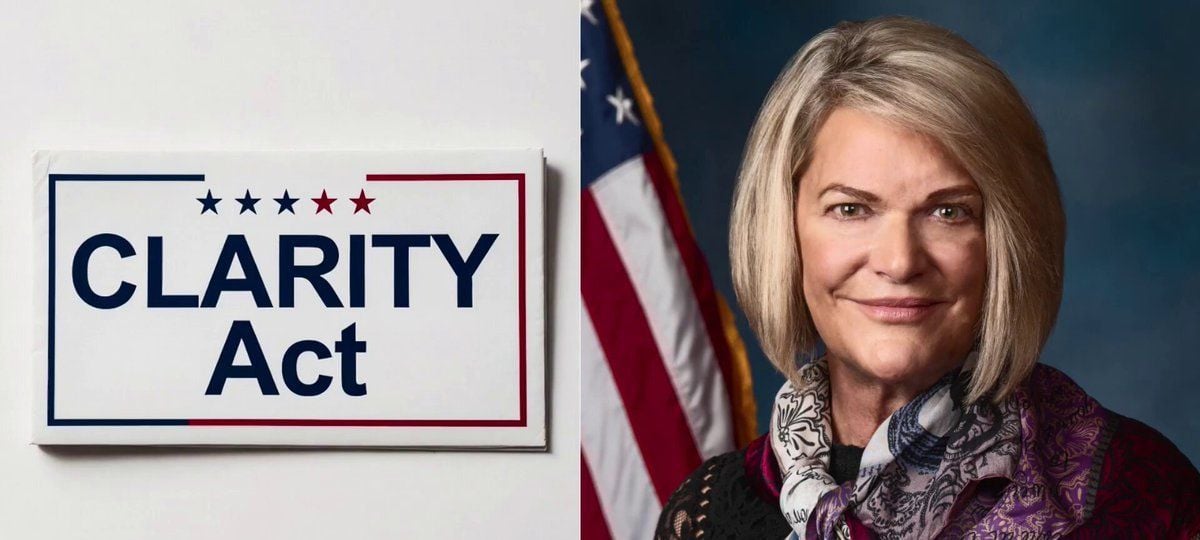
Senator Cynthia Lummis (@SenLummis) is positioning the Digital Asset Market Clarity Act as a direct legislative response to North Korea's Lazarus Group, the state-sponsored hacking operation
A
AnonymousCryptoCompass newsroom
July 27, 2026
2 min read
NEWS
CryptoCompass editorial visual for policy coverage.
Senator Cynthia Lummis (@SenLummis) is positioning the Digital Asset Market Clarity Act as a direct legislative response to North Korea's Lazarus Group, the state-sponsored hacking operation behind some of the most damaging crypto thefts on record.
A Bill Built Around Enforcement
Under the proposal, the Treasury Department would gain authority to sanction foreign crypto firms involved in illicit finance. Crucially, compliant companies that voluntarily freeze suspicious transactions would receive legal protection for doing so, removing a key deterrent that has historically made private-sector intervention risky. Lummis has argued the bill is designed to intercept criminals before stolen funds can be moved and laundered.
The proposal would apply Bank Secrecy Act, anti-money laundering, and sanctions-compliance requirements to crypto exchanges, intermediaries, and certain controlled decentralised finance platforms. The bill also takes aim at what Lummis has called the "DINO loophole." That provision closes a gap that has allowed crypto exchanges, DeFi platforms, and crypto ATMs to claim decentralization to avoid anti-money laundering rules and sanctions, even when operators retained control.
The Threat the Bill Is Responding To
The scale of North Korea's crypto theft operation gives the legislation an urgent backdrop. The February 2025 theft of $1.5 billion in Ethereum from Bybit, the largest single cryptocurrency theft in history, was attributed by the FBI to the Lazarus Group cluster it tracks as TraderTraitor.DPRK-linked actors stole $2.02 billion in 2025 alone, a 51% year-on-year increase, pushing their all-time cumulative total to $6.75 billion.These funds are believed to be used by North Korea to support its weapons program while escaping international sanctions.
The CLARITY Act itself has been moving steadily through Congress. The bill passed the House in July 2025 with a 294-134 bipartisan vote before the Senate Banking Committee advanced it 15-9 in May 2026.It now sits on the Senate Legislative Calendar awaiting a floor vote.However, the bill has not yet passed the full Senate, and disputes over ethics enforcement, anti-money laundering rules, and stablecoin rewards could result in further changes.
BitMEX is shutting down. The derivatives exchange that helped pioneer crypto perpetual swaps said it will permanently close on 23 September 2026 at 04:00:00 UTC, halting new account registrat
Coinbase CEO Brian Armstrong is elevating "agentic finance" as a core use case for crypto, coinciding with reports that the company's Base network has surpassed 100 million AI-driven payments
Triple-A’s crypto wallet hack expanded to $11.8M as attackers drained additional deposits across multiple blockchain networks despite ongoing response efforts. Specter reported new Bitcoin an