The fight over CLARITY Act sanctions heated up after Coinbase-owned advocacy organization Stand With Crypto rebuffed Senator Elizabeth Warren’s condemnation of the proposed laws. Warren warne
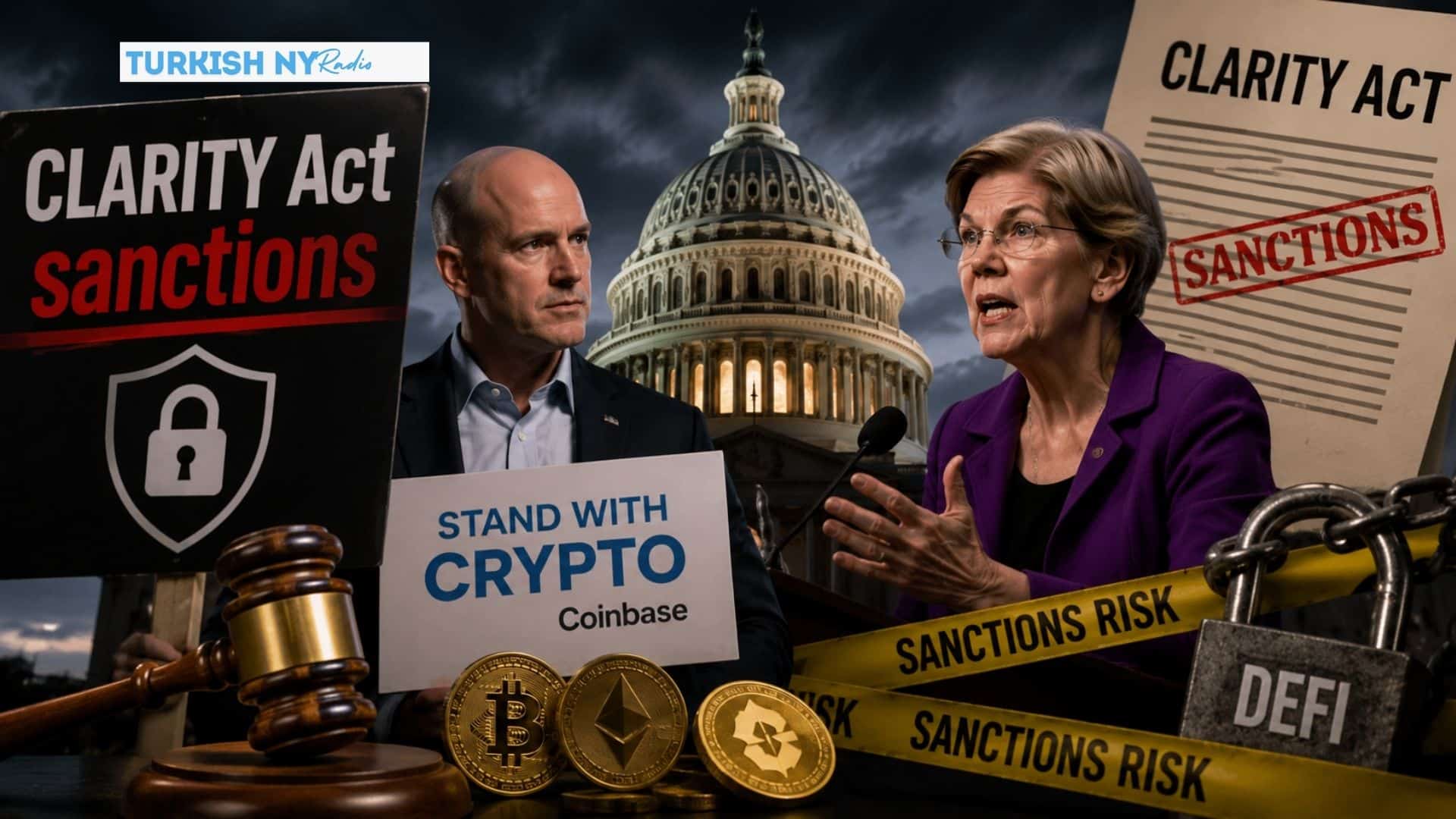
The fight over CLARITY Act sanctions heated up after Coinbase-owned advocacy organization Stand With Crypto rebuffed Senator Elizabeth Warren’s condemnation of the proposed laws. Warren warned that the law might open the door for approved organizations to use decentralized finance (DeFi), while advocates believe that it increases anti-money laundering (AML) regulations and provides authorities with new tools for fighting illicit financing.
The latest discussion illustrates widening political disagreements over how the US should manage digital resources as legislators work to finalize the CLARITY Act sanctions before Congress breaks for the August session.
Stand With Crypto Rejects Warren’s Criticism
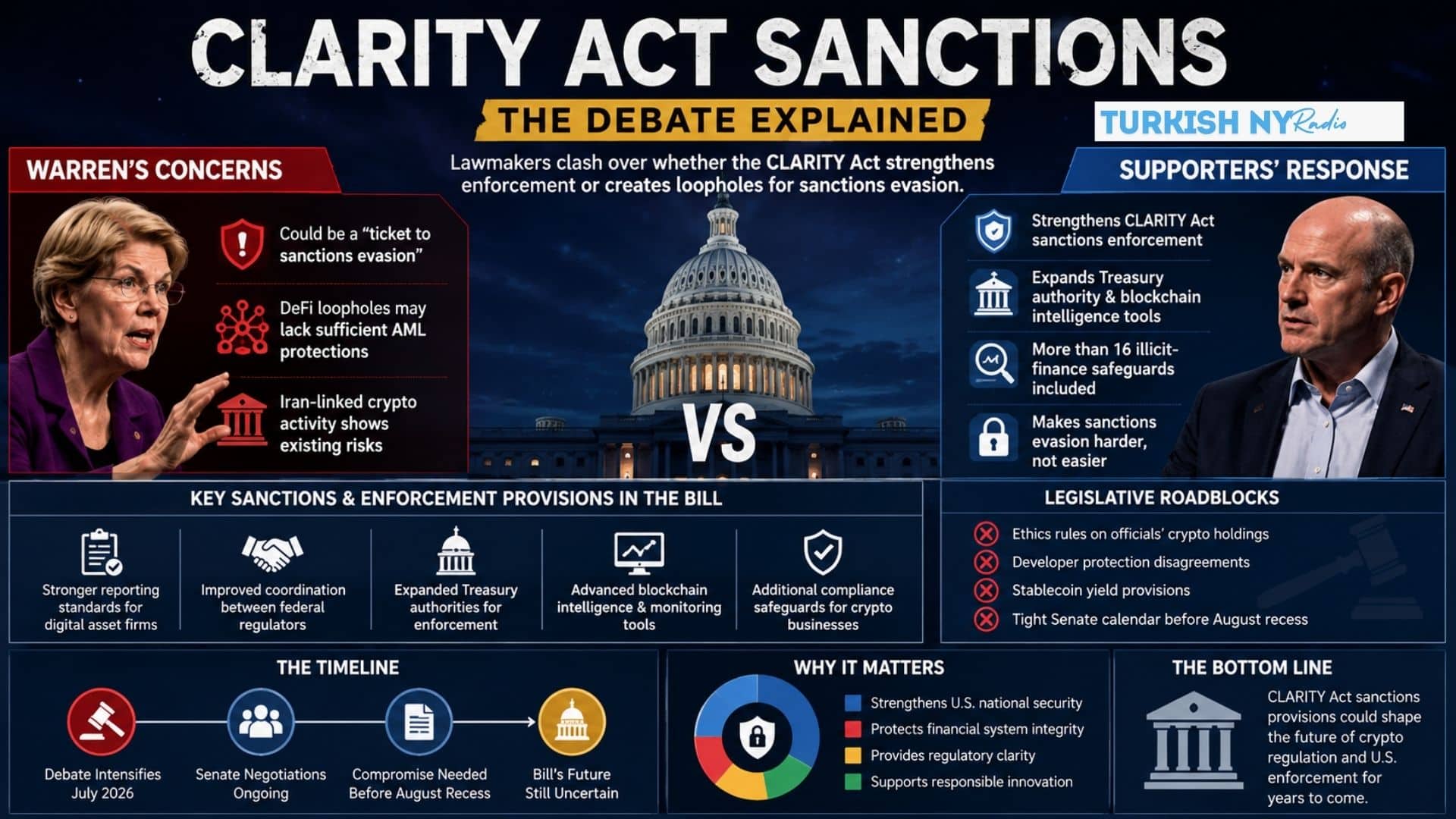
The controversy surrounding CLARITY Act sanctions gained momentum after Senator Elizabeth Warren warned that the legislation, in its current form, could become a “ticket to sanctions evasion.” During discussions on the bill, Warren cited sanctions expert Richard Nephew, arguing that decentralized finance platforms may not face sufficient compliance obligations under the proposal.
Coinbase-backed advocacy group Stand With Crypto fiercely rejected the assertions.
As to the organization, the law includes a separate part aimed at bolstering measures against illegal financial activities. It claims that the law extends the Treasury Department’s power, enhances blockchain intelligence functionality, and imposes new compliance requirements on online asset enterprises.
“The bill strengthens enforcement tools rather than weakening them,” Stand With Crypto said while responding to Warren’s concerns.
Supporters argue these provisions demonstrate that CLARITY Act sanctions enforcement would become more effective instead of creating new regulatory gaps.
Proponents Argue that the Bill Provides rotections.
The proponents of the bill, like Senator Cynthia Lummis, have supported it by pointing out that it has more than 16 clauses aimed at combating illicit funding.
Supporters argue that CLARITY Act sanctions safeguards include tighter reporting requirements, enhanced regulatory cooperation, broader investigation authority, and better blockchain monitoring features.
They claim that these measures provide authorities more visibility into questionable cryptocurrency activities while also establishing clearer regulatory criteria for genuine blockchain enterprises operating in the US.
Industry proponents feel that regulatory clarity may promote innovation while maintaining compliance duties.
Senate Faces Tight Timeline
Although the discussion over CLARITY Act sanctions is ongoing, the bill must still pass many political barriers before becoming law.
Legislators remain divided on ethical regulations governing government officials’ cryptocurrency holdings, blockchain developer safeguards, and stablecoin-related restrictions. These outstanding challenges have hampered advancement in the Senate.
With just a short legislative agenda before the August vacation, House leaders must decide if agreements can be struck on time.
Market participants are closely monitoring negotiations because the legislation could become one of the most significant crypto regulatory frameworks adopted in the United States.
Although both sides agree that stronger oversight is necessary, they remain sharply divided over whether the current language adequately addresses sanctions enforcement and national security risks.
Conclusion
The political struggle over CLARITY Act sanctions exemplifies the difficulties of developing comprehensive crypto law that pleases technology supporters and national security leaders. Although Senator Warren feels the legislation creates hazardous gaps, advocates claim that it has effective enforcement measures and current compliance requirements. As Senate deliberations continue, the decision may impact the future of online digital asset legislation in the US and have long-term implications for bitcoin firms.
Summary
The dispute over CLARITY Act sanctions has emerged as one of the most carefully monitored concerns in US cryptocurrency legislation. Senator Elizabeth Warren worries that the measure might weaken sanctions enforcement by creating DeFi loopholes, while Coinbase-backed Stand With Crypto and other backers say that the law increases anti-money laundering safeguards and expands Treasury regulatory power. With key policy disputes remaining unresolved, legislators face increasing pressure to achieve a compromise before the Senate’s August vacation.
Glossary of Key Terms
CLARITY Act: An envisioned piece of US legislation that aims to provide a full regulatory structure for online assets.
Sanctions: Are governmental restrictions designed to impede financial or commercial activities involving specific persons, groups, or nations.
DeFi (Decentralized Finance): Refers to blockchain-powered financial systems that function without traditional middlemen.
AML (Anti-Money Laundering): Laws and regulations designed to prohibit criminals from concealing unlawfully acquired monies.
Blockchain Analytics: A technology used to track bitcoin transactions and detect illicit financial behavior.
FAQs for CLARITY Act Sanctions
1. What exactly is the Clarity Act?
The CLARITY Act is a suggested piece of US legislation that aims to offer clearer regulatory standards for digital currencies and currency marketplaces.
2. For what reason is Elizabeth Warren opposing the bill?
She contends that certain restrictions may create gaps that allow sanctioned companies to abuse decentralized financial platforms.
3. To what extent did Stand with Crypto respond?
The Coinbase-backed lobbying organization claims that the law increases sanctions administration by boosting Treasury power and strengthening blockchain surveillance capabilities.
4. Did the CLARITY Act sanctions become law?
No. The proposal is currently being debated in the United States Senate, and major policy issues remain unsettled.
5. For what reason is this law important to the cryptocurrency industry?
If passed, it might provide clearer regulatory criteria for digital asset firms while also influencing compliance, oversight, and market monitoring in the US.
Sources