Key Takeaways Crypto card monthly volume reached $660M in April 2026, up from near zero in March 2023. TRON is the dominant chain by volume, leading every monthly bar on the chart. BSC second
Key Takeaways
- Crypto card monthly volume reached $660M in April 2026, up from near zero in March 2023.
- TRON is the dominant chain by volume, leading every monthly bar on the chart.
- BSC second, Ethereum third – Solana, Base, Optimism and Arbitrum also present.
- Multi-chain expansion accelerating – Other 12 chains segment growing consistently.
- Three years of uninterrupted growth suggests real adoption not speculative activity.
According to data CryptoRank.io, crypto card monthly volume reached approximately $660 million in April 2026, after it reached $606M in march. Three years ago, in March 2023, that number was close to zero. The chart shows a consistent, uninterrupted climb across 37 months that has turned crypto cards from a niche product into infrastructure processing hundreds of millions in real spending every month.
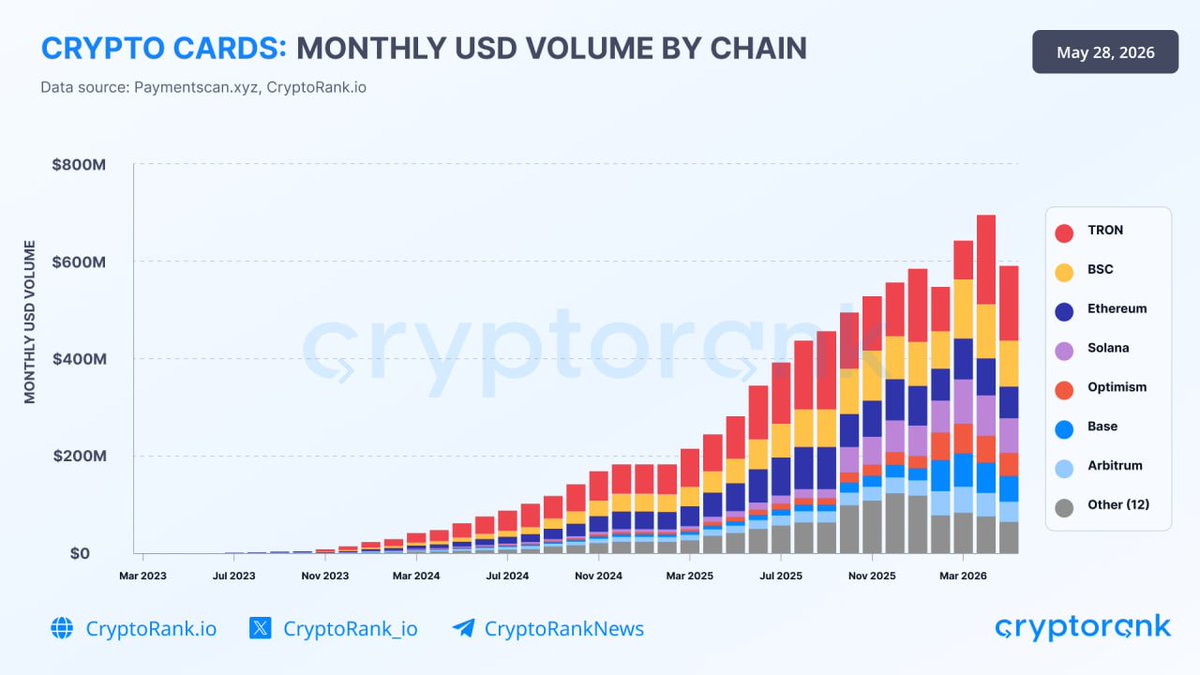
That growth pattern matters as much as the number. Speculative activity produces volatile, spiky charts. This one doesn’t. Every month is higher than or close to the one before it, which points to people actually using crypto cards to spend rather than a crowd cycling in and out of a trend.
The chain leading the volume isn’t who you’d expect
TRON is the clear dominant force, the red segment sits at the bottom of nearly every bar throughout the entire three-year period, consistently the largest single contributor to total volume. That will surprise anyone whose mental model of crypto card usage centers around Ethereum or Solana.
The reason TRON leads isn’t narrative. It’s infrastructure. TRON has some of the lowest transaction fees of any major blockchain, processes transactions quickly, and has deep stablecoin liquidity, particularly USDT on TRON, one of the most widely used stablecoin routes globally. When people spend crypto at merchants via a card, they want fast and cheap settlement. TRON delivers that better than most chains at scale.
BSC sits second throughout the chart, another fee-efficient chain with broad stablecoin availability. Ethereum is third, which is notable given its higher transaction costs. The Ethereum volume likely reflects users with larger balances for whom gas costs are less of a concern.
The multi-chain picture is expanding
Solana, Optimism, Base, and Arbitrum are all visible as growing contributors in recent months. Base and Optimism appearing meaningfully shows L2 adoption is reaching real-world spending infrastructure, not just DeFi. The Other 12 chains segment has also been growing, the number of chains with active card infrastructure is expanding rather than consolidating.
In 2023 the chart was almost entirely TRON and BSC. By April 2026 there are at least eight named chains contributing meaningful volume. The infrastructure is broadening as total volume grows.
READ MORE:
 Coinbase Got a Green Light for Federal Banking Charter – Here’s What That Actually Means
What $660M monthly actually means
$660M in a single month is real card spending at merchants, not trading volume, not DEX swaps. The jump from $400M to $660M happened faster than the jump from $100M to $400M, meaning the growth rate is accelerating not plateauing.
The data says crypto cards are no longer a product looking for users. They have users, they have volume, and the chain doing most of the work is the one built for cheap fast stablecoin movement, not the one with the most developer activity or the loudest community.
The information provided in this article is for educational purposes only and does not constitute financial, investment, or trading advice. Coindoo.com does not endorse or recommend any specific investment strategy or cryptocurrency. Always conduct your own research and consult with a licensed financial advisor before making any investment decisions.
The post Crypto Cards Hit $660M Monthly Volume: Which Blockchain Leads It appeared first on Coindoo.